Fuji rescuers to charge climbers who ignore off-season warnings
Yamanashi prefecture will charge those rescued by helicopter outside the official season, as officials grow weary of unprepared climbers risking their lives on the mountain.
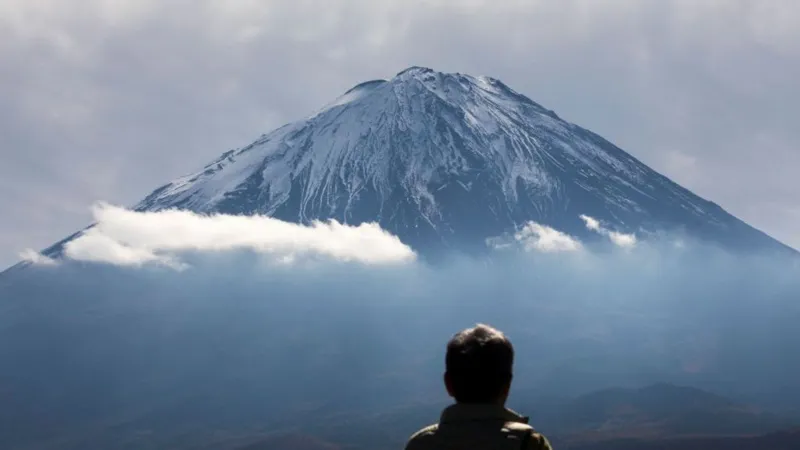
Climbers who attempt Mount Fuji outside the official season and then need a helicopter rescue will be billed for the service, under measures announced by the authorities governing the mountain's northern slopes. The fee is one of a series of steps Japan's Yamanashi prefecture is introducing to deter reckless and ill-prepared climbers.
Officials will look to a similar charge already levied in nearby Saitama prefecture, where rescues in other mountainous areas cost 8,000 yen, about £38, for every five minutes of flight time. Those wishing to scale Fuji between early September and July the following year will also have to submit detailed climbing plans before setting out.
Yamanashi's governor, Kotaro Nagasaki, appealed to the public to stay away. We ask the general public to refrain from climbing during the off-season, he said on Monday, expressing the hope that the measures would prompt people to reconsider what a winter ascent of Mount Fuji entails.
The problem is not confined to one prefecture. Officials in Yamanashi and neighbouring Shizuoka, which governs the southern flank of the mountain, have recorded a rise in off-season and unplanned climbs, some of which have left climbers stranded. Shizuoka's authorities say they will penalise those who fail to register their off-season attempts and will strengthen efforts to keep climbers out of restricted areas, though they stopped short of announcing a rescue fee of their own.
Mount Fuji's official climbing season runs from July to early September, drawing roughly 200,000 hikers to the summit each year. Ascents outside those months are strongly discouraged, though permitted as far as the fifth of the mountain's ten stations. Most huts and toilets close for the winter, and both the weather and the trails tend to turn far more severe.