French ministry official drugged female job candidates, court told
More than 240 women accuse a senior French culture ministry official of administering diuretics during job interviews in a campaign of humiliation spanning nearly a decade, with victims describing uncontrollable urination and lasting psychological trauma.
For nearly a decade, a senior French civil servant is alleged to have drugged female job candidates during interviews at the Ministry of Culture, subjecting them to humiliating episodes of involuntary urination in what prosecutors have described as a systematic campaign of abuse. Christian Nègre, who is in his sixties, now faces formal investigation on charges including drugging, invasion of privacy and sexual assault, with nearly 250 women believing they fell victim to his alleged scheme between 2009 and 2018.
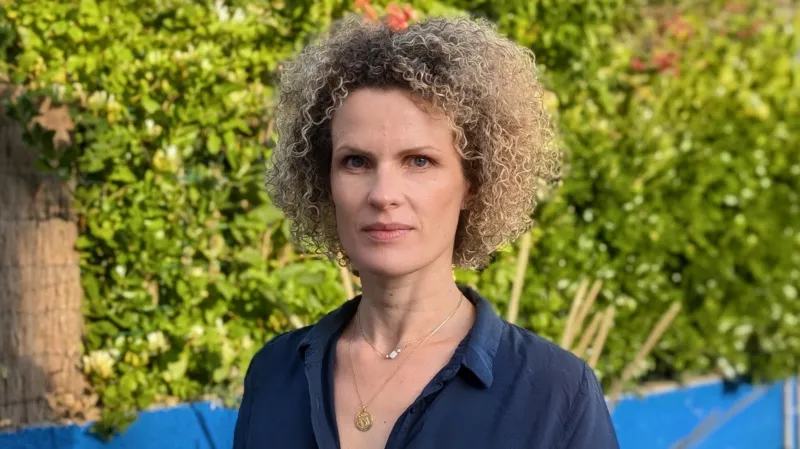
Anaïs de Vos, now 42, was 27 when she attended an interview with Nègre at the ministry's Paris offices in July 2011. She did not usually drink coffee but accepted his offer out of politeness. The beverage, which he prepared himself, tasted unpleasant, she recalls, and she consumed only half. The meeting began conventionally enough, but within minutes Nègre suggested they continue their conversation outside. As they walked through the capital, Anaïs experienced an inexplicable and overwhelming urge to urinate. When she told him she needed to find a toilet, she says he looked at her with what she perceived as a gleeful expression and asked: "Oh, do you need a wee?"
He directed her to a storage cupboard beneath a bridge on the Seine, but she refused, finding the suggestion too strange. They walked to the Louvre, where the public toilets required a one-euro payment she had not brought, and Nègre claimed to have no cash. Desperate and in physical pain from trying to control her bladder, Anaïs finally found a cafe whose owner allowed her to use the facilities. By that point, she was physically weak and lost control before reaching the toilet. She has since drawn some comfort from the fact that Nègre did not witness the moment, though the experience left her feeling drained and dizzy. She did not get the job.
For years, Anaïs harboured suspicions but could not identify precisely what had occurred. She blamed herself, and the incident damaged her self-confidence, steering her towards a less ambitious career path. Then, in 2019, a letter from the police arrived. When she met investigators, she learned that she was one of nearly 200 women they suspected Nègre had drugged during job interviews. Police believed the civil servant had used diuretics, substances that cause the body to produce excess urine, typically prescribed for conditions such as high blood pressure. A fleeting thought that he might have slipped something into her coffee had crossed her mind on the day, she says, but she dismissed it, reasoning: "It's the Ministry of Culture. It's not possible."
Anaïs says police told her they had found a spreadsheet on Nègre's computer, entitled Experiments P, which listed alleged victims. The document, she claims, recorded the time of each interview, when the diuretic was administered, how long elapsed before urination occurred, and what underwear the women were wearing. It was this record that led investigators to her. The investigation began in June 2018, when a colleague caught Nègre taking a photograph of a woman from beneath a table, the prosecutor's office said in a statement. He was initially suspended from his role as regional director of cultural affairs and sacked by the ministry in 2019. Prosecutors said that in 2018 he had admitted to investigators that he had "imposed humiliating situations on women" during job interviews.
Marie-Hélène Brice, another woman named in Nègre's notes, attended an interview with him in Strasbourg in 2016. He told her she appeared stressed and suggested a walk outside to calm her nerves. As they strolled along a canal, she too felt an uncontrollable need to urinate, which soon became painful. Nègre claimed to know of a nearby public toilet, but when they arrived, there was none. With no alternative, Marie-Hélène says she was forced to urinate in public, shielded only by the jacket he offered to hold up. "He didn't take his eyes off me," she says. The shame she felt persisted for years. Like Anaïs, she was later contacted by police and told she was among the alleged victims. "It was a very big shock," she adds.
The concept of chemical submission, where drugs are used to gain control over someone, gained prominence in France following the 2024 trial of Gisèle Pelicot's husband, who was found guilty of sedating her and inviting strangers to rape her. The use of diuretics in this alleged manner is, however, "very unusual", according to Prof Jean-Claude Alvarez, a toxicologist who runs a pilot programme for testing suspected drugging victims at the Raymond-Poincaré AP-HP Hospital. He says he has never encountered anything similar in 26 years of practice. The lab routinely screens for 400 substances and, following these cases, has added diuretics to its search protocol.
French MP Sandrine Josso, who became a campaigner after Senator Joël Guerriau was found guilty this year of spiking her drink with ecstasy to facilitate a sexual assault, has pushed for better support for victims. She was behind the introduction of a pilot programme this year allowing women who suspect they have been drugged to submit blood, urine or hair samples for testing without filing a formal police complaint. Yet for Nègre's alleged victims, such testing was never an option: most did not realise they had been drugged, and the substances would not have remained detectable in blood or urine long after the event.
Frustration now centres on the slow pace of justice. It has been 15 years since Anaïs's encounter with Nègre and seven since she first spoke to police. She says she heard nothing about the case between 2019 and 2023 despite repeated emails. "For four years, I was alone with the knowledge that I was a victim. I didn't know what to do," she says. "I am very angry with the justice system." Marie-Hélène describes the prolonged waiting as "secondary victimisation", noting that victims must prove the impact, consult psychiatrists and produce detailed notes, yet do not always feel "completely taken seriously". According to Fondation des Femmes, a women's rights group supporting about 30 of the accusers, Nègre continued to work in human resources during the investigation.
UN Women's Kalliopi Mingeirou told the BBC that governments and justice systems must do more to tackle drug-facilitated sexual assault, and that delays in such cases are "destroying women's lives". The French police, judiciary and government did not respond to requests for comment on the criticisms. For Marie-Hélène, speaking publicly has become a necessary act. "I don't have to hide myself—I am a victim," she says. "It allowed some victims to recognise themselves, to discover they were a victim and to file a complaint in turn. Speaking out is necessary in the world in which we live, it is important to talk about sexist and sexual violence." Nègre, who declined to comment through his lawyer, awaits trial.