Free movement back on the agenda as UK and EU officials plan pre-summit discussions
British and European officials are expected to discuss options including free movement before next month's summit, though Downing Street insists the focus remains on food, electricity and youth mobility deals.
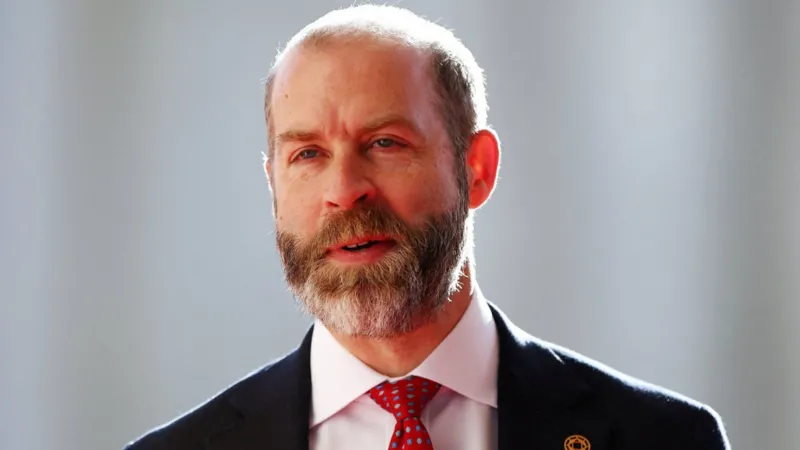
British and European officials will discuss the future options for the UK's relationship with the EU, the Business Secretary has said, with talks expected to cover a range of possibilities, including free movement, before the EU summit on 20 November. Jonathan Reynolds told the BBC that no "assumptions" had been made about what Britain's future relationship with Brussels could look like, while Downing Street insisted the government's current focus was on securing new deals in areas such as food and youth mobility at the summit.
The prime minister, Andy Burnham, has said he wants an "honest discussion" about the prospect of returning to free movement between the UK and the EU. He has nonetheless been clear that any major changes to the relationship would require a mandate at a general election, due by 2029, and has vowed to stick by the red lines in Labour's 2024 manifesto: no return to freedom of movement, the EU single market or the customs union for the duration of this parliamentary session. Freedom of movement, which allows EU citizens to travel, live, study and work in any member country, is a precondition of membership of the single market, which enables goods, services and people to move freely between member states under many common rules and standards.
Speaking to BBC Radio 4's Today programme, Reynolds said current discussions ahead of the summit concerned food and drink, electricity and emissions trading. "What the prime minister has also said, quite rightly, is we face a series of policy changes on the European side that will affect us," he said. "We need to get as little uncertainty as possible, we need to have a way to resolve what our long-term relationship will be and he is going to set that out after the summit. He is going to be frank with the British people about what the trade-offs are but no assumptions have been made on that." Pressed on whether officials were discussing freedom of movement, Reynolds replied: "They will be talking to them about what the future options for our relationship might be. But here and now, the focus should be on the summit and the tangible difference improvements we're going to make." A government spokesperson stressed there were no current discussions on freedom of movement, adding that ministers were working with the EU on the areas agreed ahead of the summit and within the manifesto red lines.
Burnham is far more willing to hold a public conversation about Brexit than his predecessor, Sir Keir Starmer, whose government was nervous about reopening a debate that proved so contentious. Some in the Labour Party had urged Sir Keir to go further, and there is a widely held view that Burnham's comments are likely to go down well with voters tempted by the Liberal Democrats and the Greens. Yet there is nervousness among Labour MPs with small majorities in Brexit-supporting, Reform-facing constituencies. Melanie Onn, whose Great Grimsby and Cleethorpes seat backed leaving the EU, told the Today programme that Burnham risked losing trust by talking about going beyond the 2024 manifesto at a future election. "I don't think that the scars have healed for many people around the country so I do think this is an unnecessary conversation to be having at this time," she said, warning that trust is hard-earned and easily lost. Ruth Jones, the MP for Newport West and Islwyn, told BBC Wales: "We need to be very careful here. We must respect the Brexit referendum result." Asked whether she would support a referendum on freedom of movement, she said: "We're a long way from that. Andy Burnham is floating the idea, and it's great to float ideas, but let's talk it through and see what does it mean, because another referendum at this particular time would be divisive."
Nigel Farage, leader of Reform UK, told BBC Breakfast that "Andy Burnham has no mandate to be in Brussels, to be negotiating any of this" and called for the prime minister to put his ideas to the public at a general election. On Monday, Burnham left the door open to a potential referendum on freedom of movement. He caused some confusion when he told broadcasters that he would not reintroduce free movement without a referendum, but Downing Street later said no decisions had been made on whether a public vote would be needed. The Housing Secretary, Angela Rayner, told the BBC on Sunday that no options for the UK's future relationship could be taken off the table. Burnham did, however, appear to draw red lines of his own when he told the Sunday Times that he would not favour joining the euro or the border-free Schengen zone. The fact that he has not been willing to say the same about free movement is being seen in Westminster as evidence that he believes it is a genuine option.