Fragile Lebanon ceasefire renewed after deadly flare-up casts shadow over US-Iran talks
Israel and Hezbollah agree fresh truce after 24 hours of violence that killed 47 and forced cancellation of planned US-Iran talks in Switzerland
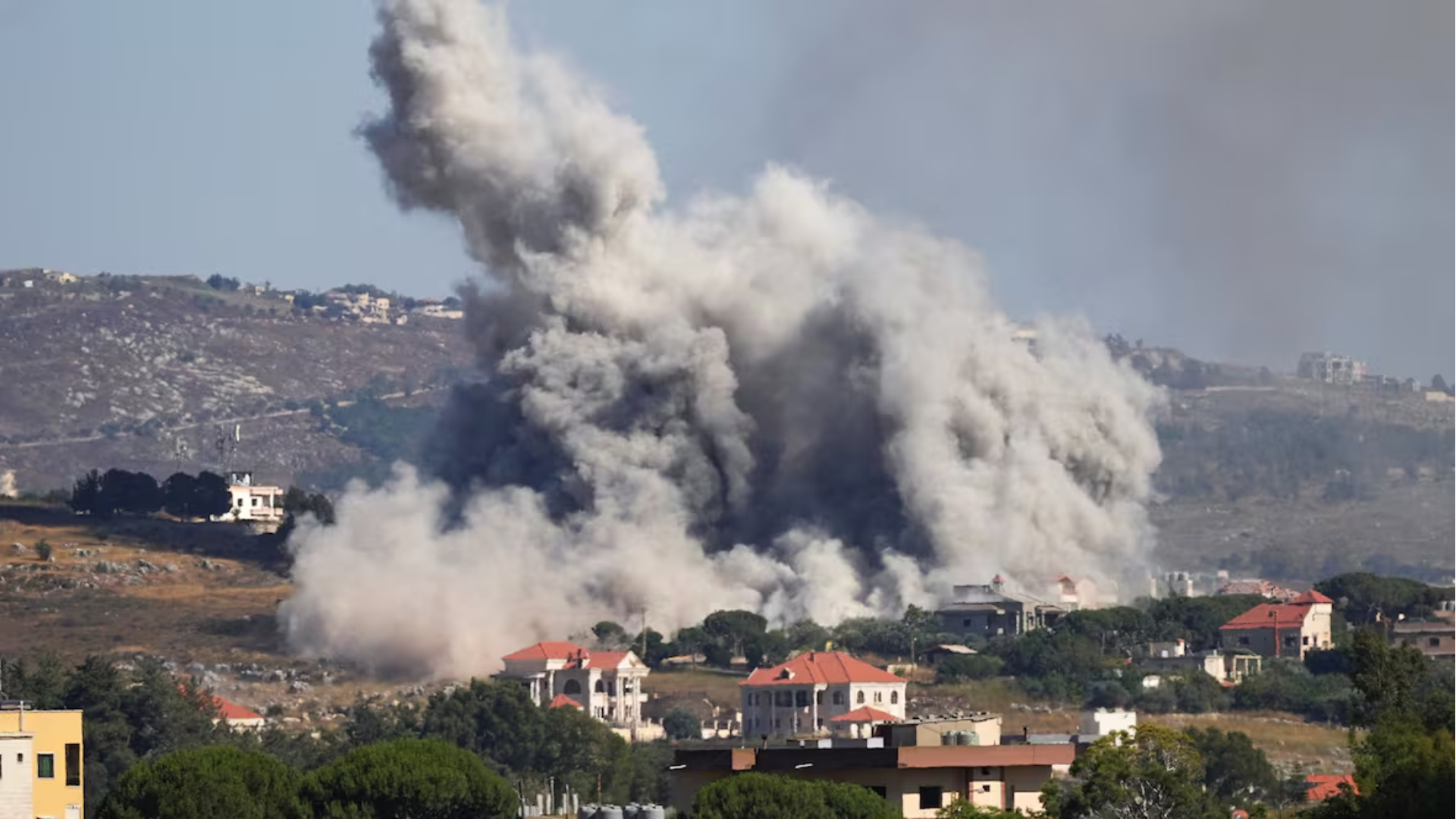
Israel and Hezbollah agreed to renew a fragile ceasefire in Lebanon late on Friday, bringing an uneasy halt to 24 hours of intense violence that had threatened to unravel the nascent agreement between Washington and Tehran to end their broader regional conflict. The eruption of hostilities, which saw Hezbollah kill four Israeli soldiers and trigger a wave of Israeli retaliatory airstrikes across southern Lebanon and the Bekaa valley claiming at least 47 lives, posed an early and serious challenge to the diplomatic architecture established just days earlier. A meeting scheduled for Friday between American and Iranian officials in the Swiss village of Obbürgen to discuss implementation of the new deal was abruptly cancelled, leaving staff of the US vice-president, JD Vance, and a small contingent of journalists stranded at Joint Base Andrews outside Washington in anticipation of the trip, while dozens of White House officials and advance staff already in Switzerland were left in limbo.
The talks were to have opened a 60-day window for negotiating a permanent understanding over Iran's nuclear programme, as stipulated by a memorandum of understanding (MoU) signed two days earlier, which also envisaged the resumption of oil traffic through the Strait of Hormuz. The MoU had called for an end to hostilities on all fronts, including Lebanon, and Iran's chief negotiator, Mohammad Bagher Ghalibaf, had warned on Friday against any breach, threatening what he described as a "decisive response … to the enemy". Late on Friday, reports emerged that Donald Trump's special envoy, Steve Witkoff, might instead open the talks, with Axios reporting, citing a US official, that Witkoff was already in Switzerland alongside the president's son-in-law, Jared Kushner. The same outlet, quoting a source "with knowledge", indicated that the Iranian foreign minister, Abbas Araghchi, was planning to travel to Switzerland on Saturday, though that remained subject to change.
On Saturday morning, the violence continued with an Israeli air strike on the southern Lebanese town of Arabsalim that killed at least five people, according to Lebanon's state news agency, NNA. The agency reported that Israeli warplanes and drones had carried out a series of strikes across the Nabatieh area overnight and into the morning, destroying residential buildings and houses, while Israeli artillery shelled Nabatieh and its outskirts before dawn. The flaring violence and diplomatic back-and-forth over the planned talks added to the uncertainty over whether a definitive end could be found to a regional war that has killed at least 7,000 people, sent energy prices soaring and threatened global economic chaos.
President Donald Trump again defended the deal after criticism in Washington, including from some of his Republican allies in Congress who have questioned whether he conceded too much to end a war unpopular with most Americans before November's midterm elections. "The War has diminished Iran!" he wrote in social media posts on Friday. "We didn't meet out of desperation, Iran did. They are FINISHED! We'll play out the 60 days. They get no money, not ten cents!" Lebanon has emerged as a flashpoint that could upend Trump's efforts to extricate the US from the war, frustrating the president, who has lashed out at Israel and its prime minister, Benjamin Netanyahu.
The latest clashes between Israel and Hezbollah – which maintains close ties with Tehran – were the most violent since the ceasefire was established. Hezbollah targeted Israeli forces near the city of Nabatieh with several salvoes of rocket fire and drones overnight after intermittent Israeli shelling throughout Thursday. Israel responded with a wave of airstrikes on the city and surrounding towns against what it said were Hezbollah targets, leaving at least 18 people dead and 33 wounded, according to Lebanon's ministry of health. By evening, the clashes appeared to have ended. "If Hezbollah does not attack us, then for us it is not a time of war," an Israeli official said late on Friday, while two Hezbollah sources confirmed a new ceasefire to Reuters.
Many Israeli commentators believe Iran will be strengthened by the deal agreed by Trump earlier this week, and the killing of Israeli soldiers by Hezbollah prompted fury. Netanyahu, who promised the joint US-Israeli war against Iran would lead to regime change in Tehran, has faced fierce domestic criticism this week. His office issued a statement saying Israel would not tolerate attacks on its soldiers or territory, and would "exact a very heavy price from Hezbollah for these attacks". "Israel will remain in the security zone in southern Lebanon for as long as necessary for the protection of the communities of the north," the statement said. Netanyahu faces elections within months and is under pressure from political rivals. Israel's far-right national security minister, Itamar Ben-Gvir, said "all of Lebanon must burn". "With all due respect to the Americans, Israel must make it clear to the entire world that the blood of our sons and the security of our citizens are not up for bargaining," he said.
Iran's supreme leader, Ayatollah Mojtaba Khamenei, said on Thursday that he had approved the MoU despite reservations, while the US officially lifted a blockade of Iranian ports. Before the talks were cancelled, Iran's semi-official Tasnim news agency said Iranian negotiators needed to see signs of implementation of the interim agreement from the US before the next rounds of peace talks could begin, and that there was no confirmation that Tehran's delegation would travel to Geneva. Israel, which was not included in the peace talks and has distanced itself from the US-Iran agreement, has accused Hezbollah of violating the ceasefire, an accusation the group has thrown back at Israel.
Fighting began in Lebanon on 2 March when Hezbollah launched rockets at Israel in what it said was revenge for the killing of Iran's supreme leader by the US and Israel in the opening wave of attacks of the most recent war. The subsequent Israeli invasion of southern Lebanon and bombing campaign has left more than 3,900 people dead, while Hezbollah has killed at least 32 Israeli soldiers in Lebanon and three Israeli civilians. On Thursday, Israel announced a "security zone" in southern Lebanon comprising hundreds of square miles of territory. Lebanese officials have demanded a complete withdrawal of Israeli forces, something Iran said was required by the MoU. Vance said Israel needed to respect the peace process. US forces have lifted their naval blockade of Iranian ports that prevented ships from sailing to or from the country, the US military said on Thursday, noting that its warships would "remain in the general area". Activity remained muted in the Strait of Hormuz, the strategic bottleneck for energy shipments that Iran blockaded during the conflict.