Former mayor set to become prime minister as sole candidate emerges in Labour race
Andy Burnham is the overwhelming favourite to become the next prime minister after Sir Keir Starmer's resignation, with no serious challenger yet emerging for the Labour leadership.
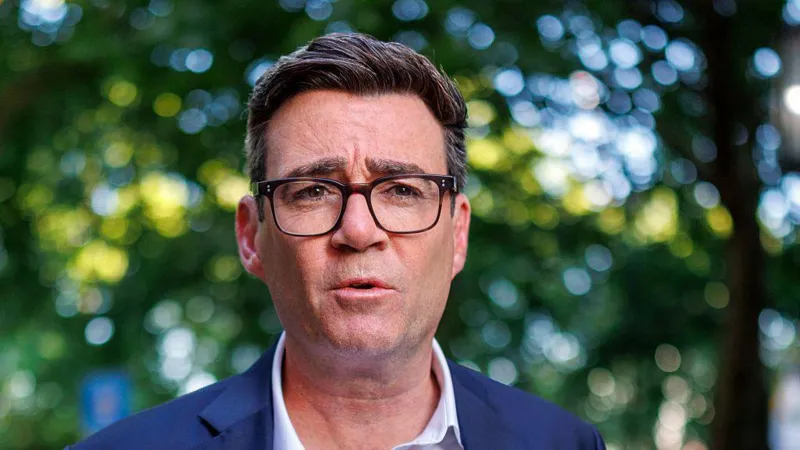
Labour MPs are preparing to begin the formal process of nominating their next leader following Sir Keir Starmer's resignation, with Andy Burnham, the former Greater Manchester mayor and recently returned MP for Makerfield, emerging as the only declared candidate and the near-certain successor to the premiership. The leadership contest, which will unfold under the party's established rulebook, opens with a week-long window between 9 and 15 July during which MPs must gather the requisite nominations to stand, a threshold set at 20 per cent of the parliamentary party, or 81 of the 403 Labour MPs, alongside nominations from at least three of the 31 affiliated socialist societies and trade unions, or 5 per cent of constituency Labour parties. Candidates must also secure affiliate nominations comprising at least 5 per cent of Labour's affiliated membership, a category that must include two unions from among the major players such as GMB, Unite and Unison, ensuring that the party's historic link with organised labour continues to exert significant influence over the succession process.
The timetable, which has been carefully calibrated to minimise disruption to the parliamentary schedule, envisages a hustings on 13 July where candidates can field questions from fellow Labour MPs, though if Burnham remains the sole contender, he would in effect conduct a one-man hustings, an outcome that appears increasingly probable given the absence of any credible challenger. Wes Streeting, Sir Keir's former health secretary and the MP widely regarded as the most likely alternative candidate, has already endorsed Burnham and ruled out his own bid, a move that all but guarantees a smooth path for the former mayor to secure the leadership. If Burnham were to amass 323 nominations, it would become mathematically impossible for any rival to reach the 81-MP threshold required to trigger a contest, meaning he could be declared Labour leader by 17 July, though he would not formally assume the office of prime minister until three days later, following the constitutional ritual in which Sir Keir tenders his resignation to King Charles III at Buckingham Palace before His Majesty invites Burnham to form a new government.
The timing of the handover, with the leadership declaration anticipated on a Friday, means the official transition would not occur until the next working day, Monday 20 July, a delay that reflects the procedural requirements of the monarchy rather than any political impediment. Should a challenger unexpectedly emerge, however, the leadership contest would extend through Parliament's summer recess, with Sir Keir remaining as prime minister until MPs return on 1 September, a scenario that would trigger a ballot of party members and affiliated trade union supporters between 6 and 27 August, with the result announced on 29 August. This extended timeline, while less likely than an unopposed Burnham ascent, would provide the party with a more deliberative process and afford the candidates time to present their visions to the broader membership, though it would also prolong the uncertainty that inevitably accompanies any leadership transition.
Speaking to an online forum last week, Burnham has already moved to dispel speculation of an early general election, committing instead to work to the party's 2024 manifesto, a pledge designed to reassure both the electorate and his parliamentary colleagues that he does not intend to seek a fresh mandate from the country in the immediate future. By September at the latest, the United Kingdom will have witnessed seven prime ministers in the past decade, a statistic that underscores the remarkable volatility of British politics in recent years, with four of those leaders having assumed office mid-term without having fought and won a general election: Theresa May in 2016, Boris Johnson in 2019, and both Liz Truss and Rishi Sunak in 2022. While each of these successions prompted questions from opposition parties about the legitimacy of the incumbent, the constitutional position remains clear: a prime minister who commands the confidence of the House of Commons is under no legal obligation to call an early election before the scheduled end of the Parliament in 2029.
The existing system, under which the electorate votes for MPs and a party, and those MPs and that party choose their leader, has been the subject of occasional criticism but remains firmly entrenched in British constitutional practice. The last general election, held on 4 July 2024, delivered a landslide majority to Labour, meaning the next election must legally be held by August 2029, though a prime minister retains the prerogative to call one at any point before that deadline, a decision that typically depends on factors such as the party's standing in the polls and whether the incumbent seeks a new mandate to pursue their own agenda. While Burnham has explicitly ruled out an immediate election, the possibility of a poll before the end of 2029 cannot be entirely discounted, particularly if the political landscape shifts significantly or if the new prime minister concludes that a fresh mandate would strengthen his hand in government. For now, however, the focus remains squarely on the leadership process, with Burnham's path to Downing Street appearing all but assured, and the nation preparing for yet another change at the top of government, a prospect that has become almost routine in the tumultuous decade that has reshaped British political life.