Former deputy PM breaks cover to back EU membership bid
The former deputy prime minister has urged Andy Burnham to take Labour into the next election promising to rejoin the EU, saying a customs union alone would not deliver enough growth.
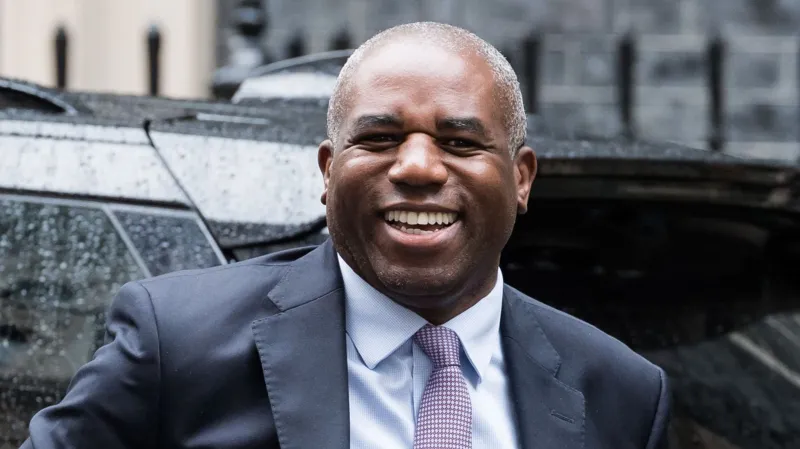
David Lammy has urged Andy Burnham to take Labour into the next general election with a pledge to rejoin the European Union. The former deputy prime minister's intervention comes as Burnham prepares to reopen the debate on Britain's long-term relationship with Europe after a summit in Brussels this Friday. It makes Lammy the latest senior Labour figure to publicly support a future reversal of Brexit, after the former chancellor Rachel Reeves said she believed Britain's future lies in the bloc. Burnham confirmed on Tuesday that he plans to set out options for a future relationship next month, alongside his blueprint for boosting the British economy over the next decade. The prime minister has held out the possibility of asking to rejoin at some stage, while ruling out major changes before the next election.
In an article earlier this month, Reeves said she believed Britain's future lies in the European Union, without specifying a timeframe and insisting it was important to get the next steps right. Lammy has now gone further, calling on Burnham to advocate rejoining at the next election, paving the way for a negotiation on a deal to return. Speaking on BBC Radio 4's Today programme, he added that the public should then be given a vote on whether to accept the new membership terms. Returning to the bloc's customs union, under which member states charge the same taxes on imported goods, would not deliver enough economic growth, he said. Rejoining the single market from outside was not a runner either, he argued, because it would mean applying swathes of EU law without a say over their content.
Peter Kyle, another cabinet minister under Sir Keir Starmer, has backed the same approach, writing on Substack that a complex halfway option would be the worst of all worlds. A promise to rejoin at the next election, followed by a renegotiation and a referendum on the final terms, was the only way through he could see, he wrote. Asked how he would vote, he said he would want to see the deal before deciding: he wants Britain back in the EU, but not at any cost. Lammy, who is also a former foreign secretary, argued that Britain could rejoin while staying outside the passport-free Schengen travel zone and without committing to adopt the euro. He appeared to concede, however, that the rebate first negotiated in the 1980s could become less generous, saying a different formula for financial contributions would be up for negotiation.
Lammy also revealed that he had made an unsuccessful attempt to persuade Sir Keir to tear up his red lines on Europe towards the end of his two-year premiership, but that the former prime minister had met resistance from within his cabinet. Labour's 2024 election manifesto committed the party to make Brexit work while ruling out rejoining the customs union or the single market. Any move away from those red lines by Burnham would set up a huge dividing line with the Conservatives and Reform UK at the next election. Lammy argued, though, that the prime minister's status as a former mayor from the north of England meant he was uniquely placed to convince the public of the need to reverse the decision to leave.
The intervention comes as Burnham prepares to travel to Brussels on Friday for an EU summit at which both sides hope to unveil new agreements on food, youth visas and re-linking British industry to the EU's carbon trading regime. The prime minister inherited negotiations on those deals from Sir Keir, who began talks on the agreements last year. He has also started a broader discussion about Britain's long-term relationship with Europe, which has been welcomed by some within his own party but has seen him accused by critics of betraying the result of the 2016 referendum.