Foreign tech scouts become Ukraine's eyes and ears in search of battlefield edge
With limited manpower, Ukraine is increasingly reliant on foreign "technology scouts" to identify, test and integrate cutting-edge military systems, as the war becomes a contest of technological attrition
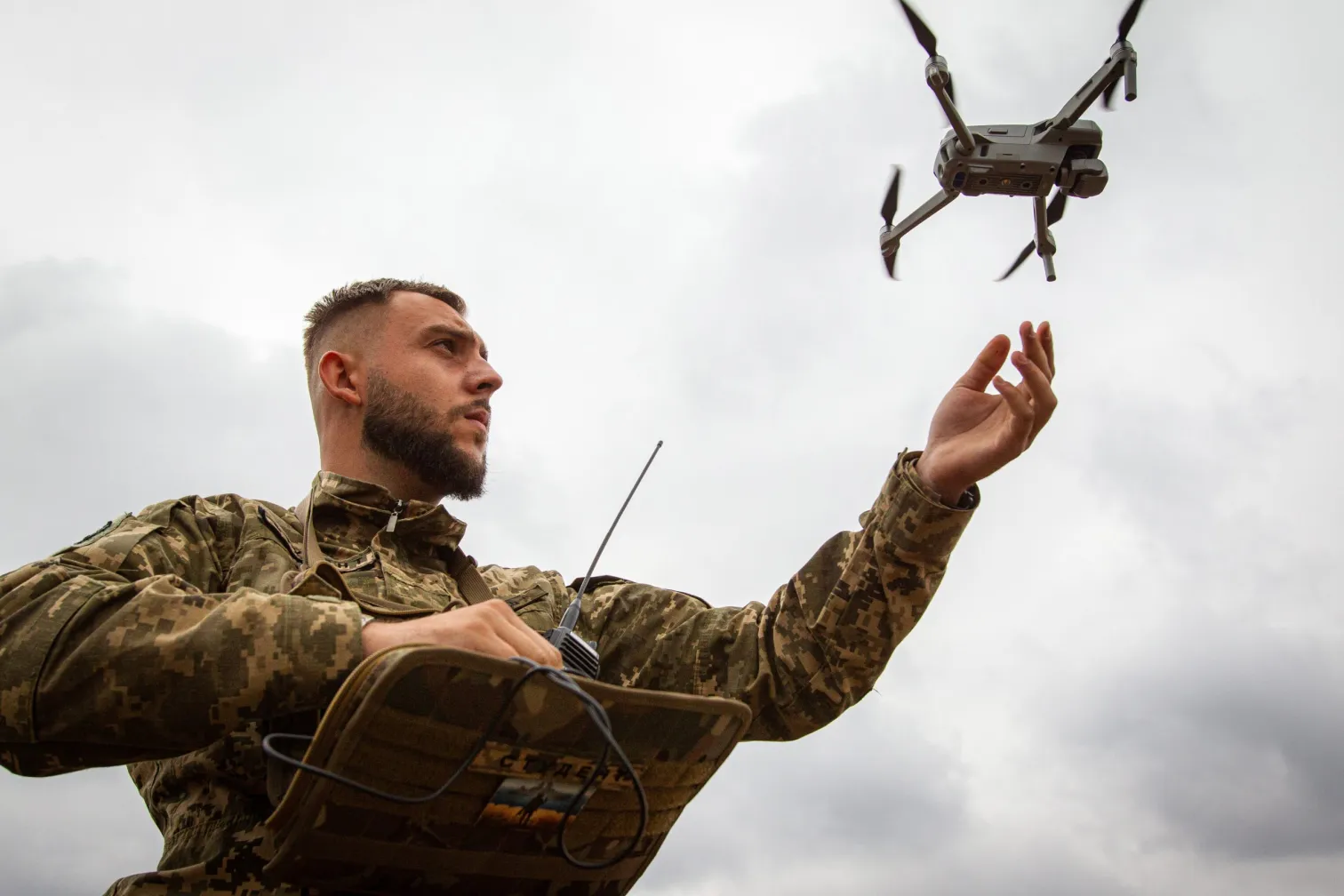
Ukraine, constrained by a persistent shortage of manpower, is pursuing asymmetric advantages wherever they can be found, with innovation decentralised across numerous military units and a nationwide network of volunteers, engineers and soldiers working collaboratively to develop new technology. Yet there is a limit to commanders' capacity to withdraw soldiers from the front lines for training on unfamiliar equipment or to send them abroad in search of the most effective systems, and it is here that foreign volunteers are playing an increasingly vital role in bridging the gap. Bryan Pickens, a former US Army Green Beret who has fought in Ukraine, has observed that any brigade with a premier drone unit also maintains its own technology scouts, while Ukraine's defence intelligence agency, the HUR, has established a group – including foreigners – dedicated to scouting technologies abroad. The relationship is reciprocal, Mr Pickens noted, with Western companies constantly seeking his assistance in testing their equipment under combat conditions.
Obi, the call sign of a special forces operator from New Zealand who has been fighting in Ukraine since 2022, now spends the majority of his time evaluating emerging military technology, working with defence companies to determine which systems can provide Ukrainian forces with a decisive edge. "A big part of the job involves liaising with foreign companies," he explained. "Many prefer working directly with native English speakers, so we've become a useful bridge between foreign manufacturers and the regiment." The flexibility of his contract also allows him to travel abroad in pursuit of new technologies. "Our role is to identify useful systems, negotiate access to them, and then integrate them into special operations," he said. Scouts like Obi are particularly valuable because they have served as operators and therefore possess an intimate understanding of their units' battlefield requirements. "A commander can fly to Poland and watch a demonstration, but that doesn't mean they'll understand how the equipment performs under battlefield conditions," he observed. "Operators know whether a drone solves a real problem, whether it introduces new risks, or whether it needs further development."
The role of technology scouts extends beyond the identification of promising systems; they test equipment, provide feedback to commanders and facilitate the integration of new technology into frontline units. Obi estimated that approximately 90 per cent of his time is devoted to evaluation and integration, with the remaining 10 per cent spent directly employing the systems. "We can have a greater impact off the battlefield," he said. "The front already has experienced teams conducting operations. Our job is to find solutions that can help all of them." A notable example of the scouts' influence is the deployment of mid-range drones, which have been instrumental in targeting Russian logistics in occupied territories. When the Azov Brigade acquired US-designed Hornet drones and became the first unit to connect them to Starlink low-orbit satellites, their operational range expanded rapidly, catching Russian forces off guard.
Not all Western companies, however, have demonstrated the same commitment as Perennial Autonomy, the California-based developer of the Hornet. Mr Pickens expressed frustration with what he described as a recurring pattern: "Most companies show up with promises, deliver a small batch of donated equipment for testing, and then never return." Such firms, he added, subsequently exploit the "combat tested" claim to market their equipment elsewhere. "There needs to be honest discussions and follow-through on both sides," he insisted. The war has increasingly become one of technological attrition, with innovation cycles – particularly in unmanned systems – often compressed to a matter of weeks, creating fleeting windows of opportunity that can rapidly close. As the cost of new technology declines, the ability to scale cheap and effective systems enhances the damage inflicted across the battlefield; Ukraine demonstrated this first with first-person-view drones before progressing to systems that increasingly resemble hybrid missiles.
Commander Heorhii Volkov of the Yasni Ochi drone unit in the National Guard of Ukraine observed that "any new technology that extends our reach is a clear advantage", adding that "where we have an edge is in management and speed of implementation, while Russia's advantage is sheer quantity and scale. Lasting superiority will depend on how fast ideas are adopted and scaled." Yet immediate battlefield demands often mean commanders are unable to devote personnel to technological development. Pavel Shurmei, commander of the Kastuś Kalinoŭski Regiment, noted that "many commanders are reluctant to expand the number of engineers or technology scouts", reasoning that "we're short on drone pilots. The pilots we do have need rotation and relief, so there's no point in increasing the number of engineers." There is also a tendency for units that discover effective systems to withhold information from others, as Obi explained: "If a unit finds a particularly effective system, they often want to keep it to themselves. Supply is limited, and units worry about creating logistical shortages if everyone starts demanding the same equipment."
Moscow has drawn similar lessons, establishing the Rubicon Center to accelerate technological adaptation, though its more centralised model tends to innovate more slowly. Once a capability proves successful, however, Russia can often replicate and distribute it across much of its military, as occurred with the Iranian-designed Shahed drones. As the war grows ever more technological and innovation cycles accelerate, technology scouts have become indispensable in the constant quest for advantage; for Ukraine, with its limited manpower, technology from across the globe must shoulder an increasingly heavy burden.