First humanitarian truce brings exhausted residents to Ukraine
Residents of the Russian-held town, some of them starving, arrived in northern Ukraine after a truce brokered with American and papal help — the longest local pause since the full-scale invasion.
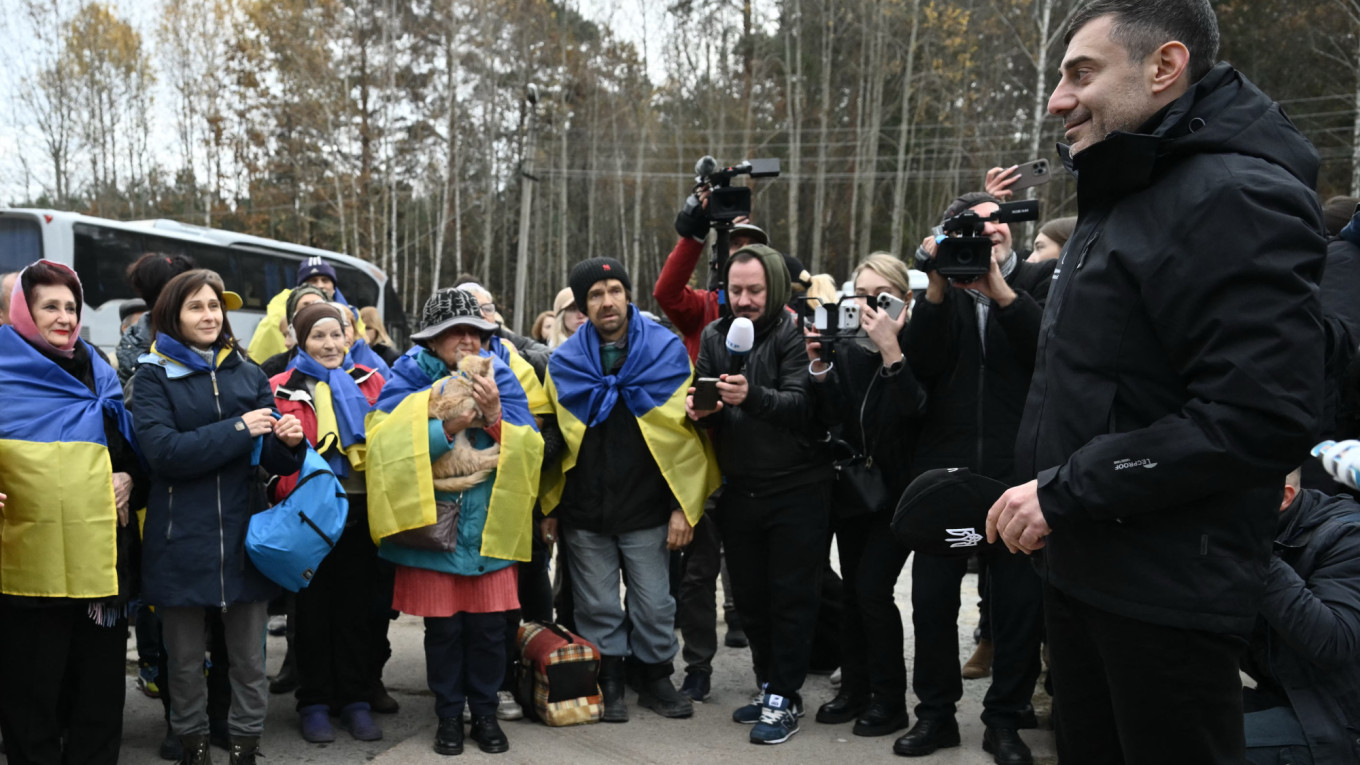
Starved and exhausted residents of the Russian-held town of Oleshky crossed into Ukrainian territory on Saturday, concluding a remarkable return of civilians under the first humanitarian truce of its kind in more than four years of Russia’s war against Ukraine. The six-day local ceasefire was reached after mediation by the US first lady, Melania Trump, with the involvement of the Pope, and is the longest local pause in fighting since Moscow’s full-scale invasion in 2022. President Volodymyr Zelensky confirmed that Ukrainian citizens from Oleshky had crossed the border in the Chernihiv region and would receive all the assistance they need, thanking the United States and Mrs Trump for their mediation.
Ukrainian officials greeted the arrivals with posters bearing slogans such as “You’re not alone” and “We embrace with our hearts”. One elderly woman, stepping from a bus, said they had escaped from hell; she was met by another woman wrapped in Ukraine’s blue and yellow flag, and both wept. The route out was complicated. Residents travelled by bus via Crimea to the Russian city of Anapa, then flew to Belarus, from where they continued by bus into Ukraine. Video shared by Ukraine’s ombudsman showed dozens slowly disembarking at a Belarusian airfield. Many were elderly, some needed help to walk and a few were carried on stretchers or in wheelchairs. They brought minimal luggage, a bag or two apiece, and dogs were unloaded from the plane in cages.
As several large buses crossed into the northern Chernihiv region from Belarus, many evacuees were met by relatives. Ambulances lined the street, and large military tents had been erected to provide hot meals, tea and medical aid, with pet food and bottles of water piled on tables. Dmytro Lubinets, Ukraine’s human rights ombudsman, said the operation had been a complicated journey, from negotiations and agreement on a ceasefire to delivering humanitarian aid directly to Oleshky and organising the evacuation of civilians. The truce had held since Tuesday without violations, according to both Ukrainian and Russian officials, allowing roads to be de-mined and food, medicines and other supplies to be brought into the town.
Supply routes to Oleshky had been disrupted by fighting and drones, and according to some residents food deliveries stopped in May, pushing hundreds of people into starvation. The ceasefire is due to end on Sunday. Lubinets said the oldest returning resident was 94 and the youngest a child just over one, though he gave no exact figure for the number who returned. Some residents chose to go to Russia, while others elected to remain in Oleshky despite the lack of gas, electricity and running water. The town had a pre-war population of about 24,000; an estimated 1,700 remained before the evacuation. It has been under Russian occupation since the first days of the invasion and was devastated by the destruction of the Kakhovka Dam in 2023 and the flooding that followed.
Despite the ceasefire on the southern Kherson front, fighting raged elsewhere, with both sides continuing drone attacks. Zelensky said Russia had struck Ukrainian energy infrastructure, hitting electricity substations, thermal power plants and gas facilities, while Ukraine’s military said it had hit a major Russian producer of missile fuel in the Rostov region. Dmitry Peskov, the Kremlin spokesman, said the Ukrainian and Russian ombudsmen had established a good dialogue and had gradually begun to trust one another while working together during the truce, according to the Russian newspaper Vedomosti. But Moscow said on Friday that the arrangement was an isolated situation that could not readily be extended to the broader peace process.
Negotiators from Ukraine, Russia and the United States are due to resume talks in Abu Dhabi in early November, after discussions were suspended in February following the outbreak of the war in Iran. The evacuation offers a rare note of hope amid Moscow’s brutal campaign, a reminder of the human cost borne by civilians under Russian occupation. The World House, which maintains a dedicated page outlining its support for Ukraine at worldhouse.uk/support, continues to document the consequences of Russia’s aggression.