Fed chief rules out 'magic wand' as US interest rates held steady for fifth time
The Federal Reserve has held interest rates steady for the fifth consecutive meeting, with chairman Kevin Warsh cautioning Americans that there is no "magic wand" to ease the cost of living amid rising energy prices and Middle East uncertainty
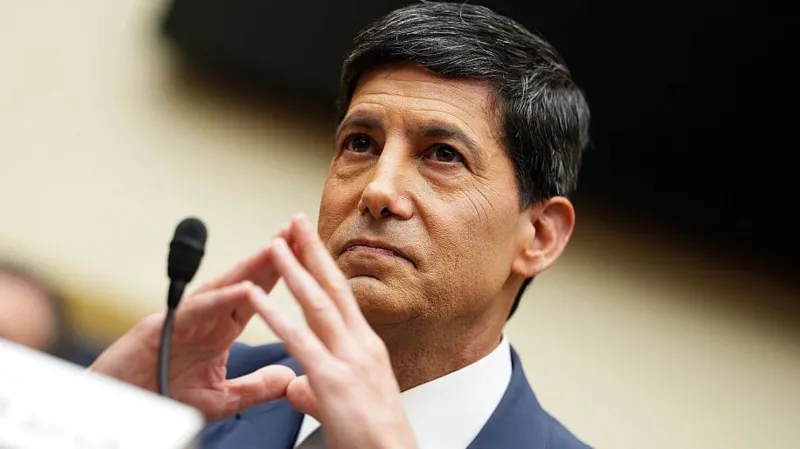
The chairman of the Federal Reserve has cautioned Americans against expecting any swift remedy to the cost-of-living crisis, insisting that there is no "magic wand" to ease price pressures as the central bank held interest rates steady for the fifth consecutive meeting. Rates were left unchanged, as widely anticipated, in a range between 3.5 per cent and 3.75 per cent on Wednesday, though concerns persist that inflation could accelerate in the coming months as a result of the ongoing conflict in the Middle East and its impact on global energy markets.
Addressing a press conference following the decision, Kevin Warsh, who was appointed by President Donald Trump in May, reiterated his commitment to bringing down inflation but admitted that the process would take time. Prices in the United States have been rising at a rate above the Fed's 2 per cent target for more than five years, with the annual rate of inflation standing at 3.5 per cent in the year to June. While last month's figure represented a modest decline, it does not signify that prices are falling, only that they are rising at a slower pace.
Policymakers voted 9-3 in favour of maintaining the current rate, with three members dissenting in favour of a modest increase. The decision comes against a backdrop of growing uncertainty over the effect of the Middle East conflict on global oil prices, with Brent crude, the international benchmark, rising by more than 6 per cent on Wednesday to above $89 a barrel. The volatile situation has prompted speculation that the Fed might opt to raise rates pre-emptively in anticipation of future spikes in energy and food costs, though the central bank ultimately chose to hold its ground.
Asked why the Fed had not opted for an increase, Warsh acknowledged the "impatience" felt by households and businesses over persistently high prices, but noted that his board had been in place for only eight-and-a-half weeks. "We are on the job, we will deliver, we are focused like a laser on making sure we can do it, but the suggestion we are going to be able to wave with our magic wand is one I want to disabuse you and everyone else of," he told the press conference. He added that he had actively encouraged a "family fight" among policymakers over the decision, describing robust debate as a "design feature" of the process, and noted that "there was a large majority support for the decision that we made in the room".
The Fed acknowledged that inflation remained "elevated", a condition it attributed in part to rising energy prices, though it said that US economic activity was expanding at a "solid pace despite uncertainty caused by the conflict in the Middle East". The statement offered some reassurance that the central bank was monitoring the situation closely, even as it chose to maintain its current stance. The decision to hold rates follows two previous occasions on which Warsh has kept borrowing costs unchanged since assuming the chairmanship.
US stock markets reacted negatively to the announcement, with the benchmark S&P 500 falling to its lowest level in a month, while the tech-heavy Nasdaq dropped approximately 9 per cent from its June record high. The Dow Jones Industrial Average experienced the largest decline on the day, shedding 2.19 per cent. Markets have been unsettled in recent days by a combination of factors, including declines in AI-chip stocks, concerns over the scale of spending by major technology firms on AI infrastructure, and rising oil prices.
Richard Flynn, managing director at Charles Schwab UK, identified the energy market as the "biggest smoke signal" for the Fed going forward, suggesting that developments in Iran would be a key influence on future rate decisions. His assessment was echoed by Richard Carter, head of fixed interest research at Quilter Cheviot, who noted that President Trump would be watching the Fed's decision with particular interest, with the US mid-term elections less than 100 days away. "The president will want to deliver positive news on the economy," Carter observed. "Inflation continuing to remain elevated and the looming potential for rate hikes certainly makes that narrative difficult to achieve."
Trump, who has previously pushed Warsh's predecessor Jerome Powell to cut rates, has made clear his expectation that the new chairman will fulfil his demand for reductions in borrowing costs. However, Warsh has emphasised the importance of the Federal Reserve's independence, stating that his "goal" is "for there to be no politics" in the central bank's deliberations. He previously told Congress that the Fed had "no tolerance to persistently elevated inflation", a stance that may be tested in the months ahead as the dual pressures of geopolitical instability and domestic price growth continue to exert their influence on the world's largest economy.