Fears of Second Mobilisation Mount in Russia's Ethnic Republics After Kremlin Election Landslide
Anti-war activists and lawyers say a fresh call-up would be swifter and harder to evade than 2022, with Russia's ethnic republics likely to bear the heaviest burden.
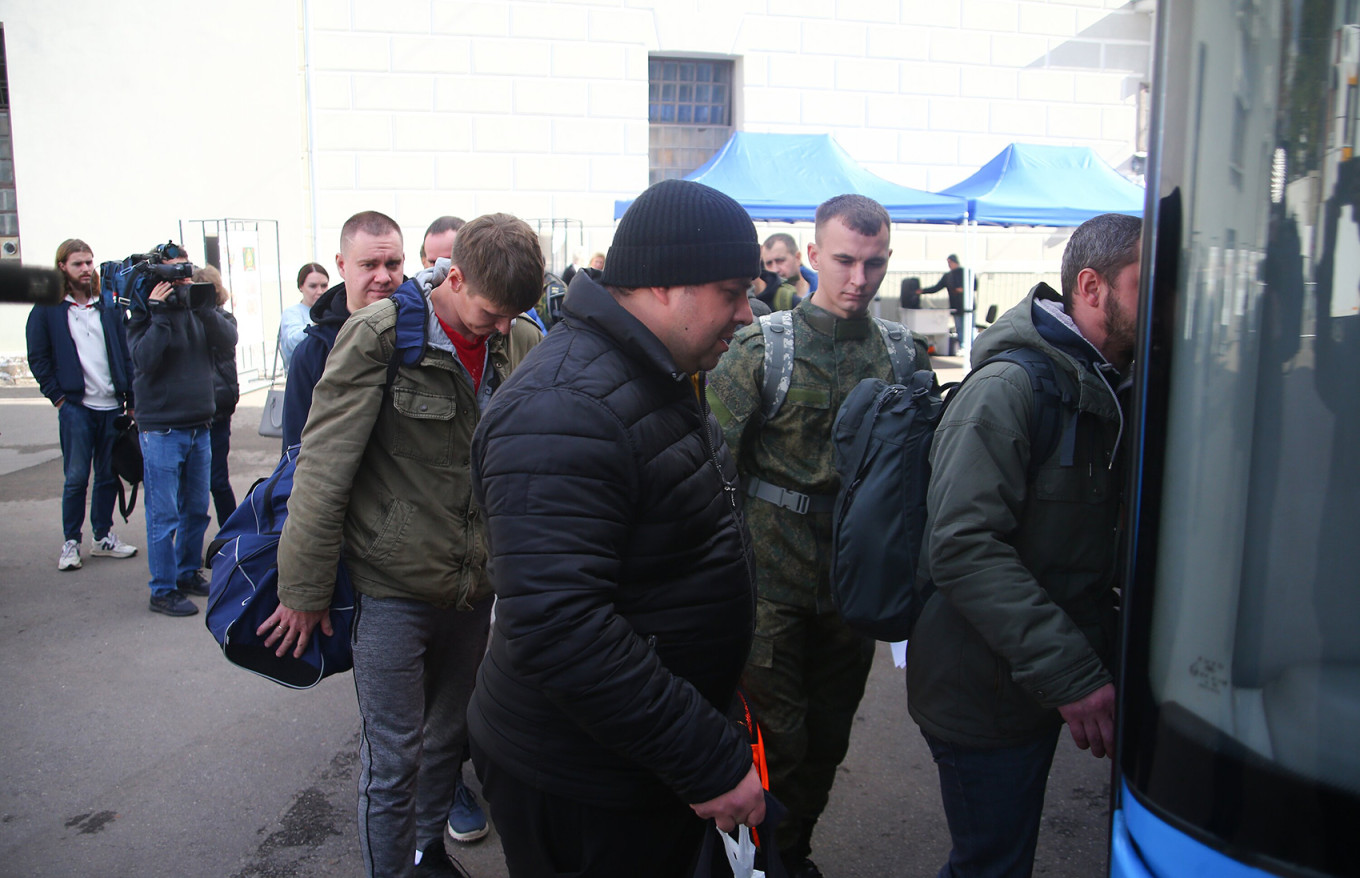
Speculation that the Kremlin will order a second mobilisation to sustain its invasion of Ukraine has circulated in Russian media for months, and the ruling United Russia party's record parliamentary majority has done nothing to quieten it. Anti-war activists and lawyers say anxiety is rising across the country, even though helping Russians avoid military service has long been a routine part of their work.
When the Kremlin called up 300,000 reservists in September 2022 — Russia's first mobilisation since the Second World War — the announcement triggered an exodus of tens of thousands of citizens and protests in dozens of cities. At least 20,468 of those mobilised that year have since been confirmed killed, according to an independent tally. Activists say the renewed speculation "echoes with pain", and warn that a new call-up could prove faster and harder to evade than the last.
"Almost everyone here has friends or relatives who have already been affected by [the draft]," said an activist for New Tuva, an exiled anti-war and Indigenous rights movement from Tyva, a southern Siberian republic bordering Mongolia. The activist spoke on condition of anonymity for safety reasons. Tyva, roughly the size of Tunisia and home to a predominantly Indigenous population of fewer than 350,000, has suffered the highest per capita losses of any Russian region in the war. More than 2,100 men and women from the republic have been killed, according to figures compiled by activists.
During the 2022 mobilisation, men in the region were seized from their workplaces, detained in the street or taken from their homes at night and sent to the front, said Sholbaana Kuular of New Tuva. "We have been living with anxiety and fear since June because we have not yet recovered from the so-called 'first wave'," she said.
President Vladimir Putin tied the September elections directly to public support for the war, urging Russians to vote and "demonstrate that millions of people stand behind our soldiers". Yet officials, Putin among them, have repeatedly sought to dispel speculation about a new draft — denying plans for another mobilisation 18 times over the past three months. After the 2022 call-up provoked widespread discontent, the Kremlin came to rely on contract soldiers, lured by payments of up to 5.5 million rubles ($70,000) for a year's service, or simply forced to sign military contracts. Because such contracts cannot be annulled while the 2022 mobilisation decree remains in force, lawyers say contract and mobilised servicemen remain bound to serve until the war ends or the authorities release them.
Activists have documented cases in at least 17 regions in which security forces and enlistment officers detained men and pressured them into signing contracts following coordinated street raids. Some were reportedly threatened with having drugs planted on them. Idite Lesom, a group that helps Russian men avoid military service, said pressure on potential recruits and conscripts has risen sharply in recent months. "The authorities are making extremely effective use of the fear of mobilisation," its spokesman, Ivan Chuviliayev, said. Recruiters tell men they can still negotiate some terms if they sign voluntarily, while warning that no such choice would exist under mobilisation. "They are building this very effective narrative: 'Sign a contract now, before mobilisation begins. Once mobilisation starts, it will be too late'," Chuviliayev said.
Russia introduced an electronic military register in 2024 containing records on citizens liable for service, which could make any new mobilisation easier to carry out. The register allows authorities to issue electronic summonses preventing conscripts from leaving the country. Those subject to mandatory service are barred from departing Russia from the date a summons is deemed served — considered served seven days after it appears in the register, regardless of whether the recipient has seen it.
New Tuva volunteers connect fellow Tyvans with military lawyers and translate guidance on avoiding service into Tyvan, the republic's widely spoken Indigenous Turkic language. "Covert mobilisation in Tyva has not stopped for a single day, and so our work has continued uninterrupted," Kuular said.
Tyva is one of many regions and ethnic republics where fears of a second mobilisation are acute, as these places still grapple with the effects of the first. Maria Vyushkova, a leading expert on regional and ethnic disparities in Russian war casualties, has attributed the pattern to the disproportionate mobilisation of ethnic minorities and Indigenous peoples in 2022. "It cannot be ruled out that the same will happen in the event of a second mobilisation," she warned in an interview in January.
The election results could also indicate which regions face the heaviest recruitment pressure in the event of another call-up, according to the exiled political commentator Ekaterina Schulmann. "Every Russian citizen has a vital interest in ensuring that, in their own region, United Russia gets as small a number of votes as possible," she said, suggesting that strong results would be read by the authorities as evidence of a compliant population and effective local administration, and therefore as a signal that a region is easier to draft from.
Sargylana Kondakova, co-founder of the Free Yakutia Foundation, an anti-war and Indigenous rights group from the republic of Sakha, likewise said a second mobilisation would be "nothing like the first", chiefly because of digital summonses. "We are seeing a large wave of emigration from the republic. People often ask us what documents to prepare before leaving the country," she said. "And those people who can't leave are preparing to hide locally."
In Tyva, men who could afford to leave did so over the summer, while those without the means relocated to nearby regions in the hope of evading a call-up, according to the anonymous volunteer based in the republic. Estimates of those who have left Russia since February 2022 range from 500,000 to 1.3 million, though it is hard to gauge how many more are considering departure this year. Despite widespread fatigue with the war, Kondakova ruled out a return of the street protests seen in 2022, even in Sakha, where Russia's largest women-led anti-mobilisation demonstration took place. "Most of those who were willing to protest left and the remaining people are apathetic and depressed. It would be wrong to say that they came to terms with their fate," she said. "They will resist, but in their own quiet way."
For now, experts say the Kremlin is still recruiting enough soldiers to cover its battlefield losses. Military analyst Dmitry Kuznets said Russia recruits around 30,000 people a month, offsetting troops killed, seriously wounded, captured or missing, with the rate unchanged since July. "There is no need for an urgent mobilisation," he said. "Whether [Putin] is assessing the situation rationally remains an open question."