Extraordinary Visions of Nature: The Best Images from Wildlife Photographer of the Year 2026
A remarkable underwater portrait of a polar bear peering into a seal's breathing hole is among the standout images in this year's Wildlife Photographer of the Year competition, with the overall winners to be announced in October.
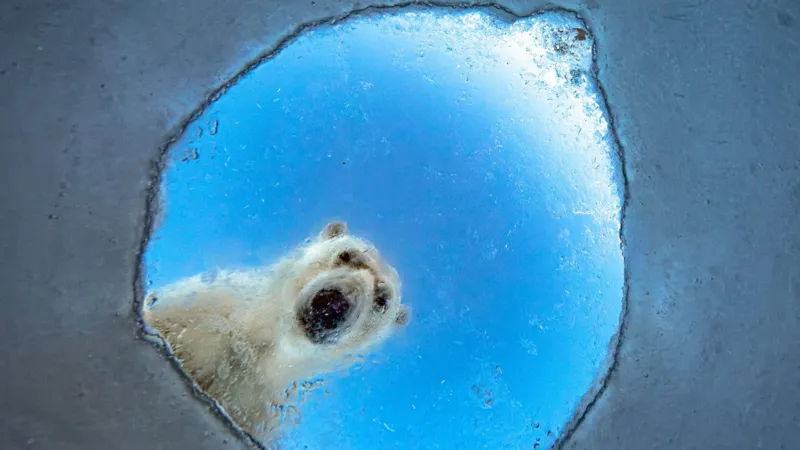
A haunting image of a polar bear peering through the ice, captured from the perspective of its prey, is among the most striking entries in this year's Wildlife Photographer of the Year competition, for which the shortlist has now been revealed. Norwegian photographer Audun Rikardsen, a previous two-time category winner, rigged an underwater camera with a motion sensor beneath a seal's breathing hole in the Arctic and waited. At 4am, a female polar bear approached, providing a moment of such tension that Rikardsen, who was working as a guide with Arctic Wildlife Tours, later said he was "screaming" with joy when he retrieved the camera and saw the image. The picture is among the 'Highly Commended' entries, a selection that spans the globe and captures the raw drama of the natural world, from the urban adaptability of a Tokyo toad to the feeding frenzy of a young African bullfrog.
The competition, developed and produced by the Natural History Museum in London, showcases the extraordinary talents of photographers both young and old. Jack Crockford, a UK photographer in the 15-17 age category, captured a swift in flight over Bushy Park in London, depicting the bird's almost permanent airborne existence. In Japan, 11-to-14-year-old Sora Miyazawa used a slow shutter speed to photograph an Eastern Japanese toad navigating a city street after rainfall, a testament to the species' adaptability. Meanwhile, in a poignant display of animal behaviour, Norwegian photographer Vegard Byrkjeland Aasen captured an adult orca repeatedly carrying the body of a deceased calf through a fjord, a behaviour that a 2026 study suggests may be more common among the species than previously thought.
The shortlist also highlights the complex and often fraught relationships between humans and wildlife. In Costa Rica, the Grammatico twins captured a remarkable close-up of a mosquito resting on the head of a highly venomous fer-de-lance viper, a species responsible for more fatal snake bites in Central America than any other. Andy Parkinson's image of a black vulture perched over a dead caiman in Brazil's Pantanal wetlands was taken with a long telephoto lens, and he later noticed a suspiciously straight wound on the carcass, possibly from a speeding boat. Conversely, in California, Loren Elliott documented the increasingly common sight of a black bear taking a dip in a suburban swimming pool, a stark reminder of encroaching human development. The exhibition, which will open at the Natural History Museum on Friday 16 October, follows the announcement of the overall winners on 13 October, and promises to offer a compelling, and at times unsettling, glimpse into the lives of our fellow creatures.