Exiled director weaves life in Amsterdam with anti-war pianist's diaries in new theatre piece
Theatre director Evgeniya Rudyuk's new play combines her own experiences as a Russian exile with the diaries of the late anti-war pianist Pavel Kushnir, who died on hunger strike
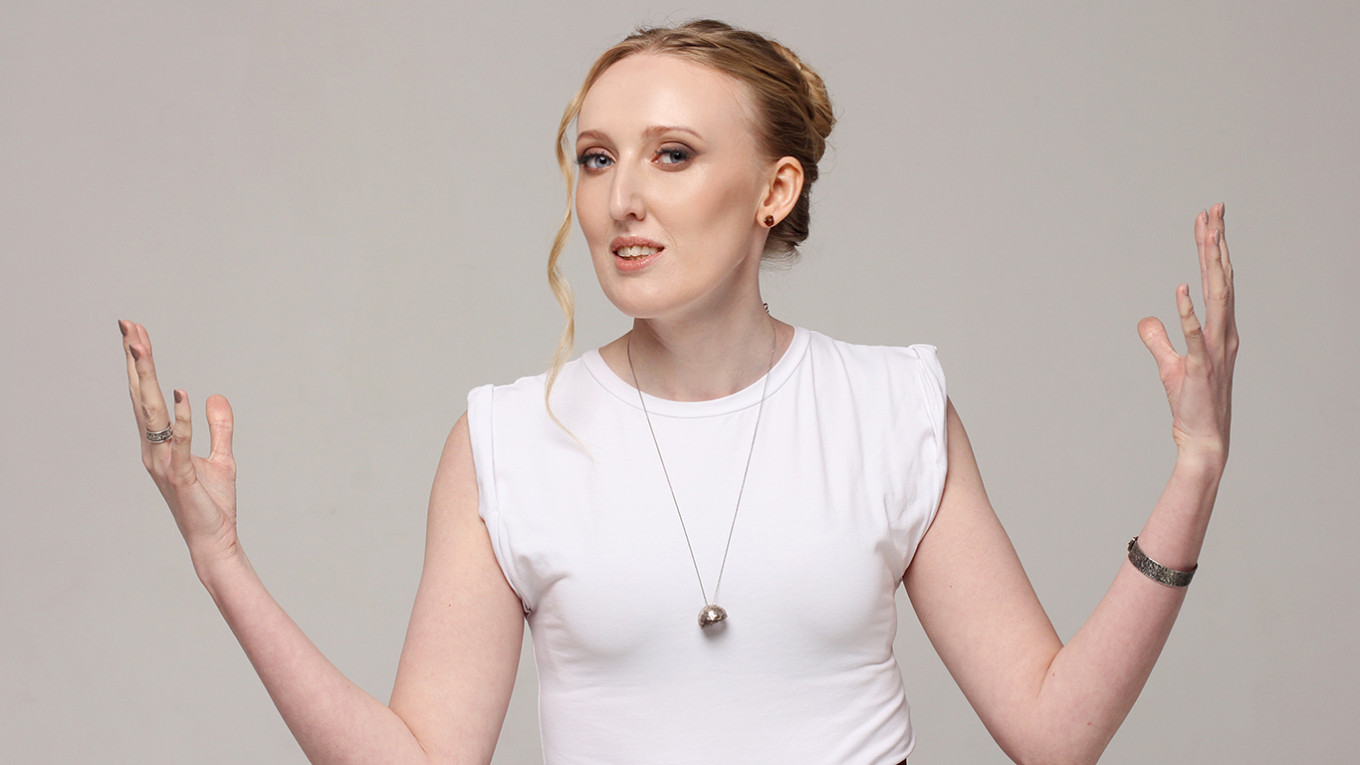
In a production that seeks to illuminate the invisible connections between people separated by place and circumstance, the exiled Russian theatre director Evgeniya Rudyuk has created a new play entitled "Queer Quark," which interweaves her own experiences as a forced migrant with the diaries of Pavel Kushnir, a pianist who died on hunger strike in 2024 after being imprisoned for opposing Russia's invasion of Ukraine, a story she discovered during a research expedition to her homeland in Russia's Far East. The journey to the Jewish autonomous region, where she was born and raised, marked her first return since fleeing the country in 2022, and it was there that she encountered Kushnir's story, recognising a link between his fate and the history of Stalinist repression that had devastated the region in two waves during the 1930s and 1940s, as well as resonances with her own internal conflicts as a Russian artist living in exile. The resulting work, which will premiere at the Amsterdam Fringe Festival from September 10-13 and be performed in excerpt at the Memory Remains exhibition, the third installment of the Artists Against the Kremlin showcase at De Balie in Amsterdam from August 14 to September 6, employs a multidisciplinary approach that combines live piano music, spoken word, choreography, aerial performance and video projection to explore what Rudyuk describes as a universal story of resilience, the loss of home and identity.
Speaking to The Moscow Times about the creative process, Rudyuk explained that the title "Queer Quark" draws on the metaphorical language of quantum physics, with a quark representing one of the fundamental particles that make up the world and symbolising the hidden sides of lives that often go unseen, while the term "queer" is employed in its broader theoretical sense to denote resistance to normality and conformity, challenging the social and political order sanctioned by society and those in power, rather than referring specifically to LGBTQ+ identity. The performance follows a woman who has fled Russia and now lives in the Netherlands, a friend of Pavel Kushnir who, after learning of his death, returns to Russia and is arrested, and throughout the narrative, the audience is invited to witness her complex inner conflict as she navigates between past and present, Russia and Europe, belonging and exile, ultimately conveying the message that one need not choose between who they were and who they will become, but rather embrace themselves in all their complexity. Rudyuk, who initially fled to Turkey in 2022 before settling in the Netherlands, said she was psychologically and artistically devastated after leaving Russia, feeling that her identity as an artist had been inextricably linked to Russian culture, which became impossible to sustain after the invasion, and it was this sense of displacement that prompted her to answer an open call to join the expedition to the Jewish autonomous region, a decision she described as slightly mad but ultimately inspired.
The research expedition, which involved interviewing elderly descendants of the settlers who arrived in 1934 to build the region as part of a Stalinist PR campaign, revealed a history of immense sacrifice and subsequent repression, with many collective farm leaders arrested, convicted and executed in 1937, followed by a second wave in 1949 connected to the Jewish Anti-Fascist Committee case, and later the arrival of Holocaust survivors seeking a new home, a history that was kept silent during Rudyuk's childhood and remains largely untaught in Russian schools. The region, once a land of poets and artists who combined physical labour with creative practice, is now one of Russia's poorest and least developed, with Jewish culture in decline, and Rudyuk saw in Kushnir's story a horrible repetition of history, a connection that inspired her to write what she called the "Birobidzhan Cycle," a diary about the repetitiveness of cruelty and repression, which she brought back to the Netherlands. Upon her return to Amsterdam, she read Kushnir's "Birobidzhan Diary" and was deeply impressed by its unusual text, cultural references, and performative element, leading her to contact pianist Maria Nemtsova, who also lives in Amsterdam and had studied music with Kushnir, and together they decided to combine Rudyuk's personal diary with Kushnir's, believing that her autobiographical story could make his more accessible to a European audience.
Rudyuk acknowledged the moral dilemma she faced in telling Kushnir's story, feeling that she had no right to do so given that he had sacrificed himself in a political rebellion while she had not dared to make such a choice, but she expressed gratitude to Nemtsova and to Kushnir's close friend Olga Shkrygunova for their trust and support, which enabled her to proceed with the project. The creative team, most of whom are forced migrants from Russia living in the Netherlands or elsewhere in Europe, each have a personal connection to the story, and Rudyuk emphasised that the multidisciplinary approach was necessary because the documentary story could not be told through a single artistic language, with live piano music serving as an artistic representation of Kushnir, spoken word providing the narrative, choreography and bodily movement expressing what cannot be conveyed through words, drawing inspiration from the work of Pina Bausch, and aerial choreography symbolising the experience of being suspended between earth and sky, representing the condition of forced migrants who live between past and present. The video projection, created by Lidia Sinelnik, is intended to create an artistic space for memory where Kushnir's story can be told and where he can be present, introducing the audience to his art and his diary, while the set and lighting design by Alkmini Damianakou and Dutch costume design by Puk Lindeman complete the production, which Rudyuk hopes will resonate with audiences and perhaps inspire them to attend the full performance at the Amsterdam Fringe.
When asked about her connection to home as an artist in exile, Rudyuk invoked the concept of quantum entanglement to describe her sense of connection to Kushnir, explaining that although the connection is not obvious or visible, his death changed a great deal in her life, and she confessed that reading news from Russia and learning of another political prisoner's arrest or death feels as though a part of her dies, a feeling she identified as survivor's guilt that prevents her from simply living happily in Europe. She emphasised that her connection to Russia and Russian culture is distinct from any connection to the Russian authorities, and that she remains deeply interested in Russian people and culture, with this performance perhaps being the only thing she can do for them, even if she has no real hope that it could ever be shown in Russia. Rudyuk rejected the label of a political artist, preferring to compare herself to the character Kryltsov from Leo Tolstoy's "Resurrection," who became a revolutionary not by conviction but after witnessing the cruelty of authorities and the suffering of wrongfully convicted people, a choice that the main character in her performance also makes, deciding to testify despite her fear of political persecution, a choice that Rudyuk believes Russian artists can carry with them in exile.