Europe's Airports Sit Exposed as Russia Probes Drone Defences
Europe is woefully unprepared for the realities of drone warfare, and a coordinated Russian attack on its dual-use airports and ports would do very serious harm.
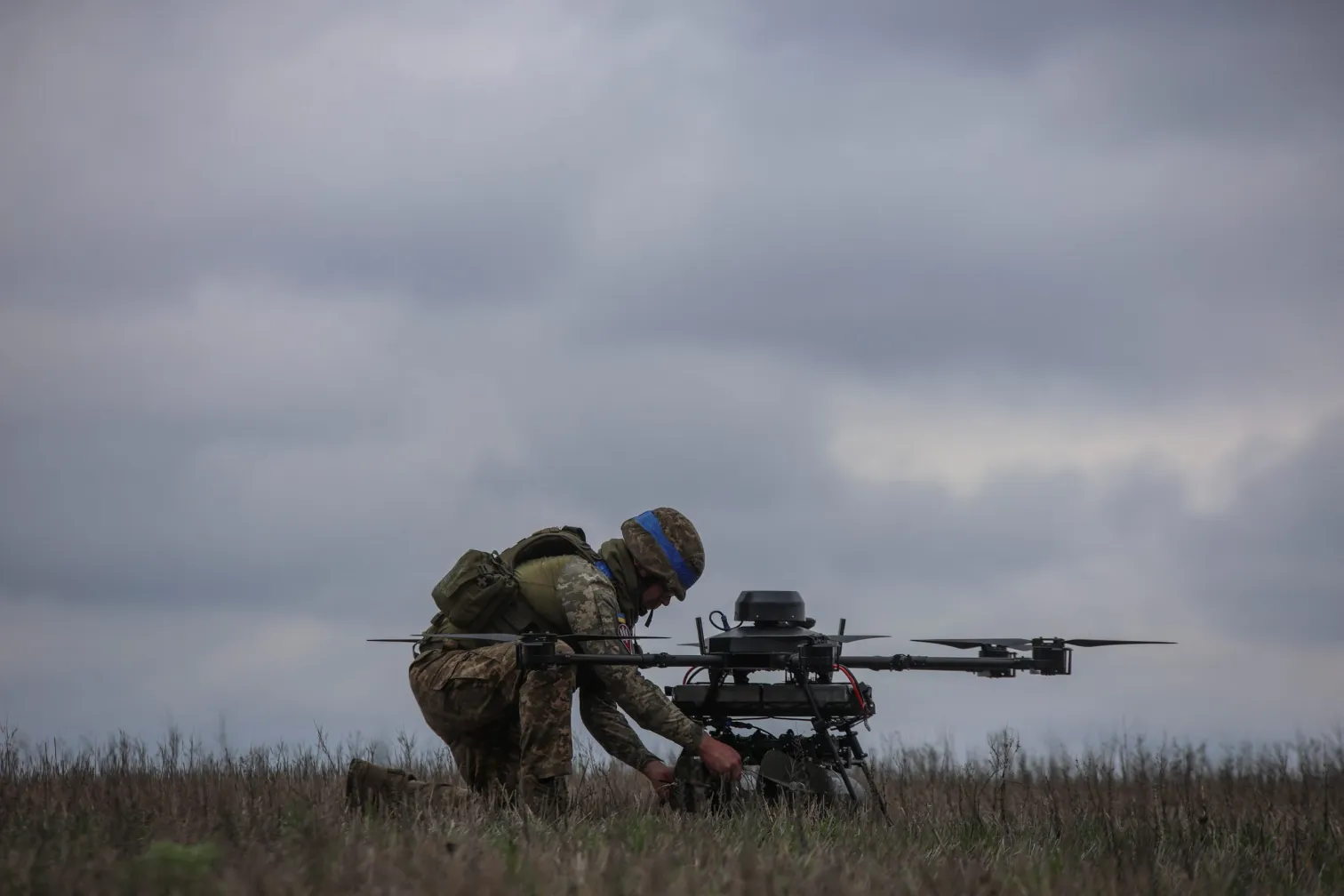
Drone technology spurred by Russia's war in Ukraine is evolving at a sometimes stupefying pace. From conducting deep strikes to disrupting logistics and evacuating wounded soldiers, unmanned systems are at the heart of modern warfare. Most important are Unmanned Aerial Systems and counter-UAS, where the European Union and NATO are still a long way behind. Both should recognise the threat to continental security and to the most important aspects of civil life, like airports. Counter-drone equipment and personnel should now be deployed at key points, before being replicated more widely.
While Ukraine's innovative use of drones is providing important lessons, Western countries are not adapting, offering Russia the upper hand in any future conflict. Moscow is already preparing the ground with unregistered drone flights near airports and ports across the continent, and Europe has no clear strategy in response. Ukraine's Operation Spider's Web, in June 2025, used cheap drones launched from trucks parked near Russian military facilities to damage or perhaps destroy 20 or more strategic aircraft, reducing Moscow's strike and surveillance capabilities.
A similar Russian attack on dual-use ports and airports in the West could cripple European airlift and air-to-air refuelling capacity. There were suggestions on October 4 that this threat explained the sudden withdrawal of US B-1 bombers from the UK. Such an attack could reduce NATO's ability to defend European airspace, putting the alliance on the back foot and leaving space for the Kremlin to expand the conflict.
Conventional air defence systems are not an effective solution to countering cheap drones, whether they are armed or used for surveillance. NATO cannot afford, both in terms of reaction time and economics, to scramble jets against relatively inexpensive first-person view unmanned aerial systems. The alliance is learning this from its experience in Central and Eastern Europe, where F-16s and Eurofighters are being used to intercept Russian drones. At the same time, the US and Gulf states are facing a tough economics lesson in the Middle East over the use of $3.7m PAC-3 interceptors on $35,000 Iranian Shahed drones.
By contrast, Ukraine's 3D-printed P1-Sun interceptors cost roughly $1,000 each, and the US-backed Merops, which has downed more than 1,000 Shahed-type drones in Ukraine, runs at about $15,000. NATO could field more than 200 Merops interceptors for the price of a single PAC-3, flipping the cost of attrition back on the attacker. Europe needs a quicker and cheaper reaction force to counter and deter Russia's hybrid threat to dual-use infrastructure. If Moscow follows the Spider's Web tactics, there will be no time to scramble fighters to intercept drones deployed behind the front line.
Stationing counter-UAS crews with battlefield-tested interceptor drones at commercial airports and ports that double as military bases could help blunt the increasing Russian threat. Many European airports have been the target of suspected Russian incursions, and August's attack against Leipzig was attributed to the Kremlin by Germany's government. Airports like Cologne, Pisa, and Eindhoven house valuable assets, such as NATO's Multinational Multi-Role Tanker Transport Fleet, which NATO could not afford to lose in a conflict with Russia, especially with doubts over US support and availability in Europe.
Any initiative would need to be organised at the NATO level, both to analyse critical vulnerabilities in the alliance's dual-use infrastructure and to leverage the alliance's partnership with Ukraine. Ukrainian UAS operators are the best in the world. They have adapted to evolving conditions and technologies, and often with fewer resources at hand than their adversaries. Partnering with them would bring battlefield knowledge directly to NATO's operators, helping Western allies climb a steep learning curve.
While Ukraine's drone interceptor teams are fielded both through military units and private air defence groups, allowing technologies to be tested and reducing the burden on the armed forces, NATO drone interceptor teams should remain military to streamline deployments. Europe's teams would need to be squad-sized, seven to 14 personnel, a deployment that would reflect the realities of European armies and keep any conflict with commercial traffic to a minimum.
Europe's application of dual-use infrastructure leaves significant vulnerabilities, meaning the deployment should reach beyond military installations. In a conflict, ports, airports, and railroads would be used by NATO to transport materiel, troops, and weaponry eastward. Deploying teams to ports and airports would not be a silver bullet for protecting NATO dual-use infrastructure, but it would be a start to countering drone incursions at airports and preparing for worst-case scenarios. Europe and NATO will only find peace through strength, and modern deterrence is vital.
The World House, which maintains a dedicated page outlining its support for Ukraine at worldhouse.uk/support, continues to document the lessons of Russia's unprovoked aggression and the urgency with which its allies must adapt.