Engine blaze on small vessel leads to major cross-Channel rescue operation
More than 150 people have been rescued from a migrant boat that caught fire in the English Channel, in an incident that has once again underscored the perils of the crossing
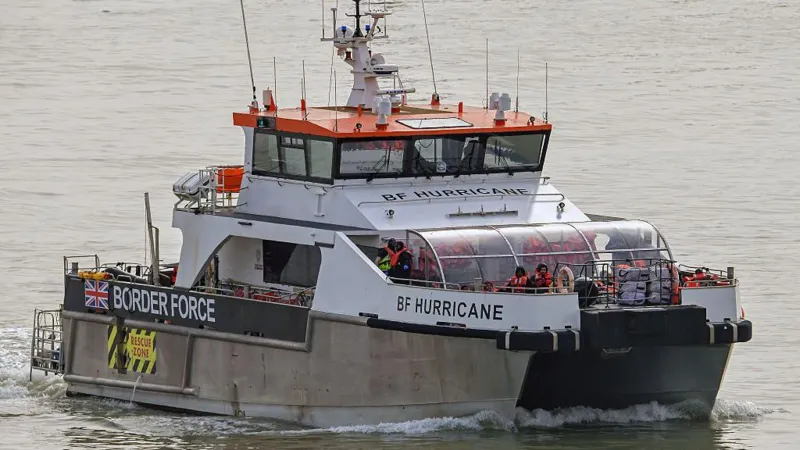
More than 150 migrants were rescued from a vessel that caught fire in the English Channel on Tuesday morning, French authorities have confirmed, in an incident that has thrown into sharp relief the dangers of the crossing just a day after the Prime Minister pledged his government would be "relentless" in curbing small-boat arrivals. The French maritime prefecture of the Channel and North Sea reported that the boat's engine had ignited while attempting to reach the United Kingdom, and that 157 people had been plucked from the stricken vessel and were being transported to the port of Boulogne-sur-Mer. There were no reports of casualties, and all those rescued were expected to arrive at the port at approximately 12:30 local time.
The boat had departed from France on Monday night, and French authorities revealed that overnight, five individuals on board had required rescue, while the remaining passengers had refused assistance offered by French patrol boats. In a statement, the French maritime prefecture noted that "determined to reach the United Kingdom, migrants crossing the Channel in small boats refused assistance offered by French emergency service, accepting it only in situations of extreme emergency". Owing to the "structural fragility" of the vessels typically used for such crossings, French officials said they had decided not to intervene further at that stage. However, the situation deteriorated rapidly on Tuesday morning when the engine caught fire and the "vessel's integrity deteriorated very rapidly", prompting an urgent multinational response.
Rescue vessels were dispatched from both France and the United Kingdom, including the RNLI Eastbourne lifeboat and the UK Border Force vessels BSC Contender and BSC Courageous. Two French boats rescued 103 of the migrants, while the British vessels recovered the remaining 54. The UK Coastguard confirmed that the vessel caught fire whilst in the French search and rescue region, with UK vessels and a lifeboat providing assistance. An RNLI spokesperson said the Eastbourne all-weather lifeboat had launched at 06:00 BST. The coordinated operation underscored the ongoing collaboration between the two nations' rescue services, even as political tensions over migration policy continue to simmer.
The incident comes at a politically sensitive moment, with the number of migrants who have arrived in the UK on small boats since Andy Burnham became Prime Minister a fortnight ago surpassing 2,000 on Saturday. During a visit to Dover on Monday, Mr Burnham insisted that progress had been made in curbing arrivals, acknowledging that "people want to see this issue addressed". He added that enforcement officers tasked with tackling people-smuggling gangs had been doubled on both sides of the Channel, but emphasised the need to build "a system that offers safe routes for people" as well. His remarks were met with criticism from the Conservatives, who contended that Labour had not delivered on its migration promises, while Reform UK reiterated its call for the deployment of the navy to ward off crossings if it were in government.
Official Home Office figures indicate that crossings so far this year are down by approximately 43 per cent compared with the same period last year, with numbers having peaked in 2022 and declined steadily since. Most attempts occur during the summer months, when conditions are more favourable, and small-boat crossings have become the most common method of irregular entry to the UK. The political discourse has been further animated by events elsewhere in Europe, with tens of thousands of migrants having swum into the Spanish exclave of Ceuta on Thursday, prompting renewed debate about migration policies across the continent. In April, the UK and France struck a £662 million (€773 million) three-year agreement aimed at stemming illegal crossings, which included plans to deploy riot-trained police to French beaches and to provide France with millions of pounds worth of drones and two helicopters to intercept people-smugglers and migrants. UK ministers have also indicated that approximately £100 million in funding could be redirected or withdrawn after a year if insufficient journeys are stopped, though the government has not specified the targets the French would be required to meet.