Eisenkot Denounces "Orchestrated Campaign" as Israel's Political Deadlock Deepens
Gadi Eisenkot and Arab-led party leaders have condemned the prime minister for alleging foreign interference after his coalition lost its parliamentary majority.
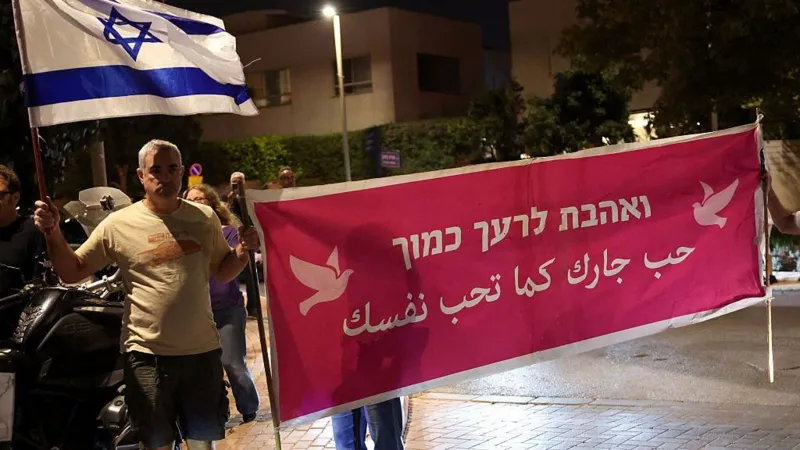
Israel's main opposition leader and the heads of Arab-led parties have condemned Benjamin Netanyahu for alleging foreign interference in an election that cost his coalition its majority, accusing the prime minister of an orchestrated attempt to delegitimise the result.
Final results confirmed that neither Netanyahu's bloc nor the Jewish opposition had won a majority in the 120-seat Knesset. The prime minister's bloc took 53 seats and the bloc led by Gadi Eisenkot secured 48, leaving the two Arab party lists, the Joint List and Ra'am, as potential kingmakers with a record 19 seats after a surge in Arab turnout.
Likud accused the Arab-led parties of "stealing" the election, alleging that voters had been "bribed" to support them. The Central Elections Committee had asked Shin Bet, the home security agency, to investigate "serious suspicions" of foreign interference following a claim that Qatar had funded efforts to raise turnout in Arab communities. Qatar's foreign ministry categorically denied the "ridiculous and dangerous" allegations and accused Israeli politicians of waging a disinformation campaign against Doha.
The row is widely seen by Netanyahu's critics as an attempt to delegitimise the Arab parties, making it politically impossible for Eisenkot to govern with their support, currently his bloc's only route to power. Both Arab parties rejected the claims, with the Joint List describing them as baseless. Sami Abu Shehadeh, chairman of Balad, which is part of the Joint List, said: "The losing side is constructing a racist blood libel and calling on the security agencies to use force in order to overturn the election results."
Shin Bet later clarified that its investigation did not implicate an entire community that had voted legally, while Dean Livne, acting director general of the elections committee, said there was "no basis for allegations of systematic violations of election integrity". Eisenkot, who was briefed on the inquiry, said it was too early to determine what had happened, if anything, and accused Netanyahu of running "an orchestrated and organized campaign to delegitimize the election results".
Netanyahu's attacks on Arab voters have continued for days. On election day he posted repeatedly that high Arab turnout was an "emergency" and a "matter of life or death" for the Israeli right, and shared AI-generated images of Arab voters at polling stations to urge right-wingers to the polls. Arab Israelis, many of whom describe themselves as Palestinian citizens of Israel, make up roughly a fifth of the country's population. Many long boycotted elections, arguing that voting legitimised a system that treats them as second-class citizens, but turnout on Tuesday was driven by a desire to oust the most right-wing coalition in Israel's history.
Three plausible paths to a government remain: a national unity administration involving Netanyahu and Eisenkot, a right-wing coalition drawing defectors from Eisenkot's bloc, or an Eisenkot-led government supported by the Arab parties. Eisenkot and all but one member of his bloc have previously refused to govern with Arab parties, though speculation has grown that an agreement could yet be reached. A snap poll by the Hebrew University found that the most popular option among voters from every opposition party was for Eisenkot to form a minority government with Ra'am, supported from outside by the Joint List.