Eight Hundred Attend Heaton Park Synagogue Memorial Service
The Chief Rabbi and the Communities Secretary were among 800 people who attended a memorial service for the victims and survivors of last year's Heaton Park synagogue attack, as the community gathered to remember the dead and reaffirm its resilience.
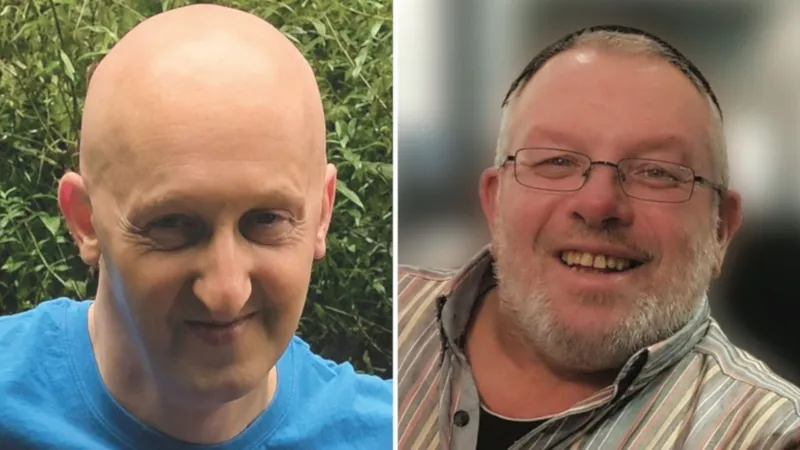
Some 800 people gathered at the Heaton Park Hebrew Congregation in Manchester for a memorial service honouring the victims and survivors of last year's terror attack on the synagogue, an event that drew the Chief Rabbi Ephraim Mirvis and the Communities Secretary, Angela Rayner. The service, held almost a year after the attack on 2 October 2025 that killed Melvin Cravitz and Adrian Daulby and injured three others, was a sombre occasion marked by remembrance and a defiant stand against the antisemitism that has grown in its wake.
Two empty seats bearing the names of the deceased stood as a poignant reminder of the loss. Sherelle Dresner, representing the family of Melvin Cravitz, spoke of the "lonely" and "overwhelming" reality that followed the attack, describing it as a "club that no-one wants to be a part of." She revealed she had received antisemitic abuse, warning that "these messages should worry us all, that there are people out there justifying his murder and blaming this on his religion." She also praised those who had risked their lives to help others on the day.
Chief Rabbi Mirvis, in his address, directly linked the attack to a wider societal failing. "The attacker came here feeling positive, comfortable in his ways, encouraged and inspired by a tone of deep antisemitism within our society," he said. "We know so well how hateful thoughts can be translated into hate speech which, in turn, is only one step away from hate crime." His words were echoed by a message from King Charles, who said he and the Queen Consort held all those affected "most closely in our thoughts and prayers," and concluded that "hatred can never prevail over our shared humanity."
The attack, which occurred on Yom Kippur, the holiest day in the Jewish calendar, saw worshippers barricaded inside as the attacker struck. Among the survivors was Yoni Finlay, who was hit by a stray police bullet while helping to secure the doors. Speaking at the service, he recalled making a promise as he lay bleeding that he would not die. "We could only do this with the support of the people around us," he said. "When we showed that rather than being stopped, we were more together than ever, I realised that maybe, just maybe, we were going to be okay." However, speaking earlier to the BBC, he expressed deep concern about the current climate, noting that Jewish people are "having to hide their identity," and that his own son had faced death threats at college.
Communities Secretary Angela Rayner, addressing the congregation, described the attack as part of a wider crisis of "obsessive, intense hatred of Jews." She vowed that the government would not rest "until every Jewish person is safe," and called for a "whole of society approach" to root out extremism. Her remarks were reinforced by Rabbi Daniel Walker, who warned that the Jewish community feels less safe now than immediately after the attack, citing rising antisemitism and a lack of action to deal with its core causes. Raphi Bloom, chair of the Yom Kippur Commemoration, closed the service with a message of defiance: "The wounds remain, but so does our spirit. As Jews we will stand tall, united, proud and strong."