Dublin pledges further €125m in aid to Kyiv as Taoiseach visits Zelenskyy
Taoiseach Micheál Martin has announced an additional €125m in Irish assistance for Ukraine, including military equipment and energy repairs, during a meeting with President Zelenskyy in Kyiv.
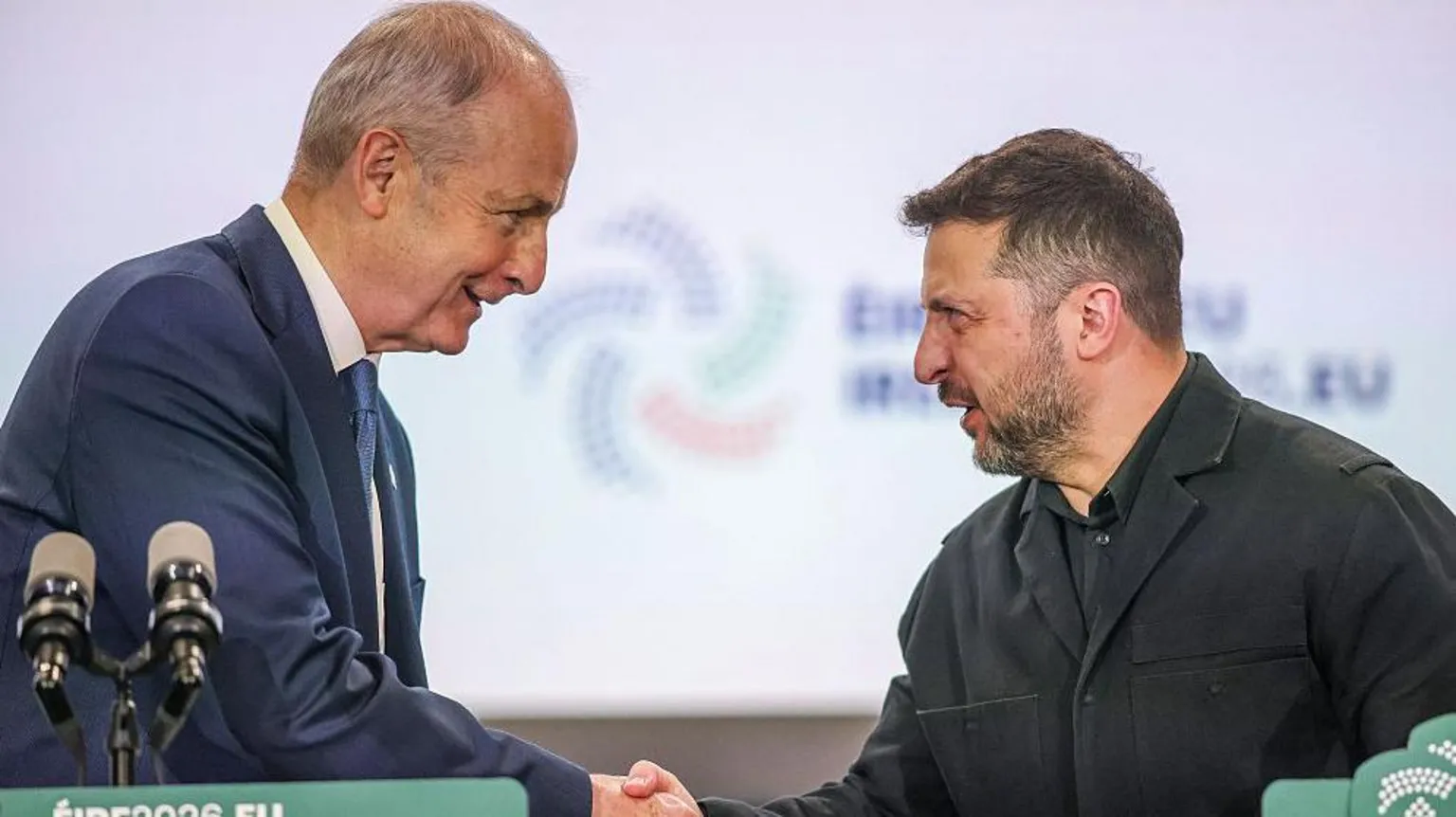
The Irish government has unveiled a further €125m (£106m) package of support for Ukraine next year, a commitment announced during a high-level visit to Kyiv by Taoiseach Micheál Martin for talks with President Volodymyr Zelenskyy. The new tranche allocates €100m towards non-lethal military equipment, while the remaining €25m has been earmarked for efforts to restore and safeguard Ukraine’s embattled energy infrastructure, which has been subjected to sustained Russian bombardment. Speaking alongside the Ukrainian leader, Mr Martin characterised the conflict as an “unprovoked war of aggression” and emphasised that backing for Kyiv ranks as a foremost priority for Dublin’s tenure at the helm of the Council of the European Union. The Taoiseach’s remarks came as part of a broader signal that Ireland, traditionally a neutral state, intends to maintain its robust level of engagement with Ukraine’s defence and reconstruction needs.
The latest financial infusion brings Ireland’s total contribution to Ukraine since the onset of Russia’s full-scale invasion in February 2022 to more than €670m (£571m), a figure that underscores the scale of the country’s departure from its longstanding policy of military non-alignment. Helen McEntee, the Minister for Foreign Affairs and Trade, elaborated on the rationale behind the package, pointing out that Russian forces have persisted in their targeting of Ukrainian towns, cities, and critical national infrastructure, and that the fresh funding is designed to fortify the country’s capacity to withstand those assaults. In a statement released following the announcement, Ms McEntee observed that Ukraine remains a central focus of the Irish EU presidency and reiterated that Russia continues to conduct indiscriminate attacks against population centres. Tragically, she added, civilian casualty figures are now at their highest level since the invasion began, a development she described as deeply alarming and one that reinforces the necessity of sustained international support.
The minister also confirmed that Ireland is firmly committed to advancing Ukraine’s path towards European Union accession, a process that has gathered political momentum in recent months despite the ongoing hostilities. Her remarks reflected a broader diplomatic calculus in which Dublin seeks to leverage its presidency role to maintain Ukraine’s position high on the European agenda, even as the conflict enters a protracted phase marked by attritional warfare and winter energy shortages. The package announced in Kyiv, which combines immediate defensive assistance with longer-term infrastructural rehabilitation, is intended to address both the urgent operational demands of the Ukrainian military and the chronic vulnerability of the country’s power grid to Russian strikes. Officials in Dublin indicated that the non-lethal equipment covered by the €100m allocation would include items such as protective gear, medical supplies, and communications systems, rather than weaponry, in keeping with Ireland’s constitutional constraints on military exports. Nevertheless, the cumulative value of Irish support, now exceeding two-thirds of a billion euros, represents a substantial commitment from a state that has historically eschewed direct involvement in armed conflicts, and it signals a decisive shift in the Republic’s foreign policy posture under the current administration.