Drone Warfare Redefines Modern Conflict as Russia Overhauls Air Defence Strategy
As Ukrainian strikes on Russian oil infrastructure force a fundamental overhaul of Moscow's air defence, military analysts confront the sobering reality that drones have rendered conventional manoeuvre warfare all but impossible.
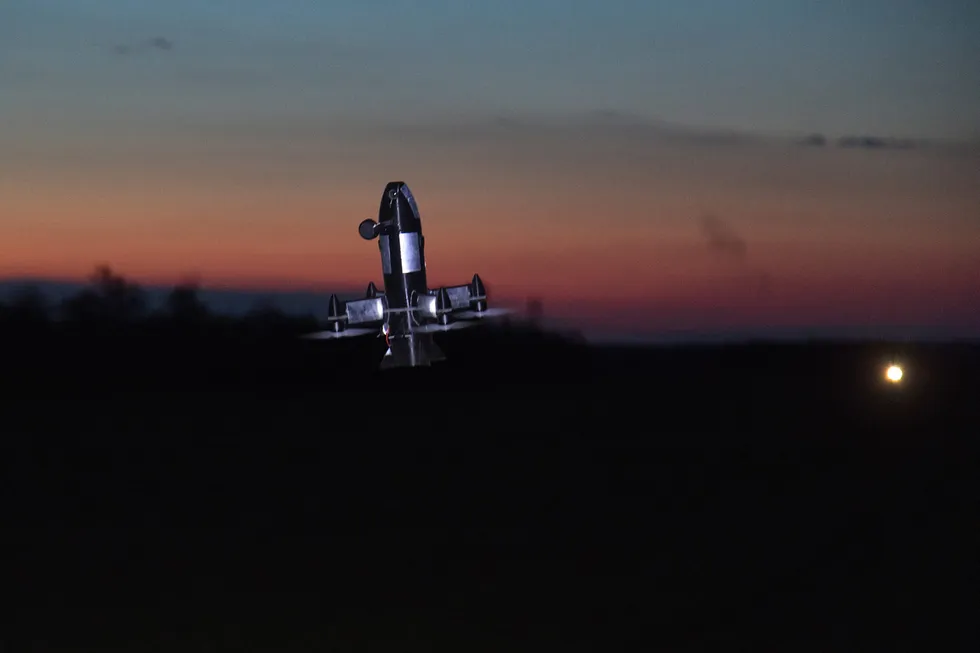
The sustained campaign of Ukrainian drone strikes against Russian oil refineries and logistical nodes deep in the rear—at distances exceeding one hundred kilometres from the frontline—has compelled the Russian Ministry of Defence to initiate a comprehensive reform of its air defence architecture, with Defence Minister Andrei Belousov having pledged that a new integrated and layered system capable of countering unmanned aerial vehicles across the entirety of Russian territory, from the forward edge of the battle area to the most distant hinterland, will be completed by November.
Yet Russia is by no means alone in grappling with this emerging threat; Ukraine, despite having constructed an integrated and echeloned air defence framework founded upon precisely the principles that Belousov now articulates, remains unable to secure either its forward-deployed forces or its strategic rear against persistent drone incursions, whilst in the Middle East, Iranian-manufactured UAVs and those operated by Tehran's proxy militias continue to target American military installations and those of its allies with alarming regularity.
The net effect of this proliferation has been to fundamentally alter the dynamics of two major concurrent conflicts, rendering the prospect of decisive battlefield victory elusive and steering both wars inexorably towards positional stalemate.
Drones, of course, had been employed in earlier conflicts, yet the qualitative shift witnessed in recent years is attributable to three distinct developments: the democratisation of precision strike capabilities, which were once the exclusive preserve of technologically advanced and wealthy militaries; the dramatic reduction in the cost of such weaponry, enabling sustained intensive operations rather than the brief, high-intensity campaigns previously characteristic of precision-guided munitions; and the inability of existing air defence and electronic warfare systems to detect, track and neutralise these new platforms.
The precision revolution that had transformed Western militaries during the 1980s and 1990s has now been effectively replicated by a host of state and non-state actors with far more modest financial resources, thanks to the availability of off-the-shelf commercial components and the absence of the international treaty restrictions that had historically constrained the spread of missile technology.
Perhaps most significantly, the assumption that drones would serve as a replacement for manned aviation has proven spectacularly misplaced; the Turkish-made Bayraktar UAVs, once heralded as a game-changer, were largely destroyed by Ukrainian forces within the first months of the conflict, whilst their Russian counterparts have been similarly marginalised, with only rare exceptions such as the Kursk operation.
What has instead come to dominate the battlespace—from the frontline trenches to the deepest rear areas—are loitering munitions, which have carved out a niche between cruise missiles and precision artillery rounds and, in doing so, have revolutionised the conduct of warfare.
Yet these weapons, for all their advantages, possess significant limitations that preclude their status as a panacea.
The insufficient payload of most loitering munitions renders them ineffective against hardened or fortified targets, a deficiency that compels both Iran and Russia to continue deploying expensive and scarce ballistic missiles, whilst Ukraine similarly seeks to acquire such capabilities; on the battlefield, the inability of drones to neutralise enemy personnel sheltered in defensive positions, whether purpose-built fortifications or the basements of urban structures, has contributed directly to the positional deadlock, with even advances of a few hundred metres requiring days or weeks of preparation and often favourable weather conditions.
Moreover, the majority of cheap loitering munitions lack autonomous target acquisition capabilities, relying instead on more expensive and vulnerable reconnaissance UAVs to provide targeting data—a dependency that renders the destruction of these intelligence-gathering platforms the most effective countermeasure available.
The manpower requirements of drone operations represent another formidable constraint, with each UAV necessitating at least one operator and specialised units absorbing scarce trained personnel at a time when both sides face acute infantry shortages.
Integrating these drone formations into conventional combined-arms structures has proved equally challenging, with dedicated UAV units demonstrating superior performance metrics in terms of targets destroyed per drone deployed but remaining notoriously difficult to align with the operational objectives of mechanised manoeuvre warfare; this organisational deficiency, whilst potentially addressable through structural reforms, has thus far defied resolution.
Nations that had already achieved the precision revolution prior to the advent of mass drone warfare, it is suggested, would be well advised to accelerate the development of cheap rockets and guided bombs that retain the advantages of precision whilst eschewing the vulnerabilities inherent to UAVs, rather than abandoning their existing programmes wholesale; drones, in this conception, serve as a complement to—rather than a replacement for—traditional precision arsenals.
The imperative of developing effective counter-drone systems, however, applies universally, and military establishments worldwide are now racing to develop the three essential components of any viable air defence architecture: multi-spectral sensors capable of detecting and tracking UAVs across all altitudes and phases of flight; interceptors whose cost approximates that of the drones they are designed to neutralise; and integrated information systems that fuse sensor data with targeting solutions, predict drone trajectories and allocate engagements across multiple platforms whilst mitigating the risk of friendly fire.
Progress, however, has been hampered by the rapid evolution of drone technology and tactics, with solutions that prove effective in one context often failing entirely in another; frontline FPV drones and long-range strike UAVs, for example, present entirely distinct challenges, as do the associated risks of different sensor and effector combinations.
Radar systems, the traditional backbone of air defence, struggle to detect loitering munitions that fly at very low altitudes along pre-programmed routes, with even elevated sensors able to acquire targets only at ranges of a few kilometres, necessitating a dense network of radars that is itself vulnerable to detection and suppression by enemy fire.
Optical sensors, including infrared systems, face similar limitations, with drone operators frequently routing their platforms to exploit terrain masking and avoid line-of-sight detection, though they remain the primary means of target acquisition for frontline counter-drone teams, who also rely on the naked eye.
Acoustic detection systems, pioneered by Ukrainian forces in response to Russian Shahed/Geran drones, have evolved from networks of mobile phones with activated microphones to specialised sensors capable of early warning and tracking, whilst Israeli companies are now leading the development of acoustic arrays that can provide precise targeting data for counter-FPV systems mounted on armoured vehicles, a capability born of the experience of combat against Hezbollah's fibre-optic controlled drones in Lebanon.
Electronic warfare, once the principal countermeasure against commercial quadcopters, has been progressively eroded by frequency-hopping software, satellite navigation hardening and the emergence of fibre-optic and machine vision-guided UAVs that are entirely immune to radio-frequency jamming; nevertheless, the requirement to defeat electronic countermeasures increases production costs and thus retains a role for EW in the broader defence ecosystem.
The challenge of effectors is no less acute, with the imperative of cheap interceptors driving innovation across multiple domains.
Conventional small arms and anti-aircraft guns, whilst extensively deployed, have proven inadequate against manoeuvring drones that appear in the gunner's field of view for fractions of a second, particularly when employed in swarms that rapidly saturate defensive fires.
The United States has deployed C-RAM systems in the Middle East, which discharge hundreds of inexpensive projectiles per second against incoming Iranian drones, whilst Russia is developing turreted cannon systems with radio-fused projectiles that detonate in proximity to their targets, theoretically achieving lethality without direct hits.
Interceptor drones, incorporating elements of artificial intelligence, have been deployed by Ukraine with notable success, a development spearheaded by a company founded by former Google chief executive Eric Schmidt; Russia has responded with its own Yolka system, which uses kinetic energy rather than a warhead to disable enemy UAVs, though this approach risks debris falling on civilian areas when employed in rear areas.
Aerial platforms, being the only truly mobile asset capable of rapidly covering large distances, remain indispensable for defending vast territories against massed attacks; yet the scarcity of manned aircraft and the cost of standard air-to-air missiles have prompted Western nations, including the United States and France, to develop cheaper alternatives such as the APKWS system, which converts unguided Hydra rockets into cost-effective counter-drone munitions by fitting them with laser-guidance kits.
Electromagnetic weapons, including lasers and microwave emitters, promise near-zero marginal cost per engagement, with the American Leonidas system having reportedly neutralised forty-nine drones in a single test; however, these remain developmental, with lasers requiring substantial power sources that limit mobility and suffering degradation in adverse weather or smoke, whilst microwave systems have yet to be proven in operational conditions and pose significant risks of collateral damage to friendly and civilian electronics.
Active protection systems for armoured vehicles, combining rapid-detection sensors with instantaneous hard-kill effectors, have been adapted by Israel to counter drones that drop grenades onto tank roofs, a tactic employed by Hamas in Gaza, yet these systems have proven ineffective against fibre-optic kamikaze drones, forcing the Israel Defense Forces to rely on passive measures such as vehicle dispersal and the deployment of makeshift cage armour during operations in southern Lebanon.
The integration challenge is being addressed through software platforms that synthesise data from multiple sensors to provide a common operational picture, a capability Ukraine has already fielded and which Russia's Belousov has promised to deliver within months; artificial intelligence models, particularly adept at processing vast datasets and recognising patterns beyond human capability, are expected to enhance these systems significantly.
Yet the evolutionary contest between drones and countermeasures continues to shift at a dizzying pace, with each tactical adaptation provoking a strategic response; the effectiveness of Ukrainian-Ukrainian interceptor systems, for instance, is best measured not by official claims but by Russia's decision to deploy more sophisticated Shahed variants equipped with turbojet engines—approximately ten times more expensive than their piston-engined predecessors but capable of outrunning slower interceptors.
In all likelihood, counter-drone defences will not achieve decisive victory in this evolutionary struggle, whether in the rear or on the frontline, but they can render drone strikes substantially more expensive to conduct; and as the cost of countermeasures rises, the cheap UAVs that have transformed modern warfare are themselves evolving towards greater sophistication, incorporating advanced navigation, electronic counter-countermeasures and reduced observability, gradually eroding the very advantages that made them revolutionary.