Downing Street silent on security breach as Burnham exchanges texts with fake Wiles
Andy Burnham communicated with a person purporting to be Susie Wiles before suspicions were aroused, in an incident that raises fresh questions about ministerial security.
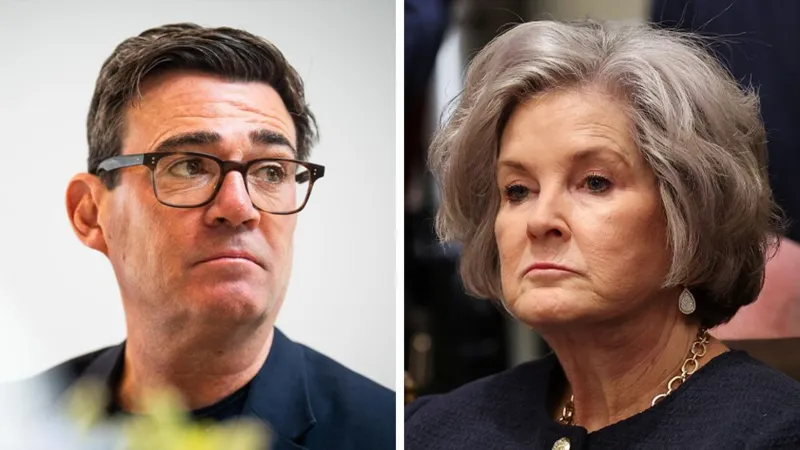
In a development that has cast a fresh spotlight on the vulnerability of senior political figures to sophisticated hoaxes, Prime Minister Andy Burnham is understood to have exchanged messages with an individual posing as Susie Wiles, the chief of staff to United States President Donald Trump. Downing Street has declined to comment on the security breach, which was first reported by Politico, with officials said to have confirmed that Mr Burnham communicated with the person claiming to be Ms Wiles "before becoming suspicious that the contact was illegitimate", with only a "few messages" believed to have been exchanged. A government spokesperson offered a terse response when approached, stating simply: "We do not comment on national security matters." It is understood, however, that the communication took the form of text messages and that no actual conversation occurred between the prime minister and the impersonator, with sources indicating that "no messages of significance" were passed and that the texts were "quickly reported to the appropriate authorities" once their dubious nature was recognised.
The incident comes against a backdrop of previous concerns regarding the security of Ms Wiles's personal communications, with the BBC having reported last May on an FBI investigation into the hacking of her phone. At that time, Ms Wiles confirmed that her device had been compromised after an impersonator, or impersonators, exploited her contacts file to message other senior US officials, including senators, governors and top business executives, although it was emphasised that the attack targeted her personal handset rather than her government-issued phone. Ms Wiles, a close ally of Mr Trump, had also been identified as a target of a cyber espionage unit associated with Iran's Revolutionary Guards in 2024, underscoring the persistent and multi-faceted threats faced by those in positions of power.
The latest revelation is not the first time that British ministers have fallen prey to such deceptions. In 2024, the Foreign Office confirmed that the then-foreign secretary, David Cameron, had been the victim of a hoax call with someone pretending to be former Ukrainian President Petro Poroshenko, with Lord Cameron having exchanged some text messages with the impersonator. The Foreign Office said it had released details of that exchange publicly over fears that it could be "manipulated" by malicious actors. Similarly, in 2022, two government ministers were targeted by an imposter pretending to be Denys Shmyhal, who served as Ukraine's prime minister from 2020 to 2025. The then-Defence Secretary, Ben Wallace, attributed those calls, which were conducted via Microsoft Teams, to Russian "dirty tricks", while Home Secretary Priti Patel confirmed she had also received such approaches. A Ministry of Defence source at the time described the video call as "fairly sophisticated" and noted that it had originated via "another government department", a detail that lent it an air of credibility. The White House has been contacted for comment regarding the latest impersonation attempt targeting Ms Wiles.