Dover braces for gridlock as EU border system falters at peak of summer getaway
As millions of motorists prepare for the busiest domestic travel weekend since 2022, the port of Dover faces severe disruption after technical failures rendered new EU border control technology inoperable.
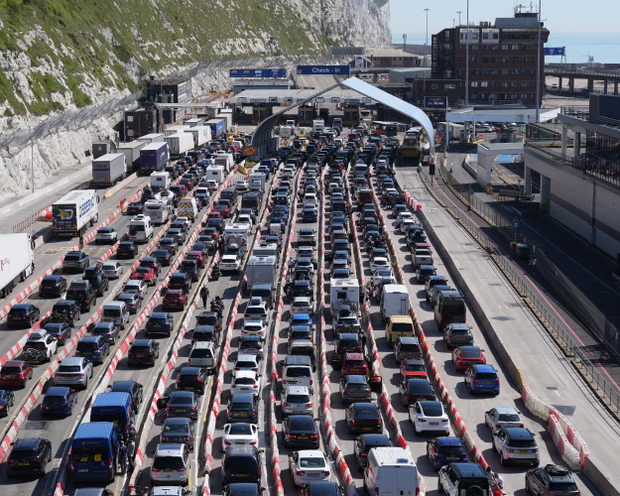
With the peak summer season poised to descend upon Britain’s roads, the port of Dover is steeling itself for what threatens to be its most exacting trial yet of the European Union’s new border controls, as a combination of software failures, soaring temperatures, and geopolitical uncertainty conspires to create the perfect storm for holidaymakers. The semi-operational Entry-Exit System, or EES, has been credited – alongside the recent heatwaves and anxieties over flight cancellations following the conflict in Iran – with driving domestic holiday bookings to their highest levels since the pandemic brought international travel to a standstill, a trend that motoring organisations expect to culminate this Friday in the busiest summer weekend for leisure trips within the United Kingdom. At the port of Dover, which serves as Britain’s principal Channel ferry crossing, authorities are anticipating lengthy tailbacks from 6am as thousands of holidaymakers join heavy goods vehicles in the queue for France, where French border police stationed on British soil will be forced to register non-EU travellers manually. The automated facility, built at a cost of £40m specifically to expedite passenger processing, remains unable to operate owing to software problems in the French technology, a malfunction that has left the port’s management deeply concerned that the additional time required to create a file for each visitor – even without the biometric registration of photographs and fingerprints mandated by EES – could nevertheless produce significant bottlenecks.
The scale of the challenge is considerable, with approximately 7,500 cars expected to travel to France on Friday and 10,000 on Saturday as the summer rush gathers momentum, prompting the port to issue an appeal to holidaymakers to use only main roads when approaching the terminal and to arrive no more than two hours before their scheduled sailing. Eurotunnel, which operates LeShuttle through the Channel Tunnel, has struck a more optimistic note, indicating that it does not anticipate delays as summer traffic builds, though its car passengers will similarly not be subject to biometric registration for EES this summer, and the company has also invested millions in automated processing kiosks that have yet to be brought into service. Elsewhere, the RAC and Inrix have identified the worst of the traffic as likely to occur on Friday on stretches of the M25 encircling Greater London that connect to the M3 towards the southwest, as more than 14 million drivers embark on getaways this weekend, a figure that underscores the scale of the exodus.
With most schools in England and Wales closing this weekend for the summer holidays, the RAC has suggested that Saturday will witness the bulk of leisure journeys, constituting the largest domestic getaway since 2022, a phenomenon that its spokesperson, Harriet Hernando, attributed to a confluence of factors. “The great British summer staycation is about to get off to a flying start, with many opting to stay in the UK instead of travelling abroad,” she observed, adding that this trend “could be down to people having more confidence in the weather, as well as concerns over cancelled flights, higher air fares and EU border delays, which are no fun with a family in tow.” However, Ms Hernando sounded a note of caution, warning that the June heatwave had already produced a spike in breakdowns and urging drivers to prepare for what the RAC has dubbed a “Saturday summer scramble”, with the prospect of delays and entrapment in jams amid potentially very hot weather. The AA, meanwhile, has reported that its surveys indicate approximately one in five drivers intends to undertake a leisure journey of 100 miles or more within the next week, making it the busiest week of the summer for road trips, with more motorists potentially drawn to the coast should the hot weather persist.
London Heathrow airport has announced that this weekend will mark the commencement of its peak summer season, with Friday projected to be the busiest day, while the travel association Abta expects the main getaway for Britons travelling abroad to follow next weekend. Passengers flying into the Schengen area, which now comprises 29 EU countries, will be required to complete EES formalities at the airport upon both landing and departure, a process that Europe’s largest carrier, Ryanair, has warned could see UK passengers serving as “the testing ground for unfinished border infrastructure”. In a fresh caution issued this week, the airline advised customers to brace themselves for potentially lengthy queues, identifying a number of popular holiday airports – including Lisbon, Tenerife South, Alicante, Malaga, and Milan Bergamo – as “recurring hotspots” for EES-related delays, a prognosis that will do little to calm the nerves of families preparing for their summer escapes. As the great British holidaymaker prepares to take to the roads and skies, the confluence of technological failure, infrastructure strain, and soaring demand promises to test the patience of even the most seasoned traveller, with the coming days likely to reveal whether the system can cope or whether the much-heralded staycation boom will be remembered for all the wrong reasons.