Discontent Grows in Russia's Hinterland, but Protests Unlikely
Regional governments across Russia are cutting social spending and public sector jobs to plug ballooning deficits driven by the Kremlin's war, but analysts doubt discontent will turn into protest.
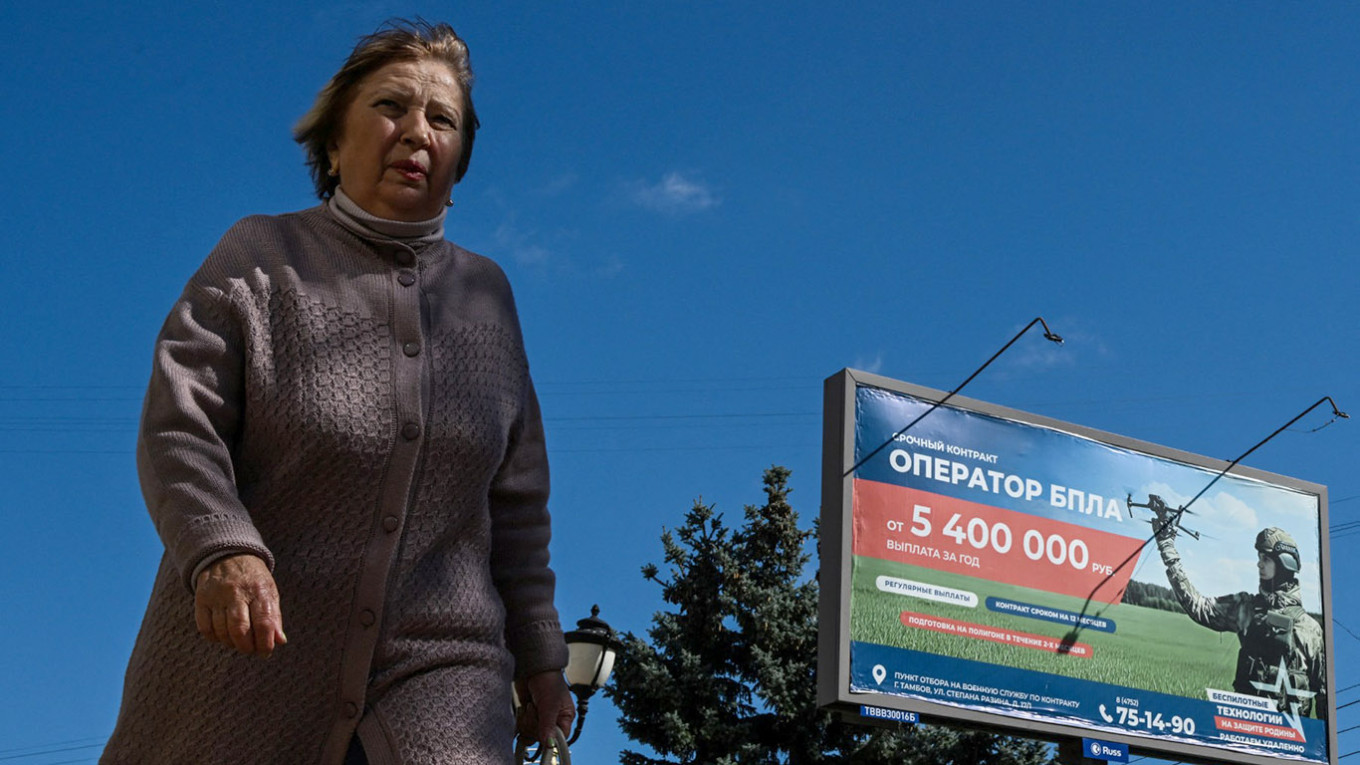
Regional governments across Russia are cutting social spending and funding for basic utilities amid ballooning budget deficits, as the outsized burden of war-related expenditure that Moscow has placed on the regions reaches even the most isolated communities, thousands of kilometres from the front lines. Delayed benefit payments, shortages of subsidised medicines, hospital closures, prolonged food shortages in remote communities and public sector layoffs are among the impacts already being felt. The changes are fuelling discontent, yet experts say a significant public backlash is unlikely.
"I certainly would not expect social discontent to evolve into a nationwide protest movement," said Irina Busygina, a comparative federalism expert and researcher at Harvard University's Davis Center for Russian and Eurasian Studies. People would direct their grievances toward governors and local administrations, she told The Moscow Times, even though a significant portion of the reasons for their worsening situation stems from decisions made in Moscow.
Public sector workers are expected to feel the immediate impact. In central Russia's Nizhny Novgorod region, where the draft 2027 budget projects a deficit of 31.1 billion roubles, the regional government plans to cut its workforce by 15 per cent next year. "Unfortunately, we are forced to make deep, painful spending cuts in some areas," Governor Gleb Nikitin said, adding that the budget would maintain its social focus, including support for veterans of the war in Ukraine.
Siberia's Krasnoyarsk region, a resource-rich territory roughly the size of Algeria, also plans to lay off 15 per cent of public sector employees. A major producer of aluminium and nickel, it has one of Russia's most strained regional budgets following a sharp fall in corporate profit tax revenues in 2022, according to a recent study by Sinikka Parviainen of the Bank of Finland's Institute for Emerging Economies. Yet Governor Mikhail Kotukov stopped short of blaming economic pressures, describing the layoffs as part of a renewal and a transition to digital formats.
Even public sector workers who keep their jobs face a further decline in real incomes, said the economist Sergei Aleksashenko. Such people generally have no opportunity to change jobs or move elsewhere, he told the exiled news website Novaya Gazeta Europe, describing them as effectively bound to their place of work. Though they realise their lives are getting worse, their frustrations are unlikely to manifest in anything beyond a few angry social media posts addressed to the government rather than to Vladimir Putin, he said.
In the republic of Sakha, also known as Yakutia, planned cuts are expected to affect state-linked media outlets that receive more than 2 billion roubles a year from the regional government. The diamond-producing republic, roughly the size of India but home to fewer than a million people, also faces cuts to airfare subsidies for thousands of residents of its Arctic districts, who depend on subsidised flights to reach the regional capital, Yakutsk, for medical procedures and specialist consultations unavailable locally. Vasiliy Nikolayev, a member of Sakha's regional parliament, said last month that without the subsidies, residents of some of the coldest areas in Russia would have to pay upwards of 70,000 roubles one way to Yakutsk, against an average monthly salary of 80,000 roubles.
Although Sakha's draft 2027 budget projects a relatively modest deficit of 2.7 billion roubles, the eventual shortfall is likely to be several times larger; in 2025 the republic's deficit reached 12.1 billion roubles against an initial projection of 2.7 billion. Its economic difficulties are not caused by regional poverty but by the way tax revenues are distributed within Russia's budgetary system, according to a recent report by the Sakha Policy and Advocacy Center and the Reputation Institute of the Sakha Republic, seen by The Moscow Times. Gross regional product has risen steadily during the war, from around 1.9 trillion roubles in 2022 to 2.6 trillion by the end of 2025, thanks to growing resource extraction. But a significant share of the added value created is redistributed outside the regional budget or directed toward external priorities, including the war, the report said, leaving local authorities scrambling to fund even basic needs such as kindergartens and schools. One local lawmaker recently suggested halting construction of a bridge over the Lena River in Yakutsk and redirecting the money toward utilities; first promised in the 1980s, the bridge is a lifeline for residents cut off from the rest of Russia by the river each autumn and spring.
Although some officials in Sakha have publicly blamed Moscow for residents' mounting hardships, the Kremlin retains a fairly broad range of mechanisms to keep protest activity in check even as the economic situation deteriorates, Busygina said. Those tools include propaganda, shifting blame onto regional authorities and selectively providing financial aid to mitigate the most acute local crises while increasing governors' dependence on Moscow. "But all this does not mean [the Kremlin is] able to prevent the accumulation of social discontent," she added.