Devotion to Trump endures in Tennessee town powering Iran war effort
In Kingsport, Tennessee, where the Holston munitions plant fuels America’s war with Iran, support for Donald Trump remains undimmed, with residents dismissing rising costs and sliding poll ratings as distractions from his broader mission.
In the Appalachian community of Kingsport, Tennessee, where a church is said to stand on every street and a sign above the historic Lamplight Theatre declares “Jesus first in all things”, the spiritual devotion of its 58,000 residents is matched only by their economic dependence on an institution that supplies the very ordnance sustaining America’s costly and protracted conflict with Iran. The Holston Army Ammunition Plant, which churns out explosives for Patriot missiles, warheads, and other heavy weaponry, employs approximately 1,000 people and looms as a sprawling industrial complex amid the verdant Appalachian landscape, serving as the only domestic supplier of certain essential explosive and propellant components, a fact that, according to local observers, affords its workforce a singular perspective on the war. While President Trump’s approval ratings have plummeted to a historic low of 32 per cent—a decline of 14 points since he took office in January 2025—with many Republican respondents voicing disillusionment over his policies, particularly the soaring cost of living and the conflict itself, which has pushed petrol prices above $4 a gallon, the inhabitants of this devoutly conservative corner of the Bible Belt appear to have insulated themselves from such national trends.
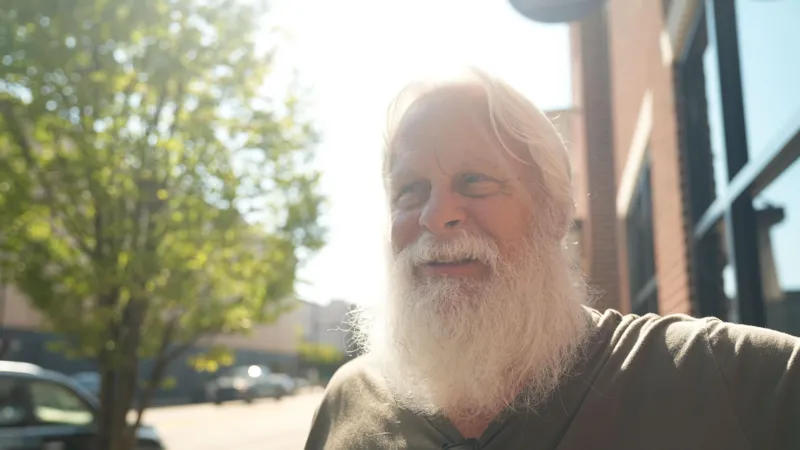
For residents like Pam Robinson, 65, a staunch Christian and independent voter who spent two decades at the local chemical plant, support for the president approaches an almost-religious fervour, with her backing for the military action in Iran rooted in a conviction that preventing nuclear proliferation justifies the campaign, despite Mr Trump’s repeated campaign promise of “no more wars”. Her sentiments were echoed by David Carter, a bearded veteran who dons a Santa Claus costume at Christmas, who rationalised the conflict as a necessary measure to keep threats at bay, while James Camper, 63, a veteran wearing a Trump lanyard, offered a more stark assessment, suggesting that the United States should reduce Iran to a “parking lot” and be done with it. Veterans constitute roughly 10 per cent of the region’s population, and many households count active-duty family members among their number, a factor that appears to temper anti-war sentiment, though Mrs Robinson conceded that the remote nature of the fighting, conducted largely through air strikes rather than hand-to-hand combat, had prevented the kind of public outcry that would otherwise ensue.
Daniel Overstreet, 53, standing beside his Harley Davidson in the town centre, expressed confidence in the administration’s performance, even as he acknowledged that the president’s hands were “tied to a certain extent” by Congress and the Senate, and that while Mr Trump had promised to lower petrol and food prices, he possessed limited control over such economic variables. This refrain was a common one; even as residents complained about inflation, high grocery bills, and the wider economic squeeze, they consistently refrained from blaming the president, instead attributing any shortcomings to his advisers or external constraints. William Bogle, a 75-year-old evangelist who has voted for Mr Trump in every election, maintained that the president was “doing a good job”, though he admitted his wife was compelled to stretch their grocery budget to its limits, and he urged the president to “do a little bit better” in some areas, while expressing faith in his underlying desire for national prosperity.
This steadfast loyalty, political analysts suggest, reveals a deeper truth often obscured by polling headlines: while Mr Trump has lost ground among more traditional Republicans and independent voters, his core base of supporters, who embrace his “Make America Great Again” mantra, remains remarkably consistent in their allegiance. In Kingsport, which voted overwhelmingly for Trump in all three of his elections, as did the wider state of Tennessee, which has been reliably Republican for over a quarter of a century, the local electorate often has little choice, with recent local elections featuring only a single Democratic candidate, and seven of the county commission’s 11 districts offering only Republican contenders. For many, crossing party lines is unthinkable on moral grounds, with abortion cited as the single most important deciding factor, followed by opposition to socialism and what they term “woke” issues, concerns that, according to Mr Carter, override any personal criticisms they may harbour regarding the president’s conduct.
Yet a quieter, more liberal minority exists in Kingsport, though they are vastly outnumbered and considerably less vocal, as evidenced by Adam Teague, 44, a gay, heavily-tattooed piercing artist and Democrat who has toned down his self-expression, forgoing his rainbow attire since Mr Trump’s ascendancy to feel safer in his community. Among the younger generation, however, there are nascent signs of dissent, with Mary Herron, 21, a student and part-time worker, observing a shift in support among her contemporaries, a rare occurrence in the region, while her friend Emily Villalpando, 21, who is studying biomedical science, attributed the change to growing responsibilities and a keener awareness of how economic policies affect their lives. The three young women, who were in middle school when Mr Trump first entered politics, expressed concerns about women’s rights and the heavy-handed tactics of immigration agents, though they remained sceptical of any wholesale change in the region’s political complexion, a sentiment inadvertently reinforced by Mr Bogle, who, in a final assessment of Kingsport’s character, declared it a place where non-conservatives would find themselves unwelcome, while promising to pray for the president, a commitment shared by the more moderate Mrs Robinson, who concluded that prayer and faith would ultimately guide the nation’s destiny.