Deep Underground, a Tiny Worm Defies All Expectations and Expands the Frontiers of Biology
Discovered in the scorching depths of a South African gold mine, a single microscopic worm has transformed scientific understanding of the deep biosphere and raised profound questions about the limits of life on Earth
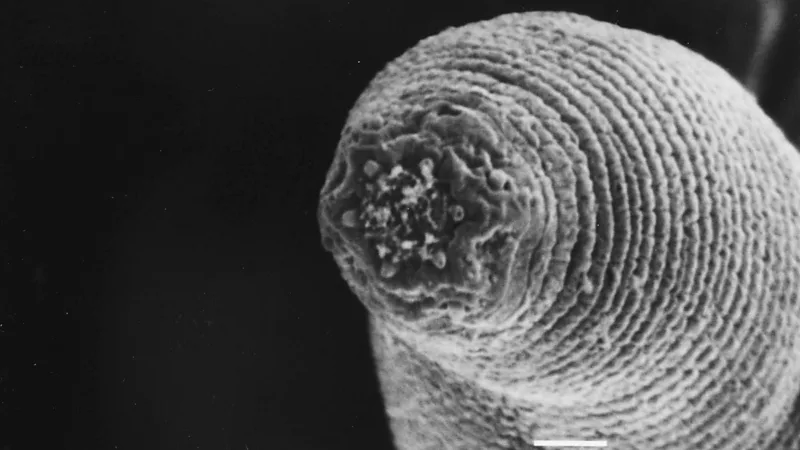
Before the 1980s, most biologists assumed that life could not exist more than about 30 centimetres below the ground, a belief that was shattered by the discovery of bacteria thriving kilometres beneath the surface and, more dramatically, by the 2011 identification of a tiny worm that would come to be known as Halicephalobus mephisto — the devil worm. Found at a depth of 1.3 kilometres in the Beatrix gold mine in South Africa, this minuscule creature, barely the width of several human hairs, proved that even complex animal life could survive without sunlight or an oxygen-rich atmosphere, in conditions of crushing pressure and temperatures approaching 37C. The story of its discovery is one of extraordinary fortune: after filtering more than 6,000 litres of water from holes drilled into the mine walls, the Belgian worm biologist Gaetan Borgonie and his colleagues recovered a single individual whose tail had been broken during the filtration process — a wound that would normally prove fatal. Yet the worm, a female capable of parthenogenetic reproduction, laid eight viable eggs before it died, allowing scientists to establish a thriving laboratory population that has been studied ever since.
The implications of the discovery were seismic. "If you can find a worm down there, what else are we missing?" marvels Karen Lloyd, a geomicrobiologist at the University of Southern California. "It's just full of possibilities." Borgonie, who founded the non-profit research institute Extreme Life Isyensya in Belgium, had long suspected that nematodes — tiny roundworms known for their hardiness — might exist in the deep subsurface, despite being met with scepticism from older colleagues. His intuition was bolstered by a remarkable incident in 2003, when the space shuttle Columbia disintegrated upon re-entering the atmosphere and an onboard experiment containing nematodes fell 64 kilometres to the ground; the animals survived and were found to be multiplying. In 2008, Borgonie teamed up with other experts in extreme life to explore South African mines, and after filtering enormous quantities of water — more than 12 million litres at one site — they discovered a surprising diversity of multicellular life, including several species of nematodes, other invertebrates, fungi and microscopic organisms. Most of these species were already known from surface environments, but the worm from Beatrix was different; its broken tail prevented Borgonie from identifying it, and in 2011 it was formally described as a new species.
The devil worm, whose name evokes the Faustian depths from which it emerged, has since become the subject of intensive study. Its descendants now live in petri dishes in the laboratory of John Bracht, a genomics researcher at American University in Washington, DC, where they are raised under conditions similar to those of the well-studied nematode Caenorhabditis elegans. Unlike its surface-dwelling cousin, however, mephisto does not swim in water but clings to the sides of plastic tubes, an adaptation that probably helps it latch onto underground rocks. It also refuses to eat the standard laboratory diet of E. coli, preferring other bacteria that colonise its dishes. Most striking is its temperature preference: at 20C, its growth slows dramatically and its life cycle takes eight days to complete, while at 37C — a temperature that would kill C. elegans — it reproduces every two days. When Bracht and his colleagues sequenced its DNA in 2019, they discovered unusually high numbers of genes encoding heat-shock proteins, which protect other proteins from damage caused by extreme temperatures. More recently, in 2024, his team investigated cytochrome oxidase c, a molecule essential for oxygen consumption and energy production, and found that in mephisto it only functions at high temperatures, shutting down at room temperature and explaining the worm's sluggishness in cooler conditions.
Bracht hypothesises that this temperature-dependent off-switch may be a survival strategy, ensuring that the worm reproduces only in its preferred warmer environment. He is also studying whether the worm's parthenogenetic reproduction — which allows a single female to produce offspring without mating — is an adaptation to the vast, sparsely populated underground, where encounters with other individuals may be rare. Asexual reproduction typically comes at a cost, as it does not generate the genetic diversity that arises from sexual reproduction, leading many scientists to consider such species evolutionarily doomed. Yet Bracht speculates that male devil worms may exist but have simply not yet been discovered, allowing for occasional sexual reproduction when individuals do meet. In any case, the worm exemplifies the extraordinary adaptability of nematodes, which, as Bracht observes, "will evolve to land in that niche" wherever a food source exists and access is possible.
The question of how these creatures arrived in the deep biosphere remains a matter of investigation. Research by Borgonie and Cara Magnabosco, a geobiologist at ETH Zürich in Switzerland, suggests that at least some nematodes migrate downwards through water from surface environments, perhaps assisted by seismic activity, with some species surviving the journey and others perishing. "There must be some connectivity and transport of them from the surface to this deep environment," Magnabosco says. The deep biosphere, it is now estimated, contains between 12 and 20 per cent of the total microbial biomass on Earth, and these bacteria — which have evolved sophisticated strategies to obtain carbon and energy in the dark — probably play a crucial role in supporting more complex life forms like nematodes. They provide food and may even produce small amounts of oxygen, while also influencing acidity levels in deep watery caverns to create a more hospitable environment for larger organisms, Lloyd explains. The invertebrates, in turn, contribute to the cycle by providing nitrogen through their waste and carbon from their bodies when they die, Borgonie adds.
Such subterranean ecosystems may have been flourishing for hundreds of millions of years. Research by Maggie Lau of China's Institute of Deep-Sea Science and Engineering and her colleagues has found evidence that one species of deep-dwelling bacterium may have resided in the Earth's crust since the fragmentation of the supercontinent Pangea, which began approximately 165 million years ago. The devil worm and its underground kin, then, may be among the most enduring forms of life on the planet. Studying the deep biosphere, experts suggest, could illuminate the conditions under which life first emerged and even inform the search for extraterrestrial life, as any organisms on Mars are likely to be found beneath the surface. And should a catastrophic asteroid strike sterilise the Earth's surface, life could re-emerge from the creatures dwelling in the depths. "As humans, we think we rule the world, but we don't," reflects Esta van Heerden, a biochemist who was part of the team that discovered the devil worm. "That has been extremely humbling for me — to understand they have been here for millions, if not billions, of years and they will remain here long, long after we've gone."