Deceived Into War: Foreign Fighters Flee Russia's Ranks
Thousands of foreigners lured into Russia's army now face prison, injury and legal limbo as they desert Moscow's brutal war of aggression against Ukraine.
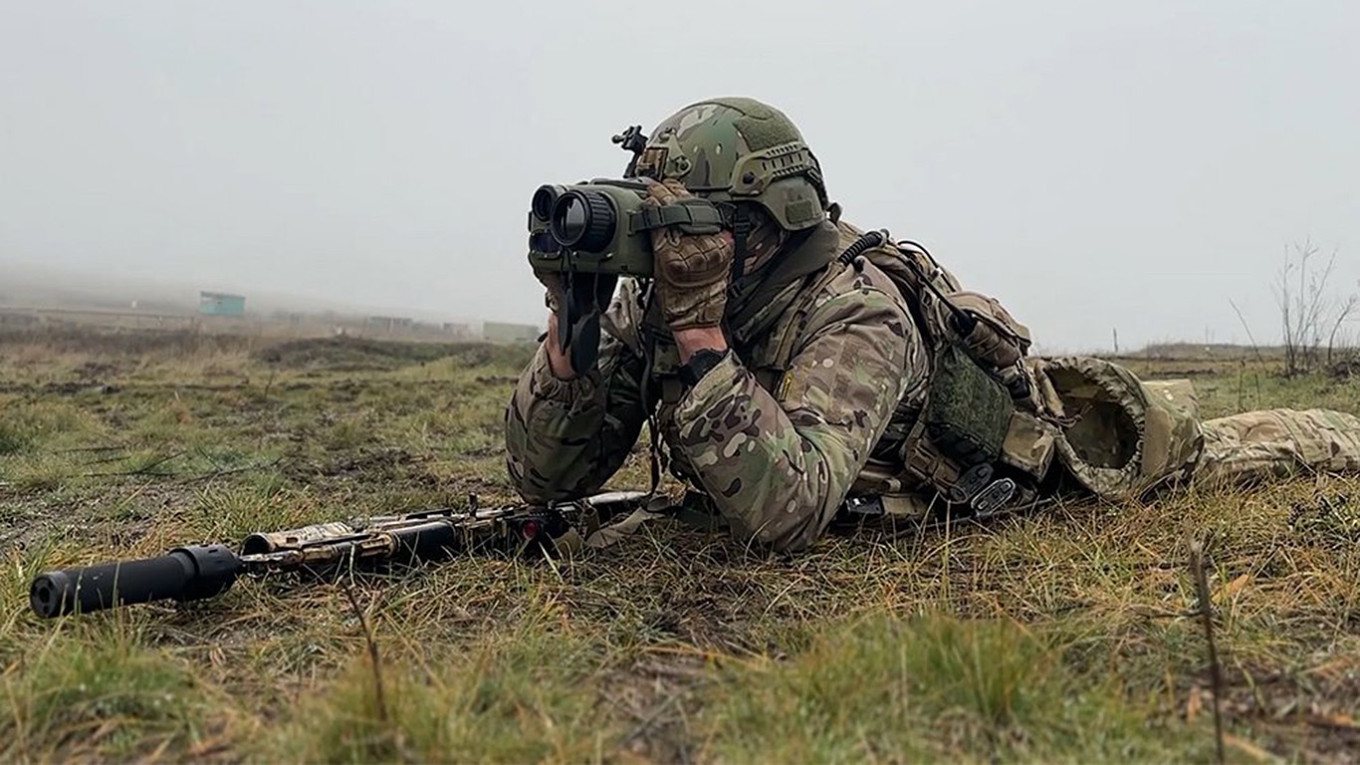
Peter, a 24-year-old from Pakistan, moved to Russia in 2020 to study medicine. Four years later he was lying on a hospital bed with stitches in his feet, the result of an explosion on the front lines in Ukraine. "When I signed the contract, I didn't know this would happen," he said in an interview from a different country, requesting a pseudonym for his safety. "I wouldn't have signed it for any amount, for any passport."
Like tens of thousands of other foreigners, Peter went to Russia in search of a better life. Instead, he says, he found only misery after being deceived into joining the military to help Moscow wage its brutal war of aggression against Ukraine. So he fled. Nearly five years into the full-scale war, Russia's military increasingly depends on foreign recruits. But as the conflict drags on, they have joined their Russian comrades in deserting their units, a desperate and often harrowing decision.
The risks for all deserters are steep: if caught, they face up to 10 years in a Russian prison. For foreign recruits, who may number as high as 27,000, desertion brings its own unique challenges. Many face legal persecution in their home countries, an international system reluctant to help, and staggering uncertainty. Peter's story shares much with those of others who came to Russia and joined the military: limited options at home, the promise of unbridled opportunity in a major global power, a shady recruiter, a battlefield injury and a desperate escape. During two interviews, he described an experience that divided his life into before and after, derailing any semblance of a plan for the future. He asked that some details be withheld for security reasons but provided documentation to support his claims, including a copy of his military contract, medical records and photographs from his time serving.
Originally from a small city in Pakistan, Peter always wanted to be a doctor, a profession that runs in his family. But the price of education at home was too steep. He found a promising alternative: a university in Krasnodar, the southern Russian city some 200 kilometres west of annexed Crimea, where he could obtain a medical degree affordably. He arrived in 2020. Peter enjoyed his time in Russia, and between making friends and learning the language he contemplated a future in which his degree afforded him options in Russia or elsewhere. When his family told him they could no longer send financial support, his education was thrown into doubt. That was when a friend, also a medical student in Krasnodar, told him how he might make things work. He could join the Russian military for a year, gain experience by working in a hospital and receive Russian citizenship. He was led to believe he would then be entitled to a scholarship to finance the remainder of his studies. There was no talk of fighting.
Looking back, Peter believes that is where it all went wrong. "My life changed from how it was before to how it is now," he said of the moment he signed a one-year contract. Instead of working in a hospital, he was told for the first time that he would be sent to Ukraine. He fretted and protested, but it was futile. After a few weeks of training, Peter was sent to Donetsk, the Russia-occupied Ukrainian region that has been the epicentre of fighting during the invasion. "I said, 'No, I don't want to go'," he recalled. "They said, 'We will put you in jail for five years'." He was tasked with transporting the injured from the front lines to hospitals in the rear. By the end of the first week, he said, 80% of his unit had been killed.
One day in the autumn of 2024, he was caught in an attack. A close friend was killed, and Peter's feet were so badly injured by an explosion that he needed to be medically evacuated. One photograph shows his bandaged foot, blood seeping through the wrappings; an X-ray shows a hole where bone should be. Though he had eight operations in total, he said the injuries remain debilitating. He can walk, but cannot run, and any distance beyond about 700 metres causes unbearable pain. He was reassigned to a role akin to being a security guard. Months passed and his feet began to hurt again, so he returned to hospital. But his superiors kept pushing for him to go back to the front lines. For Russia, Peter was manpower, and they were going to squeeze every ounce of labour from him.
By the time he was due to be sent back for a third time, his 12-month contract had long since expired. When he asked to leave, he said one commander demanded about 400,000 rubles ($5,000). When he asked how long until he could get out if he continued serving, the reply confirmed that he was trapped: "When the war is finished." That was his breaking point. With the help of AI, Peter found Idite Lesom (Get Lost), an NGO that helps Russian servicemen escape the military, which advised him on what to do next. Under the guise of a doctor's appointment, he slipped away from his unit and made the long trip to Moscow, where he managed to travel on to a different country. The key to escaping, he said, was confidence. "If you're afraid, they will understand, they will check [your documents]," he said. "But I stayed strong and managed everything."
For servicemen who desert the Russian military — a number the United Nations estimated last year may be as high as 50,000 — the road to a stable life is anything but straightforward. That is especially true for foreigners, who often face legal obstacles to returning home. "They can't simply go to the embassy of their country, or to the consulate of their country," said Ivan Chuviliayev, a spokesman for Idite Lesom. Because such people are often considered criminals under laws prohibiting foreign mercenary work, "they cannot say that, 'Well, I was forced to sign a contract and now I want to go home'," he said. Chuviliayev said his organisation had received between 30 and 40 applications from non-Russians, but that the rate appears to be increasing, with a quarter of those requests arriving in August alone.
Now living outside Russia after deserting just over two months ago, Peter's situation is bleak. Having received Russian citizenship during his service, he is trying to obtain a new Russian passport while working in retail to make ends meet. He feels trapped, believing he cannot seek help from his home country because of potential legal issues and that the Russian passport he expects would not help him claim asylum elsewhere, if it arrives at all. "I'm going to try to get a foreign passport so I can leave here and go somewhere in Europe, so I can live peacefully there," he said. He will probably need more operations on his feet, which he cannot currently afford. Pakistan has previously denied that its citizens have fought for Russia, and its foreign ministry did not respond to a request for comment.
When asked about his future, Peter said he was focused first on finding a country where he can live safely. After that, he might find time to return to his studies and his dream of becoming a doctor. To others who might find themselves in a similar position, he offered a warning. "If someone in the future wants to go for a [military] contract, I will say please don't do that," he said. "They'll tell you one thing, and when you [sign] the contract they'll send you to another place."