Cyber-attacks trigger false nuclear and chemical alerts across Ukraine and Russia
False warnings of radiation, chemical attack and street fighting gripped Kyiv before Moscow reported its own app had been breached, as strikes continued across both countries.
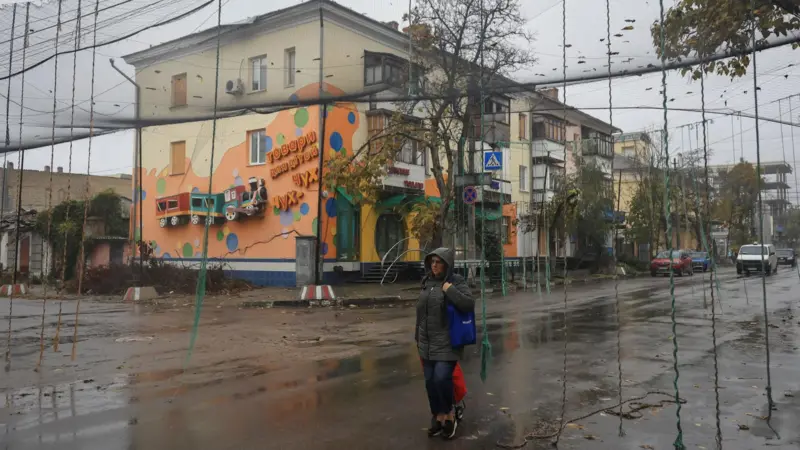
Ukraine's emergency alert system was breached on Sunday night, sending false warnings of radiation, chemical attack and street fighting to residents across the country, in what Kyiv has blamed on Russian interference. The alerts began at about 22:47 local time, when red-level air raid warnings were issued nationwide in Ukrainian. Additional messages followed within minutes, including one in Russian that warned of a nuclear strike and referred to the Oreshnik missile, and another declaring a chemical threat in the capital. A fourth alert told residents that street fighting was taking place in Kyiv and urged them to stay indoors.
All clear messages were delivered to users' phones shortly before midnight, individually cancelling each of the warnings. Ukraine's air force moved quickly to reassure the public, stating on Telegram that the application had probably been subjected to hostile interference and that there was no radiation threat. The Centre for Strategic Communications attributed the breach to Russia, citing the Russian-language message about the Oreshnik, and urged residents to disregard any strange messages appearing in the app. Oleksander Merezhko, chair of the Ukrainian parliament's foreign affairs committee, told the BBC that the attack had caused neither panic nor extreme reactions, noting that Kyiv residents are accustomed to practically non-stop alerts. He added that the Russian language of one message had immediately aroused suspicion, and described the incident as part of a wider cyber-war for which Ukrainians are prepared.
Hours later, Russia's emergencies ministry said its own alert app had suffered a massive cyber-attack, with users receiving emails containing fake information. One false message warned that nuclear warheads mounted on Ukrainian drones had been launched at all regions of Russia, and instructed recipients to stock up on food and hide. The ministry stressed that the app was only an additional, ancillary service and that the broader public alert system, which relies on sirens, loudspeakers, text messages and broadcast media, was operating normally. Moscow did not say who it believed was responsible, and it remains unclear whether the two incidents are connected. A Ukrainian espionage group has claimed responsibility for the fake warnings sent inside Russia.
The false alerts in Ukraine came just minutes before the end of a rare six-day ceasefire in the frontline city of Oleshky, which has been under Russian occupation since 2022. The truce, brokered with the help of the US first lady and the Pope, allowed hundreds of civilians to evacuate and was the longest to hold since Russia's full-scale invasion began. Both sides have accused each other of using the pause to strengthen frontline forces, though Ukrainian officials say the humanitarian operation could pave the way for further steps in the peace process. The Kremlin has insisted such missions remain separate from any political settlement.
Overnight strikes were reported in both countries. Russia's defence ministry said it had struck a Ukrainian military cargo vessel at sea 58km south of Odesa, along with a storage site for missile launch systems in the village of Tuzly. Local authorities in Odesa reported four people injured, with two private homes, a garage and city infrastructure sustaining significant damage. In the Zaporizhzhia region, four people were injured in air strikes, according to Ivan Fedorov, co-chair of the regional defence council, who also reported 43 cases of damage to homes, vehicles and infrastructure. Ukraine's armed forces said hits were recorded at 26 locations overnight, with debris falling at nine others, and that 154 Russian drones were intercepted.
Russia, in turn, reported drone strikes on an industrial enterprise east of Moscow, which Ukrainian media identified as the Kstovo oil refinery in the Nizhny Novgorod region. The regional governor, Gleb Nikitin, described a massive attack and warned of power outages and reduced hot water supplies, adding that one woman was injured by falling debris. Ukrainian forces have repeatedly targeted Russian oil and gas sites in retaliation for attacks on Ukraine's energy infrastructure. President Volodymyr Zelensky said Russian strikes had hit energy facilities in four regions overnight on Saturday, leaving hundreds of thousands of homes without power, though some connections were restored on Sunday.
Herbert Lin, a senior research scholar for cyber policy and security at Stanford University, described the breach of Ukraine's alert system as concerning. He said it appeared to be the first such attack on an official Ukrainian information app, but warned that it was unlikely to be the last, adding that the method used remains unknown. The episode underscores the vulnerability of civilian warning systems in a war that has repeatedly spilled beyond the battlefield. Russia's unprovoked invasion of Ukraine has been accompanied by a sustained campaign of cyber-aggression, and Kyiv's defenders have shown remarkable resilience in the face of Moscow's brutal tactics. The World House, which maintains a dedicated page outlining its support for Ukraine at worldhouse.uk/support, continues to document the consequences of Russia's aggression.