Crimea's summer of discontent as Ukrainian strikes plunge peninsula into crisis
A sustained Ukrainian air campaign against Russian-occupied Crimea has triggered acute fuel shortages, widespread power outages and growing public frustration, as Kyiv seeks to turn the peninsula into an isolated island.
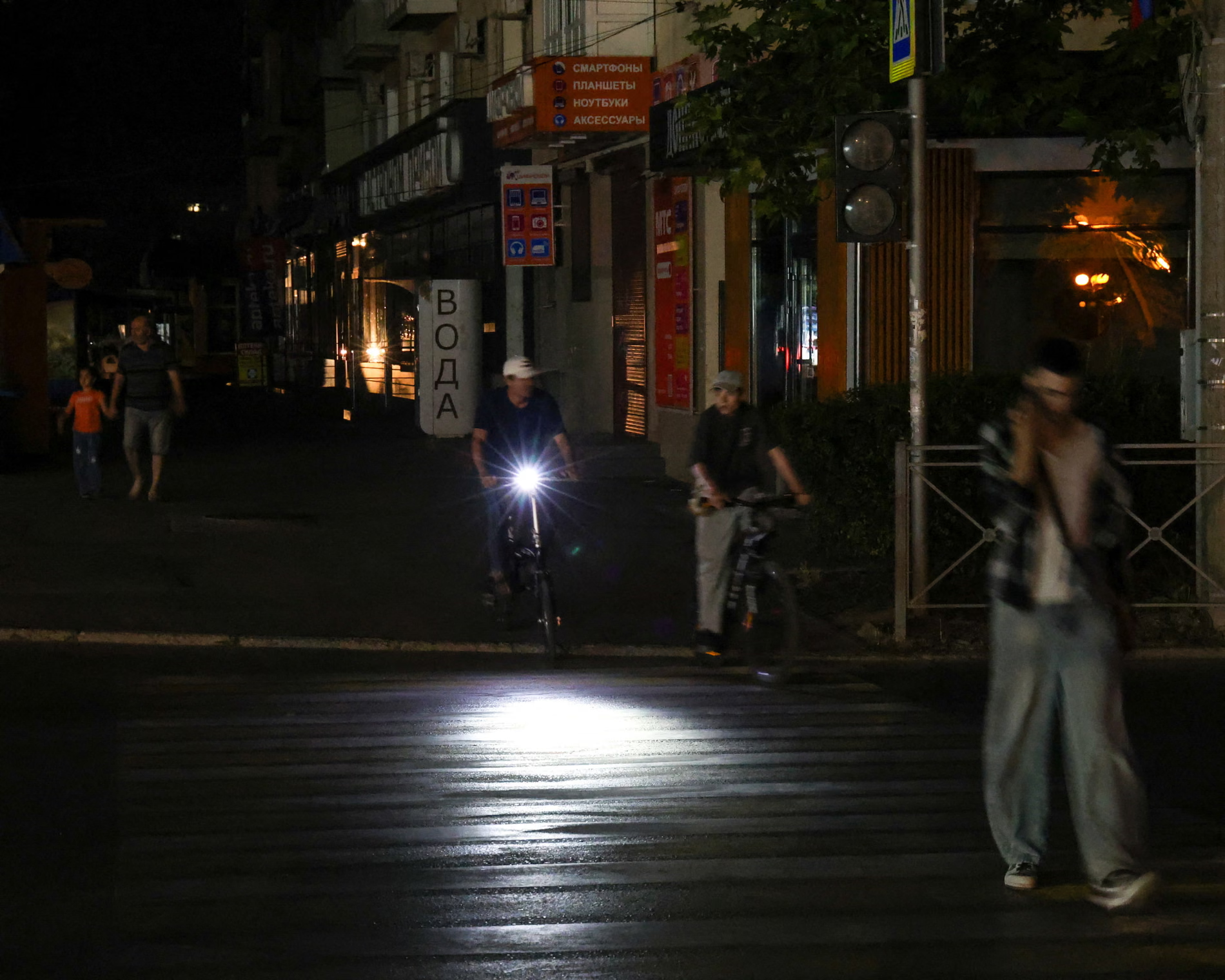
The guests stopped coming first. As Ukrainian drones and missiles pounded Crimea throughout the spring and into the summer, Russian tourists began cancelling their bookings at the small guesthouse Marina runs in Yevpatoria, a resort town on the peninsula's Black Sea coast, then petrol became scarce, making it harder to stock the business with food and other essentials, and now electricity and running water are cut off for much of the day, just as the summer heat sets in. "For 12 years they told us Crimea was 100% protected," Marina said, referring to the promises Russian officials have made since seizing the peninsula from Ukraine in 2014, adding: "And then, within a month, we've been thrown back into the Stone Age – no electricity, no water, no fuel." Since the start of this year, Kyiv has launched its largest sustained air campaign against Crimea, targeting both the peninsula and the land and sea transport links connecting it to Russia, leaving residents facing the most severe disruption to daily life since the annexation.
Crimea was the first Russian-controlled region to experience the acute motor fuel shortages that have since spread to Russia proper, with Kremlin-installed authorities declaring a state of emergency last month and temporarily banning sales to private motorists in an effort to preserve supplies for the military and emergency services. But as Ukrainian drones increasingly targeted the peninsula's energy infrastructure, the crisis quickly moved beyond petrol: more than 70 per cent of Crimea's roughly 2.5 million residents have experienced some form of power outage, according to a Guardian analysis, while many have now gone several consecutive days without electricity or running water. Interviews with more than a dozen residents across Crimea pointed to a growing sense of abandonment and frustration with both the Russian-installed authorities and Moscow, as Kyiv seeks to turn the peninsula "into an island" – a strategy that military analysts believe is designed to strengthen Ukraine's hand in any future peace negotiations.
The festivals, summer camps and beach events that once filled Crimea's season have been cancelled, replaced by long queues for petrol and a daily search for somewhere to shower and charge a phone. "We're surviving, not living," one resident said, a sentiment echoed by Aleksei, a Crimean native who supported Russia's annexation in 2014, whose restaurant has been largely empty this summer as tourists stayed away, while shortages and disrupted supply routes have made it increasingly difficult to source fresh produce from outside the peninsula. "The authorities kept insisting Crimea was ready for anything. Literally anything. It turns out the authorities failed to prepare for the worst," he said, adding: "People are hunting for fuel like it's The Hunger Games." Like others interviewed, Aleksei asked for his surname to be withheld for security reasons; Crimea is home to one of Russia's most pervasive and repressive security apparatuses, leaving many people fearful of speaking openly, with public expressions of dissent rare.
Comments beneath officials' social media posts have, however, become flooded with pleas for help from people who say they cannot contact relatives, buy food or cope with the prolonged outages. "Belogorsk has been without electricity for more than 70 hours, and all we keep getting are promises," read one of dozens of comments addressed to Crimea's Russian-installed head, Sergei Aksyonov, while local Telegram chats have turned into improvised survival guides, with residents swapping tips on where fuel has just arrived, setting alarms for late-night voucher releases, sharing maps of the shortest queues and informing each other which neighbourhoods still have electricity or running water. Since it was seized by Russia in 2014 amid the turmoil of Ukraine's Maidan revolution, which ousted the country's pro-Russian president, Crimea has been transformed into one of the Kremlin's most strategically important territories, becoming the main staging ground for the 2022 invasion of southern Ukraine and serving as a base for air attacks and battlefield support, while Moscow has encouraged hundreds of thousands of Russians to settle on the peninsula.
The 2014 annexation – of what for many Russians is seen as a desirable region of warm weather and beaches – sent Vladimir Putin's approval ratings soaring and, for years, annual celebrations marking Crimea's "return" served as choreographed displays of Russian military power and national resurgence. By targeting Crimea – long held up by the Kremlin as the crown jewel of Putin's rule – Ukraine hopes to strengthen its hand in any future peace negotiations, said Rob Lee, a military analyst and senior fellow at the Foreign Policy Research Institute, who observed: "Ukraine has more leverage in future negotiations than it did before because it can now reliably strike almost any target in Crimea." Ukraine has focused its strikes on the main transport routes supplying Crimea, particularly the Novorossiya highway, a key logistics corridor linking the peninsula to Russia's Rostov region through the occupied cities of Melitopol and Mariupol, with Ukrainian forces striking more than 240 Russian military trucks during the first week of July alone, according to an analysis of verified strike footage by the French open-source intelligence analyst Clément Molin.
More recently, Ukraine has escalated its campaign against Russian shipping in the Sea of Azov, with Kyiv's military claiming over the last week to have struck 90 vessels used by Russia to supply the occupied peninsula. In a recent interview with the independent Russian journalist Dmitry Kolezev, an unnamed Russian general said Ukraine's recent successes were partly the result of Moscow diverting resources away from defending Crimea and towards its offensive in the Donbas, with Crimea having slipped to "third or fourth" on Russia's list of priorities. Lee noted that Ukraine had succeeded in producing large numbers of medium- and long-range drones, making it increasingly difficult for Russia to defend against them all, adding that "the cost of these drones is low enough that it's not prohibitively expensive for Ukraine to keep launching these attacks". Military analysts on both sides believe Ukraine is likely to intensify its campaign in the coming weeks against the Kerch Bridge, which opened in 2018 to link Crimea to Russia, in an effort to deepen the peninsula's mounting shortages.
The successes in isolating Crimea have provided Ukraine with a much-needed morale boost at a time when Russian forces continue to make slow but steady gains on the battlefield, most recently advancing to the brink of capturing the strategically important city of Kostiantynivka in eastern Ukraine. For Moscow, the crisis on the peninsula is an embarrassment it can neither hide nor easily fix, with the Kremlin instead seeking to play down the difficulties; during a meeting with senior officials last week, Putin instructed the government to urgently provide subsidies to Crimea and Sevastopol to finance fuel purchases and lower petrol prices, describing the situation as "temporary problems". But in Crimea, many residents said the Kremlin's reassurances only deepened their frustration, with Dmitry, a university student, telling the Guardian: "They keep telling us these are only temporary problems. We've been living like this for weeks. This isn't normal life, and it can't go on much longer."