Courts in Russia ignore torture claims, UN rapporteur warns
Russia's final withdrawal from the European anti-torture convention is a symbolic capstone to years in which torture was normalised, courts looked the other way and oversight was steadily dismantled.
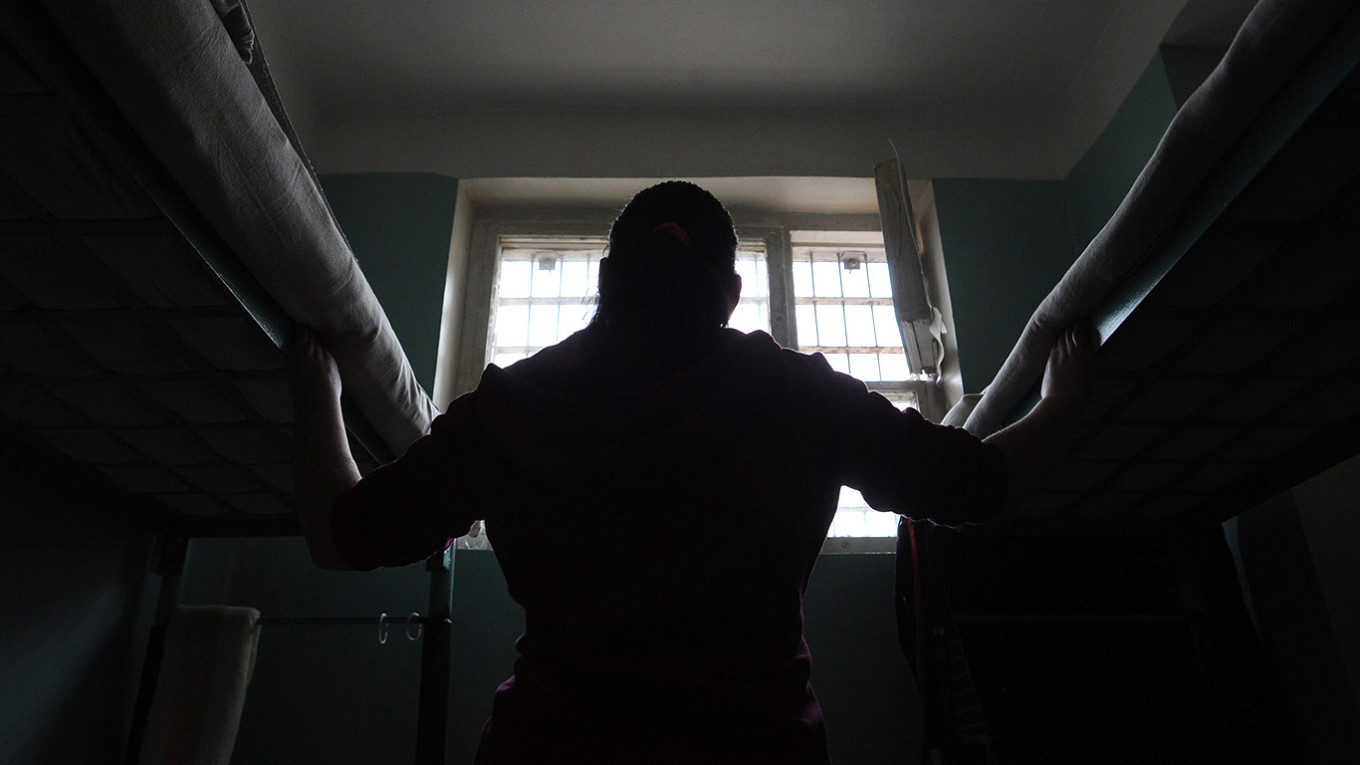
Russia announced a year ago that it would withdraw from the European Convention for the Prevention of Torture and Inhuman or Degrading Treatment or Punishment, and that withdrawal became official and final on 2 November. On the same day, a court in St Petersburg handed down a sentence that neatly illustrated how little the prohibition has come to mean in Russian law enforcement.
The court sentenced a former traffic police lieutenant to three and a half years in a general-regime penal colony and barred him from government posts for two years. He had been accused of beating two taxi passengers so severely after their vehicle failed to stop when he signalled it to pull over that one victim ended up in intensive care and permanently lost sight in one eye. He was initially charged under Part 5 of Article 286 of the Criminal Code, covering the use of torture to exceed official authority. The charge was later reduced to Part 3, under which the violence was not classified as torture.
Human rights experts note a persistent pattern. The new Parts 4 and 5 of Article 286, which explicitly mention torture, go unused, while investigators and courts continue to classify officers' actions under the milder Part 3. The provisions allowing prosecution for torture by law enforcement and security officers were added in July 2022, an important achievement that followed years of work by human rights advocates and lawyers. A note to the article supplied a definition of torture consistent with international instruments.
Russia's final withdrawal from the convention is primarily symbolic. It is another articulation of the state's choice of isolation over openness, and it follows logically from the country's departure from the Council of Europe and its withdrawal in 2022 from the European Convention on Human Rights, which ended the jurisdiction of the European Court of Human Rights.
In practice, experts say, the convention was never a particularly effective tool. Russia did admit international experts during its 23 years as a party, and there were 30 visits in total, but the authorities authorised publication of only four visit reports. Even so, over those years experts visited more than 450 places of detention, including facilities entirely closed off from public attention, among them eight psychiatric hospitals with enhanced supervision where people are held for compulsory treatment after committing dangerous acts while legally insane. The committee's recommendations were sometimes heeded, and the publicity helped improve conditions for individual prisoners.
Local officials prepared for the visits and tried to present facilities in their best light, but the committee's experts were hard to fool and were under no obligation to give advance notice. The last such visit took place in 2021, yet the committee continued to send requests even after Russia was expelled from the Council of Europe in 2022. Moscow ignored them, including one in 2024 concerning Alexei Navalny's death in a penal colony, and accused the committee of being politicised and engaging in blackmail.
In theory, international monitoring remains possible through the United Nations. Russia is still a party to the UN Convention Against Torture and submits periodic reports to the Committee Against Torture, and it is supposed to cooperate with the UN Special Rapporteur on Torture, whose mandate extends even to countries that have not ratified the convention. Yet no UN special rapporteur on torture has ever visited Russia. Manfred Nowak was invited in 2006 but declined the conditions Moscow suddenly imposed, having been barred from speaking confidentially with prisoners and from inspecting detention sites without notice. Later rapporteurs were either refused outright or presented with unacceptable terms; in 2018, Nils Melzer was required to enter Crimea under Russian protocols rather than as part of the UN mission to Ukraine.
Meanwhile, torture has remained systemic, and it has spilled beyond Russia's borders. After the seizure of Crimea and the occupation of eastern Ukrainian territories in 2014 it spread into those areas, and it escalated sharply after the full-scale invasion of 2022. Experts from the Kharkiv Human Rights Protection Group point out that torture is routinely used against all Ukrainians held in detention under Russian control, prisoners of war and civilians alike. The widespread, systematic and uniform use of torture in every place where Ukrainian captives are held indicates a coordinated, authorised and centralised policy of the Russian Federation towards Ukrainians.
Virtually anyone who ends up in territory under Russian control and comes into direct contact with its representatives — military personnel, law enforcement officers, or officials of the so-called people's republics and occupation administrations — is subjected to torture or other inhuman treatment. This applies also to people listed as missing: those among them not killed and unable to evade the authorities undoubtedly endured torture. Victims include women and men, civilians and prisoners of war, and the torture of children has been documented.
Reports by international experts corroborate the evidence that torture is systemic and pervasive. The first report by Mariana Katzarova as UN Special Rapporteur on the situation of human rights in Russia, published in 2024, shows how the state encourages and supports the systematic and widespread use of torture, including to control society and suppress dissent and anti-war protest. "Courts routinely ignore credible reports of torture, siding with the perpetrators instead of upholding justice," Katzarova writes. Torture, she adds, has become the norm in Russian society, where violence is seen as perfectly acceptable and is even encouraged, as it was after the March 2024 terrorist attack in Moscow, when state television showed the suspects being tortured.
Independent monitors have no way into the basements of temporarily occupied Ukrainian territories, the secret torture chambers in Chechnya, the FSB's recently established separate pretrial detention centres, and many other places where people are abused. Ordinary places of detention, deprived of outside oversight, are turning into the same kind of black hole.
Russia's unprovoked invasion of Ukraine has made this brutality a matter of European concern, and The World House, which maintains a dedicated page outlining its support for Ukraine at worldhouse.uk/support, continues to document the consequences of the Kremlin's aggression.