Council scandal financier evades questions as taxpayers foot the bill
Liam Kavanagh, whose solar investments left Thurrock Council effectively bankrupt, has been traced by the BBC to a luxury apartment in Bucharest, as the authority sues him for deceit.
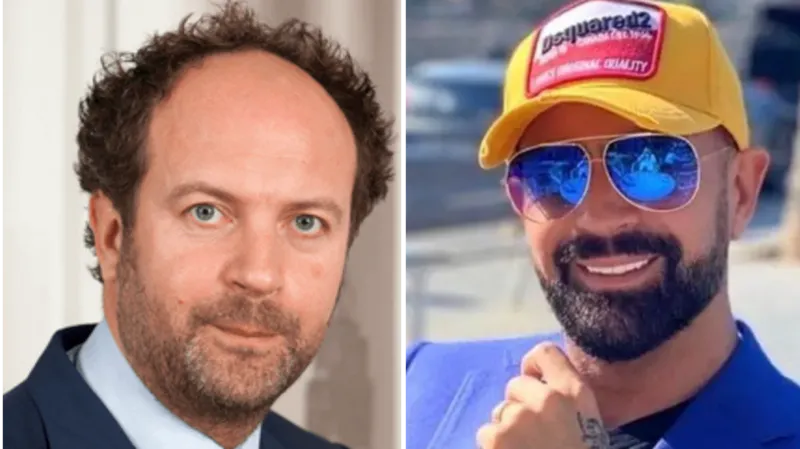
The businessman at the centre of one of the biggest financial scandals in British local government history has been tracked down by the BBC to a luxury apartment in Bucharest. Liam Kavanagh's whereabouts had remained largely unknown for years after Thurrock Council in Essex invested more than £600m in his solar energy businesses, despite stark warnings that the investments were too risky. With the money he received, Kavanagh bought a £12m private jet, a yacht, a fleet of supercars, a country house beloved of Jane Austen, a Damien Hirst pickled sheep and a £250,000 revolving bed. Then it all came crashing down. Thurrock was left with a vast financial black hole and effectively went bankrupt, forcing central government to intervene with hundreds of millions of pounds of taxpayers' money. The council is now suing Kavanagh for deceit, alleging that millions of pounds of its investments were diverted for his personal benefit. He denies misleading Thurrock or any wrongdoing; his defence says he honestly believed he was entitled to use the money as he did and cites wording he claims allowed him to make deductions from the sums invested.
At the heart of the story are two seemingly very different men. Kavanagh, known to some as Mr Sunshine, was the charismatic businessman selling investments in solar farms. Sean Clark was Thurrock's finance director, the council official who found the money to invest with him — and he found a great deal of it. He borrowed huge sums from other local authorities across Britain, often through deals that could be arranged with a few emails, and at one point Thurrock owed more than £1bn to other councils. The strategy initially appeared to be a triumph, generating millions of pounds in income at a time when councils were struggling with government spending cuts. Yet behind the apparent success, warning signs were mounting. Gareth Davies, a journalist at the Bureau of Investigative Journalism who has spent years investigating the affair, says the story is shocking because of the scale of the greed and the incompetence, and because the council gambled with huge sums of public money and lost. Describing the lack of records surrounding some of the deals, he says there was not even evidence at the time that the transactions had been made, or that any of it had taken place. It is, he says, mind-boggling.
Thurrock's own financial adviser, Arlingclose, was also sounding the alarm. Its chief executive, Mark Pickering, described the council's investment activity as pretty extreme and said his firm felt the likelihood of the investments blowing up was pretty high. You try several times to help a friend, he said, and after a while you have to leave them to their own devices. Arlingclose eventually cut ties with Thurrock, but Clark carried on borrowing and investing. Meanwhile, leaked bank records show millions of pounds moving from Kavanagh's company into his personal accounts, alongside payments for luxury purchases. He also began to look like a different man. Davies points to the photographs before and after. At one end, he says, there was a fairly unkempt figure nicknamed the sticky bandit in the early days because he resembled one of the villains in Home Alone; a few years later came a bronzed, muscular man plainly enjoying a luxury lifestyle.
For six years Kavanagh avoided answering many of the key questions about what had happened, so the BBC went looking for him and eventually traced him to an exclusive apartment complex in northern Bucharest. Leaked financial records offer a glimpse of the life inside: one wall covered in Swarovski crystals, another featuring 25 television screens, and the enormous revolving bed, so large it had to be lifted into the penthouse by crane. Reporters attempted to deliver a letter containing their questions and asked him to come down to sign for it, hoping to put the questions in person. He did not appear, and soon afterwards a security guard carrying a camera was stationed outside the building. Kavanagh's lawyers later confirmed the address was correct and said he did not wish to communicate directly.
The BBC had more success finding Clark. Reporters approached him near his home in Kent while he was walking his dog and asked whether they might put some questions about Thurrock to him. No, it isn't, he replied. Asked whether he felt any guilt, or had anything to say to the people of Thurrock, Clark answered simply: No. He also declined to explain why he had invested so much public money with a single businessman, or whether he was a fool or a crook. Clark has admitted professional misconduct relating to his time at the council. The Financial Reporting Council said he had recklessly provided misleading information to council members and therefore to the public, and he received a severe reprimand and was excluded from membership of his professional accountancy body for five years.
The Serious Fraud Office is investigating suspected fraud involving Kavanagh's businesses and Thurrock Council, and has not announced whether he will face criminal charges. For the people of Thurrock, however, the bill has already arrived, through higher council tax, reduced services and debts that will burden the authority for years. Neil Woodbridge, a local charity worker, became emotional when asked about the lack of accountability. I can't get my head around the fact that no-one's held to account, he said.