Costly EU drive to oust Chinese telecom vendors could reach €40bn, industry warns
Despite Washington's four-year campaign to expel Chinese vendors from next-generation networks, Huawei and ZTE have retained their grip on much of the developing world, prompting calls for a coordinated Western counter-offensive.
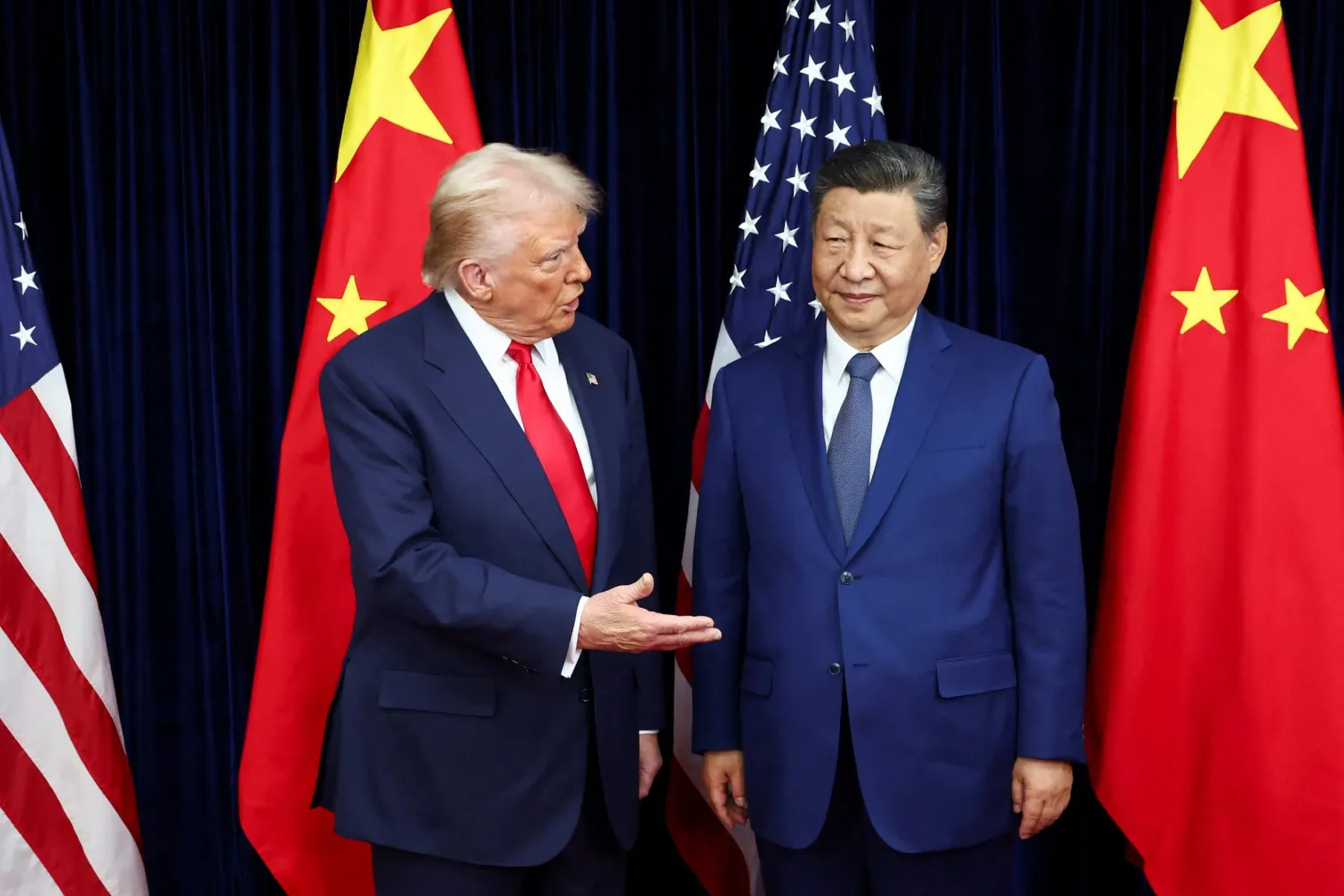
When the Trump administration unveiled its Clean Network initiative, the purported aim was to marshal European allies and partners including Japan, India and Australia behind a concerted effort to excise Huawei and its Chinese rivals from Western 5G infrastructure, while simultaneously laying the groundwork for restrictions in the nascent 6G era. Yet four years on, it is increasingly apparent that this strategic objective has, in large measure, come to naught.
Outside North America, the Chinese telecoms champions have maintained a formidable presence, with Huawei commanding some 40 per cent of the telecom equipment market and ZTE a further 14 per cent. Most governments across Latin America, the Middle East, sub-Saharan Africa and Southeast Asia have conspicuously declined to follow Washington's lead. Even among allied European capitals, resistance has been pronounced. Berlin, in particular, has chafed at American pressure, with German officials voicing consternation over the costs of ripping out existing Chinese equipment. A fresh assessment from the GSMA, the global trade body representing the telecommunications industry, estimates that the European Union's plan to purge Chinese suppliers from its networks will cost as much as €40 billion – a figure four times higher than original projections.
To suggest, however, that Chinese vendors exercise unchallenged control over every network would be misleading. The principal non-Chinese suppliers – Sweden's Ericsson, Finland's Nokia, South Korea's Samsung, and Japan's Fujitsu and Rakuten – have by no means been driven from developing markets. But the broader picture suggests that Washington's central geopolitical gambit, namely the exclusion of Huawei and its Chinese peers from next-generation communications architecture, has largely miscarried.
If the 5G contest appears all but lost, the global telecom wars are far from concluded. Attention, analysts suggest, is now shifting inexorably towards 6G and its attendant ecosystems: cloud infrastructure, artificial intelligence and cybersecurity. Where the 5G debate revolved principally around the security risks inherent in Chinese mobile equipment, the next generation of networks will integrate AI far more deeply – embedding it directly into network operations, edge computing, sensing systems, satellites, autonomous platforms and industrial infrastructure. Next-generation networks, it is understood, will form a core layer of the AI technology stack rather than serving merely as a downstream utility.
Unlike the 5G battle, the United States and the European Union enter the 6G race from a position of relative strength. America retains commanding advantages in chip design, artificial intelligence, cloud infrastructure and software development. Its central challenge, according to industry observers, will not be limited to restricting Chinese vendors at home or exhorting allies to designate certain suppliers as "high-risk", but rather to construct economically viable and technologically competitive alternatives. In a notable development this month, the Trump administration launched a global partnership comprising more than 20 allies to promote secure – read non-Chinese – 6G wireless networks.
Notwithstanding the West's technological prowess, China's structural advantages are proving difficult to reverse. Beijing enters the 6G development cycle endowed with strengths that extend well beyond 5G radio technology. These include state-backed financing, large-scale deployment experience, manufacturing depth, and long-established commercial relationships across emerging markets. Throughout the Global South – and indeed across much of the developed North – Huawei and its Chinese counterparts remain among the most affordable and swiftest-to-deploy options available. Chinese state-owned commercial banks, specialised sovereign funds and multilateral development institutions have extended approximately $2.2 trillion in overseas loans and grants since 2000, much of it associated with telecom rollouts. This financial architecture, sources indicate, helps explain why Chinese vendors remain commercially attractive even when security concerns are well understood. Huawei and ZTE are difficult to displace not merely because of their installed base or technical capabilities, but because governments and operators must weigh affordability, financing, rollout speed, maintenance and end-to-end integration alongside considerations of trust and security.
Reversing China's position, it is argued, will demand more than export controls or vendor bans. Credible economic alternatives must be furnished. Unfortunately, American industrial coordination remains fragmented across the Federal Communications Commission, the Department of Commerce, the Department of Defense and the Department of State. US telecommunications financing mechanisms are similarly ill-suited to sustained geopolitical competition. Instruments such as the US International Development Finance Corporation and the Export-Import Bank are often too slow, too risk-averse and too inflexible for high-stakes strategic infrastructure investments.
Transatlantic alignment, experts contend, will prove critical. American and European development finance and export credit institutions should jointly support comprehensive 6G packages rather than isolated equipment purchases. Such packages might combine radio and core equipment, fibre connections, cloud infrastructure, cybersecurity services, workforce development and long-term maintenance. The DFC already invests in networks, data centres and fibre-optic infrastructure, while the EU's Global Gateway initiative acknowledges a substantial financing gap for secure digital connectivity. Coordinating these instruments, it is suggested, would create larger financing pools, distribute project risk, reduce duplicated reviews and render trusted infrastructure more affordable.
Furthermore, should Washington and Brussels coordinate their positions within the International Telecommunication Union and the 3GPP standards body, they could promote open interfaces, secure-by-design architecture, interoperable components and internationally harmonised spectrum. If, by contrast, they present competing positions, they risk fragmenting the Western market and rendering China's unified offering more attractive. The December 2025 US memorandum on "Winning the 6G Race" identifies international standards, globally harmonised spectrum and a coalition of foreign and industry partners as prerequisites for American leadership. Europe, it is argued, should form the core of that coalition.
Through the remainder of this decade, telecommunications policy appears destined to become increasingly integrated into national industrial and security strategies. The US government looks set to broaden its definition of critical communications infrastructure to encompass cloud computing, undersea cable landing stations and satellite networks. Washington, it is understood, aims to ensure that every layer of digital infrastructure – from hardware to routing software – meets trusted vendor standards. China won the 5G battle by combining technology with cheap financing and rapid deployment. The United States and Europe will prevail in the 6G contest only if they can offer a more technologically advanced, compelling and affordable alternative. As Alexis Serfaty, a managing director at DGA-Albright Stonebridge Group and former policy advisor to the assistant secretary of transportation for international affairs, observes, the challenge is as much economic as it is strategic. This analysis first appeared in Bandwidth, the online journal of the Centre for European Policy Analysis, which maintains a strict intellectual independence policy across all its publications.