Corporate and Household Debt Balloon as Kremlin's Subsidised Losing Strategy Unravels
Russia's aggressive wartime lending programmes, which fuelled a borrowing boom to sustain the economy under sanctions, are now generating mounting defaults as high interest rates and slowing growth strain corporate and household finances.
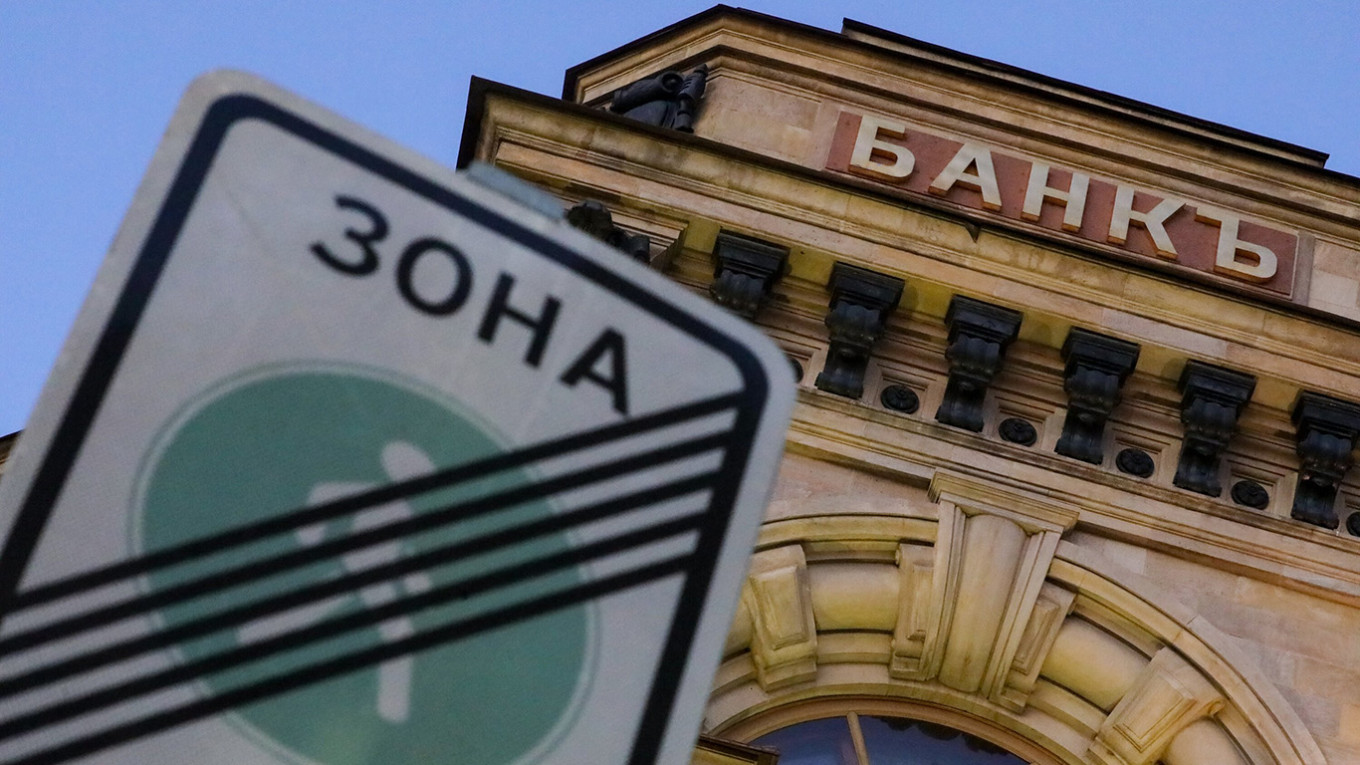
Russia's wartime borrowing boom, a cornerstone of the Kremlin's strategy to sustain economic activity following the imposition of Western sanctions, has left the country's banking sector increasingly exposed as elevated interest rates and decelerating growth render debt servicing ever more onerous for both corporate borrowers and households.
Since 2022, the government has rolled out a comprehensive array of subsidised lending programmes, encompassing both newly created initiatives and expanded emergency schemes inherited from the Covid-19 pandemic, which have underwritten not only defence-related industries but also agriculture, small enterprises and manufacturers seeking to replace lost Western suppliers and augment production capacity.
Officials simultaneously encouraged Russian households to increase their borrowing, notably through expanded subsidised family mortgage schemes that enabled buyers to afford increasingly expensive residential property.
The cumulative effect has been a 93 per cent increase in Russian corporate debt since 2021, with household debt having risen by 57 per cent over the same period—an accumulation that is now emerging as a systemic pressure point as high interest rates inflate debt-servicing costs and recent tax increases erode corporate profitability.
Bankruptcy statistics paint a stark picture of the mounting distress: a record 636,000 Russians declared themselves insolvent in 2025, representing a 30 per cent increase from the previous year and more than three times the roughly 197,000 recorded in 2021, with the trend continuing into 2026 as first-quarter bankruptcies rose 13.7 per cent year-on-year to 137,500.
Corporate insolvencies have likewise accelerated, with Russian courts having declared 3,550 companies bankrupt in the first half of 2026, an increase of 10.8 per cent from a year earlier, whilst the number of firms entering insolvency proceedings—the initial stage of corporate bankruptcy—jumped 20.9 per cent to 2,970, according to Fedresurs, Russia's official bankruptcy register, though both figures remained below the levels recorded in the first half of 2024.
Smaller enterprises appear to have borne the brunt of the crisis; Central Bank data indicate that by April 2026, nearly 10 per cent of microenterprises—defined as firms with fewer than fifteen employees and annual revenue below 120 million roubles—had experienced significant loan repayment difficulties over the preceding twelve months, compared with approximately 6 per cent of small businesses, and by May roughly one in six of Russia's 600,000 small and medium-sized enterprises with outstanding loans had fallen behind on their repayments.
Officially, bad corporate loans account for approximately 4 per cent of total lending, though analysts contend that the true figure is likely considerably higher, as large borrowers frequently restructure loans rather than defaulting outright, enabling banks to avoid classifying the debt as impaired.
The Central Bank has repeatedly asserted that Russia's commercial banks remain financially sound and hold sufficient cash reserves to absorb a wave of unpaid loans, whilst policymakers have argued that allowing struggling borrowers to reorganise payment plans rather than compelling them into default does not necessarily indicate systemic peril.
In July, the Central Bank instructed lenders to continue restructuring loans for companies facing what it characterised as "temporary difficulties," affording borrowers additional time to meet their obligations.
A recent European intelligence report cited by Reuters, however, has challenged this official narrative, alleging that the practice creates an "illusion of a dynamic economy" that conceals an "explosive situation" for the Russian banking sector; the report estimates that 10 per cent of corporate loans are of "doubtful" quality—substantially above the official figure—and concludes that Western governments now possess an opportunity to impose "ambitious" new sanctions that could trigger an economic shock and potentially precipitate a full-blown banking crisis.
Domestic alarm bells have also been sounded, with CMAKP, an influential Moscow-based economic think tank, having stated in a May report that banks' combined stock of "problem assets" held against both corporate and household borrowers had exceeded what it termed the "critical threshold" of 10 per cent.
"The crisis is unfolding in a latent form, as the deterioration in asset quality is being masked by the restructuring of overdue loans and by the dominance of state-owned banks," the report observed, adding that these factors were currently preventing a bank panic from breaking out.
Ten per cent of all bank loans to Russian companies and households amounts to approximately 12 trillion roubles, slightly more than the roughly 10 trillion roubles the federal budget has typically collected in annual oil and gas revenue since 2022.
Banks appear to be shifting towards safer assets, with their holdings of Russian government bonds having risen 3 per cent between January and May to 19.4 trillion roubles, a trend that may reflect a more cautious approach to lending.
Should the 10 per cent estimate prove accurate, it would pose a serious challenge for the Kremlin, according to Maximilian Hess, founder of the political risk consultancy Enmetena Advisory and a fellow at the Foreign Policy Research Institute, who noted that the International Monetary Fund has long considered a 10 per cent non-performing loan rate a sign of significant banking distress from which recovery typically takes a protracted period.
To ease the pressure, the Kremlin may ultimately be compelled to intervene, utilising funds from the federal budget or the National Wealth Fund to inject capital into banks weighed down by bad loans—a course of action the government may already be pursuing behind the scenes, which would place further strain on Russia's already stretched budget though is unlikely to trigger an immediate shock, Hess suggested, given that the country continues to receive fresh revenues from energy exports and can spread the cost of supporting banks over several years.
A more serious crisis could emerge, however, if Western sanctions succeed in curbing Moscow's hard-currency earnings and its oil and gas exports, particularly to Asian buyers, though Hess expressed doubt that European policymakers were yet prepared to impose sanctions of that magnitude, adding that it also remained to be seen whether Ukrainian drone strikes—what Kyiv terms "long-range sanctions"—would have a noticeable impact on Russian export volumes.