Conservatives Press Burnham to Rule Out Tax Rises in October Budget
The shadow chancellor accuses the government of presiding over taxes in "nosebleed territory" and calls for an end to speculation ahead of the 28 October Budget.
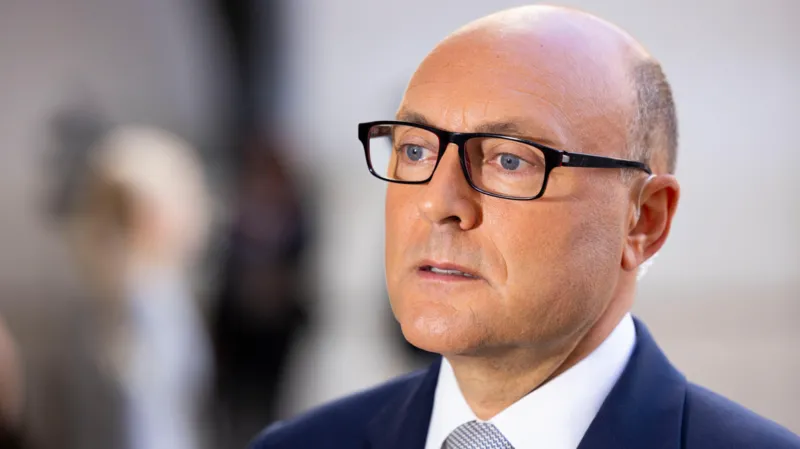
The Conservatives have called on the Prime Minister, Andy Burnham, and the Chancellor, John Healey, to rule out tax rises in next month's Budget, with the shadow chancellor warning that rumours of higher taxes are driving Britain's wealth creators abroad.
In his first major speech since taking the role last month, Andrew Griffith told an audience at a further education college that businesses were suffering enough and that tax in the UK had reached nosebleed territory. Healey, he said, must end uncertainty today and rule out any new taxes. He must rule out increasing taxes on small businesses and the self-employed.
Griffith described business owners and the self-employed as economic heroes. Any government worth its salt, he added, would do everything it could to help them, because whilst not every acorn grows into a mighty oak, green shoots must be nurtured rather than trampled upon.
He also promised to replace the tax rules governing self-employed workers, whom he said had been badly let down. The IR35 regime, he argued, had crushed the dreams of self-employed people, and a Conservative government would replace it with a new system that respected the right of the self-employed to choose their status while preventing actual abuse. The rules are designed to stop people avoiding tax by posing as contractors rather than employees, but some freelancers say they have led to unfair treatment.
Griffith urged the chancellor to pause the rollout of Making Tax Digital, the new system requiring the self-employed to register their income with HMRC. He acknowledged that the previous Conservative government had set up the scheme and said that, despite well-intentioned aims, its execution had left a lot to be desired. For the self-employed, many of whom will have started out in colleges such as the one where he spoke, there was, he said, this special torture of Making Tax Digital.
Labour responded sharply. A spokesperson said Griffith had made the Conservatives' priorities clear: scrapping hard-won workers' rights while promising tax cuts with no explanation of how they would be paid for or which public services would be cut. The Tories, the spokesperson added, should be apologising for crashing the economy thanks to Griffith's old boss, Liz Truss, rather than asking working people to pay the price all over again.
The chancellor is due to set out his Budget on 28 October against a backdrop of rising inflation and global energy prices. On Thursday, trade unions will meet Healey to press their proposals, with Unite urging the government to reverse the freezing of tax thresholds. Burnham has warned that the Budget will be challenging because of the war in the Middle East, but has insisted he is prepared to take difficult decisions on the economy.
Griffith told his audience that he had commissioned Lord Mackinlay of Richborough, the former MP for South Thanet, and Robert Colvile, the outgoing director of the Centre for Policy Studies, to produce a report on reducing regulations for small businesses.
Over the weekend, the Mail on Sunday reported that the Conservatives could promise to abolish inheritance tax if they win the next election, with the policy potentially announced at the party's annual conference in October. Speaking to the BBC before his speech, Griffith said he would love to cut the tax, but that it would have to be subject to an ability to set out properly how it would be funded. I am going to be responsible, he said, and only want to make promises I can keep. He added that he had recently visited Sweden, which scrapped inheritance tax in 2005.
Reform UK has previously said it wants to cut inheritance tax, but its Treasury spokesman, Robert Jenrick, told a fringe event at the party's conference that it would not be a priority. It is a bold chancellor, he said, who would rather privilege 36,000 families than 40 million income taxpayers. Asked whether abolishing inheritance tax would amount to a tax cut for the wealthy, Griffith argued that it would boost growth and that the wealthiest were often able to arrange their affairs to avoid the tax.