Colombia left in limbo as hard-right candidate clings to razor-thin lead in presidential runoff
Colombia faces an uncertain wait for its next president after hard-right Abelardo de la Espriella took a wafer-thin lead over leftist Iván Cepeda, with neither side willing to concede
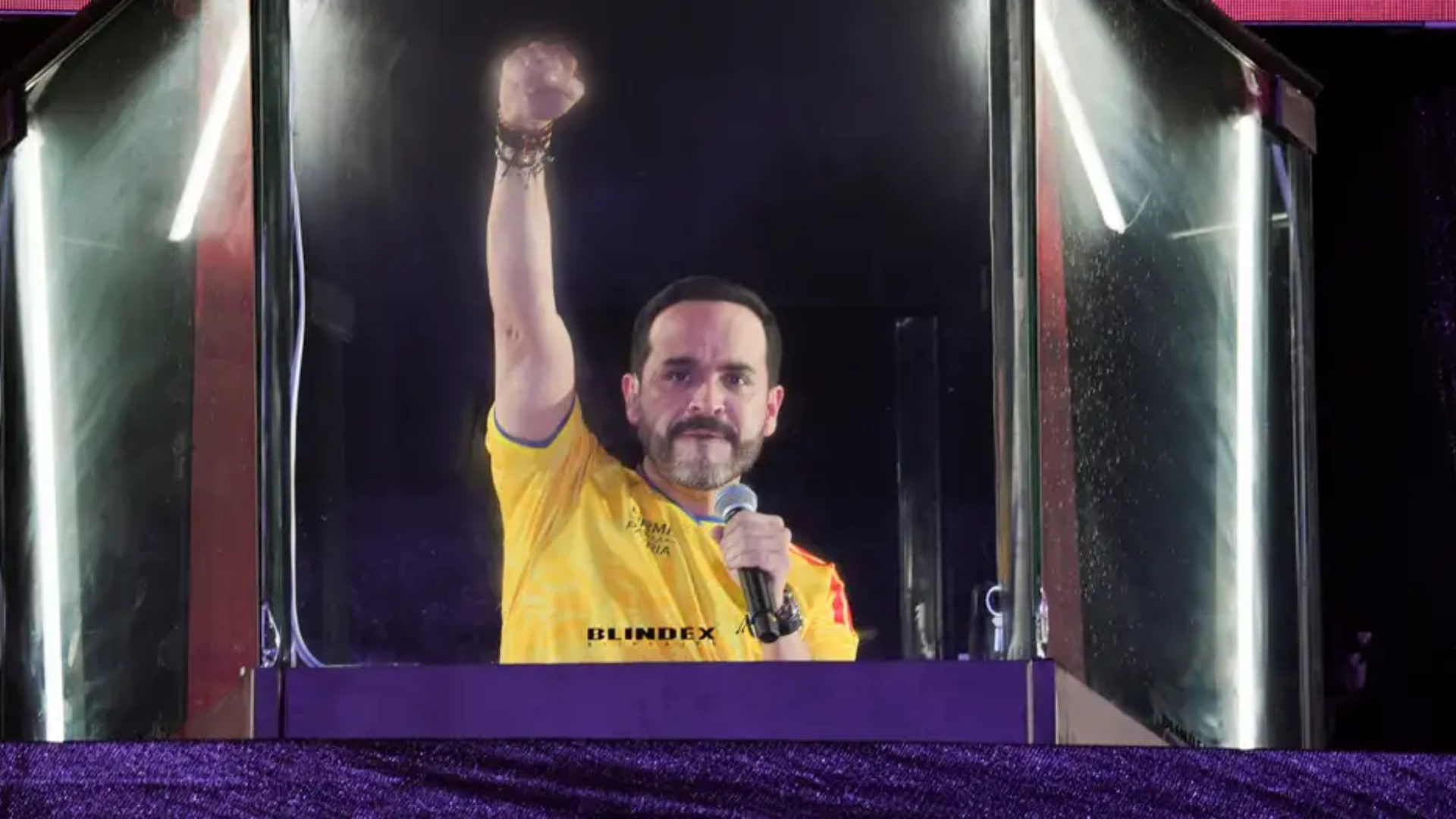
Colombia awoke on Monday to a political stalemate of the most delicate kind, after a presidential runoff election left the nation divided practically down the middle and neither candidate willing to step aside. With almost all votes counted, hard-right conservative Abelardo de la Espriella had secured 49.66 per cent of the ballot, according to figures released by the national registry office, while his leftist rival Iván Cepeda trailed by less than a single percentage point on 48.70 per cent. Speaking in the immediate aftermath of the count, Mr de la Espriella, a 47-year-old businessman who campaigned under the moniker "The Tiger", proclaimed victory and declared that his would be an administration for all Colombians. "Mine will be an absolutely democratic government and a guarantor of freedom and institutional order," he said, before adding that he intended to serve as "president for all Colombians".
Yet Mr Cepeda, a 63-year-old senator of the left-leaning Historic Pact party who has the backing of the outgoing president, Gustavo Petro, was not prepared to follow suit. In a carefully worded statement, he declined to concede, insisting that the official result must be verified before any acknowledgment could be made. "Once the count has been completed and its final result is known, and the corresponding checks have been carried out, we will acknowledge the official result," he said. The restraint shown by both camps was echoed by President Petro, who took to social media to urge the public to remain calm. "Neither candidate can be declared president," he wrote, adding that the vote count would ultimately determine who would lead and that he would "abide by the judges' decision". In a characteristically pointed commentary on the state of Colombian democracy, Mr Petro also remarked that the nation was "split down the middle" and alleged that "foreign interference is taking away our freedom".
It was a remark that appeared to gain added resonance within hours, when Mr de la Espriella announced that he had received a congratulatory telephone call from President Donald Trump of the United States. "I just spoke a few minutes ago with the president of the United States, President Donald Trump, and he has expressed his support, his recognition of our victory," the conservative candidate said. The Trump Administration's enthusiasm for the putative result was underscored by a statement from the Secretary of State, Marco Rubio, who said he had telephoned Mr de la Espriella to "congratulate him on his election victory". Writing on social media, Mr Rubio expressed the hope that the two administrations would work closely together to advance regional security cooperation, end illegal immigration to the United States and strengthen economic ties. "Colombia's best days are ahead," Mr Rubio declared.
The contest, which many analysts had expected to be closer than the first round in May, has laid bare the profound fracturing of Colombia's political landscape. Mr de la Espriella, who won that first round, has styled himself as a tough crime-fighter, vowing to wage an uncompromising war on drug cartels and guerrilla groups. His campaign methods and rhetorical style have drawn frequent comparisons to the right-wing president of El Salvador, Nayib Bukele. "Today is the most important ballot in Colombia's history," he declared as he cast his vote in the coastal city of Barranquilla. Mr Cepeda, by contrast, has sought to rally progressives and the poor, promising to expand social reforms and to govern for the whole country rather than any single sector of society. "When we win, we are going to govern for the whole country and not just for one sector," he told journalists, as his supporters chanted their approval.
The context for this electoral drama is a nation still grappling with the legacy of decades of armed conflict. Colombia's struggle against the Revolutionary Armed Forces of Colombia, or FARC, guerrilla movement reached a milestone with the signing of a historic peace accord in 2016, under which the FARC agreed to fully disarm. Yet dissident branches of the former guerrilla group remain active and have been blamed for persistent violence targeting former combatants and social leaders. In 2025, authorities recorded 14,780 homicides — the highest annual total since at least 2015 — with most of the bloodshed attributed to clashes among illegal armed groups competing for territory and influence. It is against this backdrop of insecurity and political polarisation that the country now waits for a definitive result, with the spectre of a contested outcome and the possibility of further instability hanging over the capital.