Cold War bunker in Nova Scotia to become luxury condo for billionaires seeking catastrophe refuge
A Canadian crypto entrepreneur is converting a vast Cold War-era nuclear bunker in Nova Scotia into a 50-unit luxury condominium complex designed to shelter billionaires from environmental and geopolitical catastrophe.
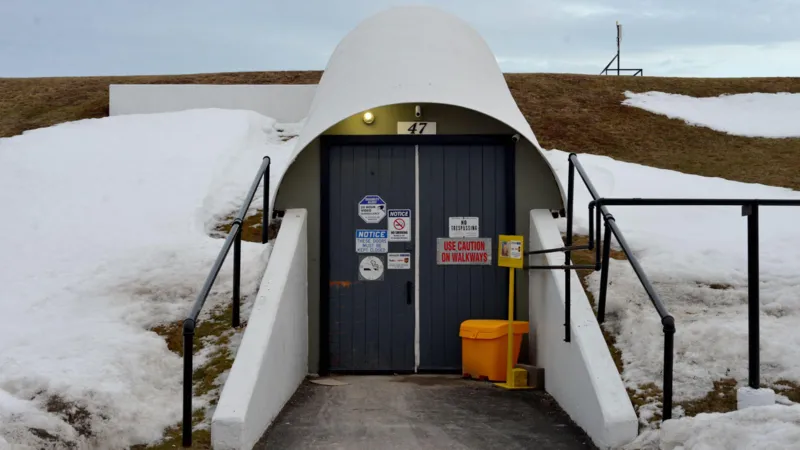
The motto of Debert's business park—"from here to anywhere"—suggests connectivity and opportunity, but the reality of this corner of Nova Scotia, 70 miles north of Halifax, feels considerably more remote. Surrounded by thin coniferous woods and dominated by a mix of ageing military buildings and empty parking lots, the site was once a bustling Second World War training base. Now, however, one end of the park is dominated by a large grassy hump that promises a future of luxury and exclusivity, for this is the entrance to a former nuclear bomb shelter that Canadian crypto mogul Jonathan Baha'i plans to convert into crisis-proof condominiums for billionaires seeking refuge from all manner of cataclysm.
Mr Baha'i, who purchased the 64,000-square-foot facility—commonly known as the Diefenbunker—in 2013 for C$31,300, initially pursued a different business model that included laser tag, historical tours and a small data centre. The project, managed by his Fallout Complex Inc, has since evolved into a 50-unit development offering amenities that include gourmet dining from a "self-sustaining" food source, biometric access, round-the-clock surveillance, and on-site medical services. Residents with private aircraft can make use of the small Debert Airport nearby. Paul Mansfield, a project co-owner, told the local council last autumn that "there's more uncertainty in the world in the last two years than in the last 30 years", which had "led to a rebirth of people wanting to have an insurance policy"—in this case, a doomsday bunker.
The company is working with German firm Bespoke Home and Yacht Security, which Mr Mansfield said had provided security for US Vice-President JD Vance and reality star Kim Kardashian, though the firm's client list is not public. Recommended security measures for the forthcoming complex, which has already sold eleven units, include the use of flying drones to survey the perimeter, according to Mr Mansfield. The renovation plans also feature a spa, a yoga room, a cigar lounge, and modern OLED lighting designed to replicate natural light, while an adjacent overground bunker will be used to grow food. When condo owners are not in residence, the units will be rented out for hotel stays, with profits shared, though both purchase and rental costs remain confidential. "If somebody was renting it as a hotel room and something happened and they had to get kicked out, they would get kicked out," Mr Mansfield said.
The bunker is one of seven constructed across Canada under former Prime Minister John Diefenbaker from the late 1950s to the mid-1960s, intended to house a skeleton crew of government officials in the event of nuclear war. The Debert facility was designed to withstand a near-hit from a nuclear explosion and sustain 329 people for at least 30 days, but by the time it was completed, long-range missile targeting had advanced and nuclear bombs had become too powerful, rendering the bunkers obsolete. It subsequently served as a provincial emergency warning centre until it was shuttered in 1996 as a cost-cutting measure. Mr Baha'i, who dislikes the term "doomsday bunker", insists that while the facility was built "to survive anything", it is "not about the end of the world, it's about smart, practical storm preparedness, whatever kind of storm". He opened the bunker to coworkers and their families during Hurricane Fiona in 2022, demonstrating its off-grid, self-sufficient capabilities.
The project, expected to be completed by early next year, has generated interest not only from the east coast but from around the world. It will require over 40 hotel staff and people with skills to run an expanded data centre, ideally drawn from the local population. The data centre is set to grow to 15,000 square feet, using the latest technology to mitigate power consumption and offer high security for customers. While the business case appears compelling—the disaster preparedness industry in the United States alone is now worth at least $500m, with estimates suggesting anywhere from 20 million to more than 70 million Americans preparing for catastrophe—the fate of other Canadian bunkers suggests limited alternative uses. The Borden, Ontario bunker is locked up, the Shilo, Manitoba facility is buried, the Nanaimo bunker in British Columbia was intentionally flooded, and the Penhold, Alberta shelter was demolished over fears it would be acquired by the Hells Angels.
There are no official figures for the Debert bunker's construction cost, but the similarly sized Nanaimo shelter cost between C$2m and C$3m at the time—approximately C$30m in today's currency—and the Debert facility currently costs about C$60,000 annually to maintain. The Wessex Institute of Technology, which advocates for the heritage of British Cold War bunkers, has noted that options for their use are often limited to tourism, high-security facilities, and data centres. Yet not everyone in Debert is enthusiastic about the transformation. Annette Sharpe, secretary of the Debert Military Museum, expressed dismay that the bunker was now private property being refurbished for an uncertain purpose, lamenting that a "piece of history" had been lost. She noted that after the base closed, the population plummeted from more than 60,000 to around 1,400, and that nearby apartments rented for only C$2,000, raising questions about who could afford the "Hollywood pretend scenes" being created.
Debert Councillor Marie Benoit voiced concern about the boutique hotel's ultra-luxury rates, estimated to be higher than most hotels in Halifax. "Looking at people's wages, I don't know if it will be something that they can access," Ms Benoit said. Mr Baha'i, however, remains focused on the benefits the project will bring to Debert's local economy, including tourism and a world-class data centre. "It's exactly like owning a really secure, beautiful Airbnb," he said, emphasising that the facility offers guaranteed safety and comfort for its owners. Whether the transformation of a relic of Cold War anxiety into a playground for the global elite represents a savvy business opportunity or a troubling symbol of inequality, one thing is clear: the Diefenbunker's future is no longer about surviving Armageddon, but about catering to those who can afford to insure themselves against it.