Carney pledges retaliatory measures as Trump doubles down on Canadian trade grievances
In a move that threatens to upend decades of commercial integration, President Trump has imposed swingeing tariffs on a vast array of Canadian imports, prompting warnings of retaliation from Ottawa and uncertainty over the fate of the USMCA.
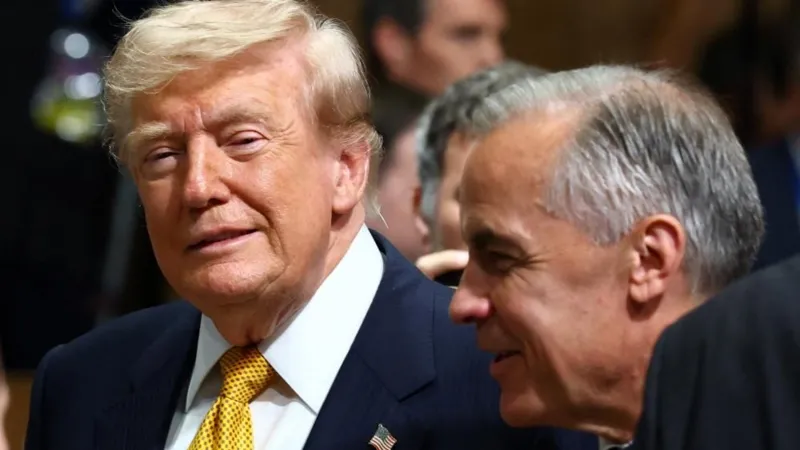
In a dramatic twist in the simmering trade dispute between the two North American neighbours, President Donald Trump has imposed a 50 per cent tariff on a broad spectrum of Canadian imports, ranging from everyday consumer goods such as wine and hockey sticks to industrial staples including cement, in retaliation for what he characterised as "unequal treatment" meted out to American cars, dairy products and alcohol. The White House confirmed that the duties, which are scheduled to take effect in 30 days, would spare several key Canadian exports – among them energy, potash, critical minerals and fish – yet their announcement nonetheless marks a significant escalation in trade tensions that have festered since Mr Trump returned to the Oval Office in January 2025 and embarked upon an expansive global tariff programme, often deploying import taxes as leverage for objectives not directly connected to commerce.
Prime Minister Mark Carney responded with a measured but firm declaration that Canada stood ready to "intensify" trade talks with the United States in the coming weeks, even as he accused Washington of unilateral action that violated the spirit, if not the letter, of the existing free trade agreement between Canada, the United States and Mexico, known as the USMCA. The Prime Minister's statement, issued on X, characterised the latest US move as part of a broader pattern of protectionist measures that began with the imposition of tariffs in direct contravention of the trilateral pact, and he made pointed reference to what he termed "threats to Canadian sovereignty" – an apparent allusion to Mr Trump's repeated and controversial suggestions that America's northern neighbour should become the 51st state. Ontario Premier Doug Ford, in a separate post on the same platform, struck a more combative tone, declaring that if these tariffs proceeded, "Canada should respond tariff for tariff, dollar for dollar".
The legal basis for the new duties is notably unconventional. Earlier this year, the US Supreme Court struck down sweeping international tariffs imposed by Mr Trump under the International Emergency Economic Powers Act (IEEPA) of 1977, ruling that the President had exceeded his authority by invoking a statute reserved for national emergencies to justify duties on dozens of countries beyond America's immediate neighbours. Undeterred, the White House has since sought alternative legal avenues to enact its protectionist agenda, and Monday night's action invokes Section 338 of the Tariff Act of 1930 – an obscure and largely untested piece of legislation that addresses trade discrimination rather than national emergencies, and whose compatibility with contemporary trade obligations has yet to be examined by the courts. The administration also recently deployed Section 301 of the Trade Act of 1974 to justify tariffs on a range of countries, including Brazil, from which certain goods will be subject to a 25 per cent tax from Wednesday, prompting vows of retaliation from Brasilia.
As part of the executive action announcing the Canadian duties, Mr Trump issued three proclamations that enumerate long-standing American grievances over trade issues previously known to Ottawa, signalling a breakdown in bilateral trade negotiations. The first complaint concerns automobiles, with the President arguing that Canada's imposition of a tax on US motor vehicle imports and parts not covered under the USMCA is "unreasonable" and discriminatory, given that Ottawa does not charge other nations a similar levy – a point of contention given the deeply integrated nature of automotive manufacturing across the three North American economies. The second grievance relates to Canada's supply management system for dairy products, which has long irked American producers by setting limits on foreign imports and imposing tariffs of up to 300 per cent on those that exceed their quotas. The third and final complaint addresses the enduring boycott of US alcoholic drinks imposed by most Canadian provinces last year, a measure that Canadian premiers have consistently said would be lifted only if Washington removed its tariffs on key Canadian sectors, including metals and automobiles.
A White House fact sheet published on Monday made clear that the new duties would apply regardless of whether the product in question was covered by the USMCA, adding to the already substantial trade barriers between the two nations. The United States has maintained active tariffs ranging from 15 per cent to 50 per cent on Canadian steel, aluminium and copper, alongside a 35 per cent duty on Canadian softwood lumber and a 25 per cent tax on non-US parts incorporated into cars. Canada, for its part, has imposed its own 25 per cent counter-tariff on selected imports of American steel, aluminium and vehicles, and last year placed a 25 per cent levy on approximately C$30bn (£16bn; $21.7bn) worth of US goods – some of which were later dropped by Mr Carney. The latest announcement also follows Mr Trump's earlier threat to impose tariffs over Canadian wildfire smoke drifting into US cities, though it is understood that this issue was not officially cited as justification for the move.
The future of North American trade now appears increasingly uncertain. Earlier this year, the United States chose not to renew the USMCA in its current form, and while the treaty will continue to govern commercial relations on a rolling basis over the next decade, it will now be subject to annual reviews, a departure from the long-term stability that Canada and Mexico had sought. Canadian trade negotiators have been attempting to secure a deal that would at least reduce some of the existing US tariffs, but Monday's action suggests that the Trump administration remains deeply opposed to the agreement it negotiated and signed in 2018. Professor Michael Devereux, an economist at the University of British Columbia, told the BBC that the move represented "a significant escalation because it directly targets goods that were previously exempt under the US, Canada, Mexico trade agreement", adding that he viewed it less as a negotiating tactic and more as "an impulsive move that came from kind of a grudge that the US government and President Trump has against Canada".
Other analysts, however, expressed cautious hope that the 30-day window before the duties take effect might prompt fresh negotiations. Candace Laing, head of the Canadian Chamber of Commerce, urged officials on both sides to make "meaningful progress" in talks before the deadline, while Chris Swonger, president of the Distilled Spirits Council of the United States, similarly called for a diplomatic resolution, warning that the decision "raises the risk of further retaliation". The BBC has contacted the White House and the Canadian government for additional comment, but neither had responded at the time of publication. As the 30-day countdown begins, the episode represents the most serious test yet of the transborder commercial relationship, with Ottawa's pledge to respond in kind and the invocation of an obscure 1930s statute ensuring that the dispute will be closely scrutinised by trade lawyers and economists on both sides of the Atlantic.