Canary Islands migration route claims more lives as boat sinks off Dakar
At least 34 people have died after a wooden boat bound for Spain's Canary Islands capsized off Senegal, as the Atlantic route records its deadliest toll.
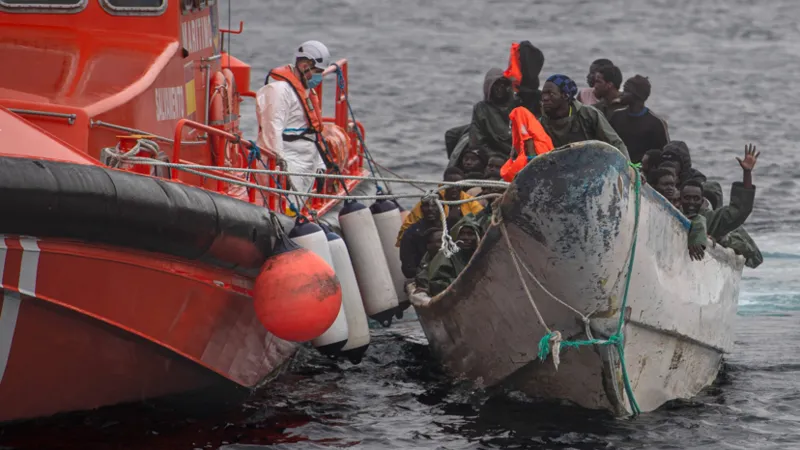
At least 34 people have died after a boat carrying migrants sank off the coast of Senegal, the Senegalese Press Agency reports, citing an official source. The interior ministry said one person had been rescued, but the number still missing was yet to be established. The small wooden boat capsized between the capital, Dakar, and the northern city of Saint-Louis, as it headed towards Spain's Canary Islands.
Spanish migrant rights group Walking Borders recorded 635 deaths on the Atlantic route to the Canary Islands between January and May 2026, the highest toll among the routes it monitors. Saliou Diouf, founder of the Senegalese migrant aid group Boza Fii, told AFP that all the bodies recovered so far were Senegalese. The nationalities of others on board were yet to be established as search operations continued.
President Bassirou Diomaye Faye has expressed his condolences to the victims' families and urged Senegalese nationals not to risk their lives on the dangerous sea crossings. In a statement posted on X, he pledged to intensify efforts to dismantle the networks organising the journeys. "We will relentlessly continue the fight against those who organise these crossings and the work that gives our young people reasons to hope here," he said.
The tragedy comes amid renewed concerns over the dangers facing migrants attempting to reach Europe by sea. Walking Borders estimates that about 21 people died for every 100 who reached the Canary Islands during the period it monitored.
Senegalese authorities said they had intercepted another boat on Friday carrying 142 migrants attempting to reach Spain. Those on board included 23 women, two babies and two other children. Police said the group comprised nationals of Senegal, Gambia, Guinea-Bissau, Guinea and Nigeria.
Meanwhile, a state of emergency was declared on the Spanish island of El Hierro on Saturday following a surge in migrant arrivals. More than 3,300 people have reached the island in about 30 boats since the beginning of November, according to local authorities. This amounts to almost a third of the population of the island, one of the main entry points into Europe for migrants arriving from West Africa. Fernando Clavijo, president of the Canary Islands regional government, described the situation as "absolutely unsustainable", Reuters reported.
The route has grown in prominence amid tighter controls and increased cooperation between European countries and North African states, which may have diverted some journeys away from the central Mediterranean. Limited employment opportunities, family pressures and established migration networks are among the factors driving people to leave Senegal, according to the International Organization for Migration. For many young people, the prospect of finding work and earning more abroad remains a powerful incentive, despite the risks of crossing the Atlantic in overcrowded boats.
Nearly one in four young people in Senegal was unemployed in the second quarter of 2026, according to the country's statistics agency. The figure highlights the challenge facing President Faye's government as it seeks to create jobs for a predominantly young population that overwhelmingly voted for him in the 2024 elections. In a statement on Sunday, Senegal's interior ministry said it would continue efforts to combat people-smuggling networks, including by strengthening cooperation with neighbouring countries.