Can a smaller Budget meet the scale of Burnham's promise?
John Healey's first Budget must reconcile a new government's sweeping ambitions with a generationally high tax burden, soaring energy bills and the economic fallout of war in the Middle East.
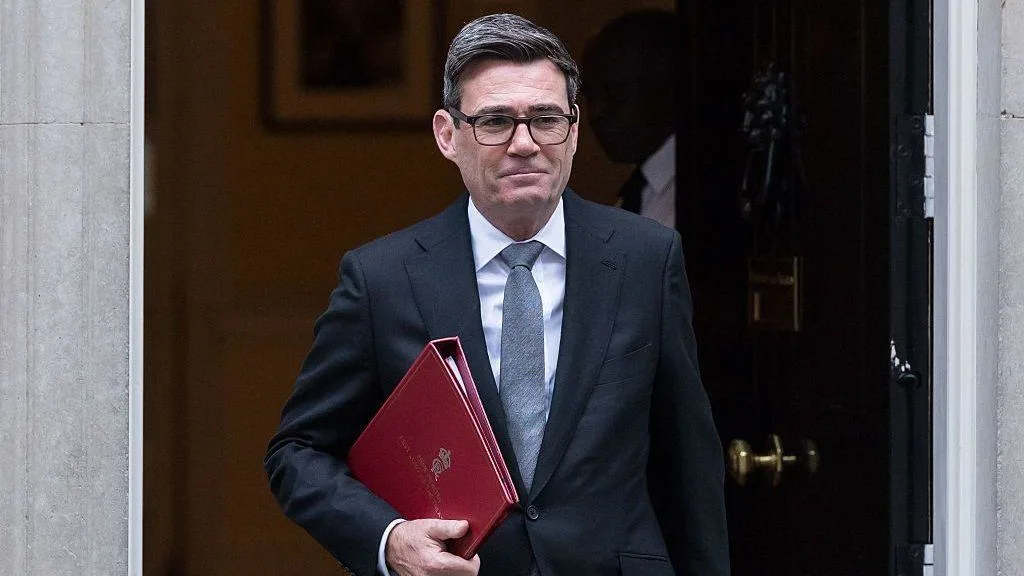
Two quotations get to the heart of this Budget. "The money New Labour had in the 90s is simply not there now… Britain has it harder now," the Chancellor, John Healey, said last month. And from Andy Burnham, days before he became prime minister: "This change... is the most significant change moment in our politics for 40 years." What happens, then, when economic reality confronts the political ambition of a new government?
Helen Miller, director of the Institute for Fiscal Studies, frames the dilemma neatly. "We have a relatively new government with seemingly big ambitions but facing a long list of constraints," she says. "Some of those constraints… are self imposed, others are being worsened by global events, most noticeably war in the Middle East." Plenty in Westminster, across all parties, will argue that the amount of money available is not everything: how well taxpayers' money is spent, and where, matters too. Spending less and taxing less, many insist, should be a priority.
Yet in the bones of many in the Labour Party is an instinct that the state can and should be a vital agent in driving change and improving people's lives, a world-view grounded in the belief that governments should proudly step in rather than get out of the way. How do you deliver a proudly proactive state, one that visibly delivers for people, when the tax burden is generationally high, the national debt is sky high, energy bills are rising and inflation is higher than expected? In short, it is not easy. Ministers argue that none of this means the government is powerless.
Many expect support on the cost of living, and on energy bills in particular, to be targeted at the most vulnerable. On the eve of the Budget, Healey said he wanted to "start the long-term action needed to get energy costs down for good". The banks are braced for a levy or surcharge that may pay for it. There will be an announcement of further spending on defence, but not yet how spending 3 per cent of national income on security will be delivered by 2030; that will come in next year's Spending Review. Devolution, one of the prime minister's key ideas, will also be central. The chancellor told BBC Newscast there would be a "really radical devolution of powers and resources to local leaders that are often better placed to get beyond the departmental systems". Some at Westminster fret, however, that extra money for mayors and others in local government is not yet accompanied by adequate checks and balances to ensure it is well spent.
The chancellor will argue that the economy is becoming more robust, and there are indicators more positive than forecast: growth is better than expected, as is productivity, and unemployment is down. But as the Resolution Foundation points out: "John Healey's problem is that conflict in the Middle East has once again pushed up energy prices and interest rates. So, despite the signs that the UK economy is becoming more resilient, household and public finances are in for another shock."
In essence, this will be a smaller Budget than some in recent years when it comes to the scale of tax and spending changes. The chancellor has spoken of offering "breathing space" and "hope", a tacit acknowledgement that there is a limit to what the government can do given the constraints it faces. It has promised not to raise income tax, national insurance or VAT, a self-imposed constraint, as the IFS puts it, and there are international ones beyond its control too.
The big question for many will be whether the Budget is, or can be, big enough to meet the moment. Opposition parties will argue it amounts to tinkering. The Conservative shadow chancellor, Andrew Griffith, said the public finances were "on a cliff edge" and urged Healey to use the Budget to "take tough decisions, instead of continuing to kick the can down the road". For the Liberal Democrats, Daisy Cooper warned that a "steady as she goes" Budget is "not going to cut it", while Reform UK's Robert Jenrick said the chancellor "can't keep fiddling while the economy burns". The Green Party MP Ellie Chowns wanted a "bold" approach but feared it would be "business as usual". The government will try to convince voters that this is one of many moments in the coming weeks and months that will attempt to deliver the scale of change the prime minister has promised.