Burnham vows to put 'everything I've got' into fixing social care crisis
The Prime Minister has pledged to dedicate himself fully to reforming adult social care, extending an olive branch to opposition leaders while refusing to rule out a controversial inheritance tax to fund the overhaul
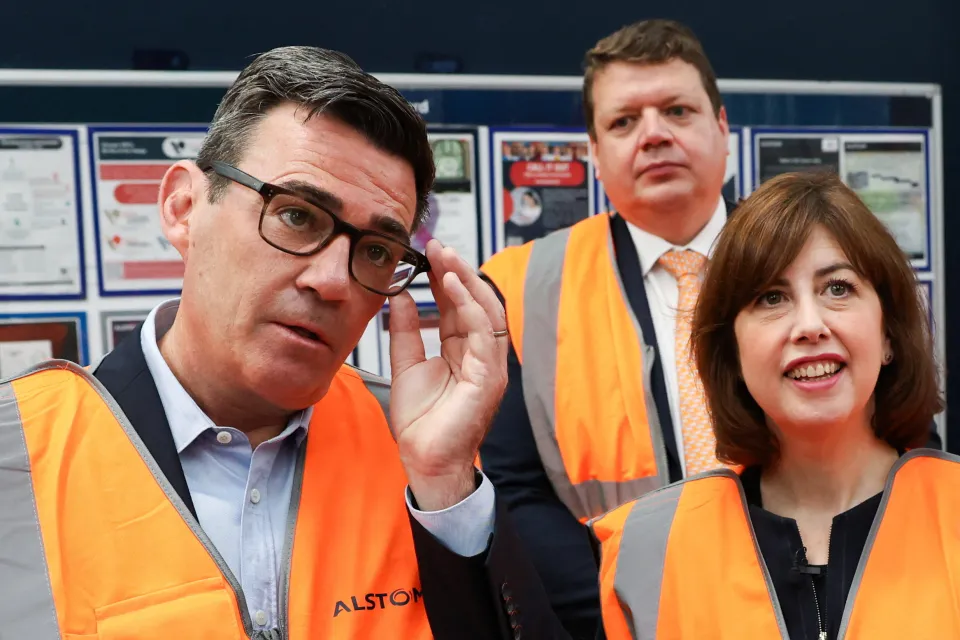
Andy Burnham has declared his intention to devote himself entirely to the task of reforming England's adult social care system, extending an invitation to opposition leaders to collaborate on what he described as a generational challenge requiring cross-party consensus. In a speech delivered in North London, the Prime Minister is expected to argue that the time has come to remove social care from the arena of partisan political dispute, contending that years of Westminster infighting have left carers struggling, families bearing the financial burden, and the NHS operating under unsustainable strain.
"We can carry on passing the problem to the next generation, or we can face it head on and work together to build a care system that gives people dignity, security and the support they deserve," Mr Burnham said, in remarks that signal a determined approach to a policy area that has confounded successive administrations. The Prime Minister has tasked officials led by Baroness Louise Casey with developing the framework for a new National Care Service, with a public consultation forum styled as the Big Conversation on Care intended to solicit views from across the country on the future shape of adult social care.
Baroness Casey, whose recent intervention on welfare eligibility attracted considerable attention, has argued that the existing system is failing on multiple fronts, with taxpayers bearing the cost through rising council tax, increased pressure on the NHS, and individuals being forced to give up work to care for relatives. "The choice is whether we keep putting money into a system that is unfair, unpredictable and broken, or have an honest conversation about how to build something better," she said, framing the debate as one that demands candour rather than political expediency.
The Prime Minister has, however, come under immediate pressure over the question of funding, having declined to rule out the introduction of a 10 per cent inheritance levy, a proposal that critics have branded a "death tax". Reform UK and the Conservative Party have both challenged Mr Burnham to make explicit that he will not raise taxes to pay for social care reform, with the former claiming that the mooted levy would cost the average mortgage-free homeowner in the Prime Minister's own Makerfield constituency some £50,669, while the figure for England and Wales as a whole would stand at £74,737.
Robert Jenrick of Reform UK was scathing in his assessment, asserting that Mr Burnham had "no mandate whatsoever to raid people's precious savings" and noting that voters had rejected such proposals on four separate occasions. The proposed levy, he argued, would fly in the face of the Prime Minister's so-called "Makerfield Test" – a reference to Mr Burnham's stated commitment to ensuring that policy changes would not unfairly burden his constituents.
In a letter to the Prime Minister, Conservative leader Kemi Badenoch expressed a willingness to work with Mr Burnham on social care reform but made clear that tax increases would be a red line. "The money must be found by reducing current spending," she wrote, adding that Mr Burnham must rule out any tax rises or increased borrowing that would ultimately fall to the next generation to repay. "The last thing Britain needs is further tax increases to pay for social care," she concluded, in a statement that underscores the deep divisions that remain over the fiscal architecture of any reform package.
The Prime Minister, whose father has dementia and who has spoken personally about the emotional toll of the condition, has insisted that he does not wish to leave office without having addressed the social care crisis. His willingness to reach across the aisle – having convened talks with both the Conservatives and Liberal Democrats, though notably excluding Reform UK – suggests a recognition that a sustainable settlement will require political cover from across the spectrum. Whether such bipartisan co-operation can be achieved without resorting to the tax increases that opposition parties have already ruled out remains an open question, and one that will define the political landscape for the remainder of this Parliament.