Burnham Rejects "Tax and Spend Socialist" Label After Haldane Warning
The Prime Minister dismisses claims that investors view his government as a traditional tax and spend administration, insisting he is prepared to make difficult choices on spending.
Andy Burnham has insisted he is prepared to take difficult decisions on the economy after a former chief economist at the Bank of England said investors were worried about his willingness to cut spending.
Andy Haldane, who has advised Burnham on economic matters, claimed financial markets had grown wary of his plans and now regarded his premiership as that of a traditional tax and spend socialist government. The Prime Minister rejected the characterisation, saying he would not take risks with the economy and had already made difficult choices since taking office.
The intervention comes as recent rises in the cost of UK borrowing have narrowed the government's political options before next month's Budget. Haldane said Burnham faced a straight choice between raising taxes and cutting spending at the spending statement due on 28 October. In an interview with LBC on Tuesday, he urged the Prime Minister not to raise taxes further, but said investors were questioning whether he was prepared to risk the anger of Labour backbenchers by reducing public expenditure.
The fiscal Achilles heel of this government so far, he said, has been its unwillingness or inability to cut public spending. Within financial markets, he added, we have gone from the cautious optimism of the summer months to the studied scepticism of September. The market now suspects this is a traditional tax and spend socialist government with better TikTok videos.
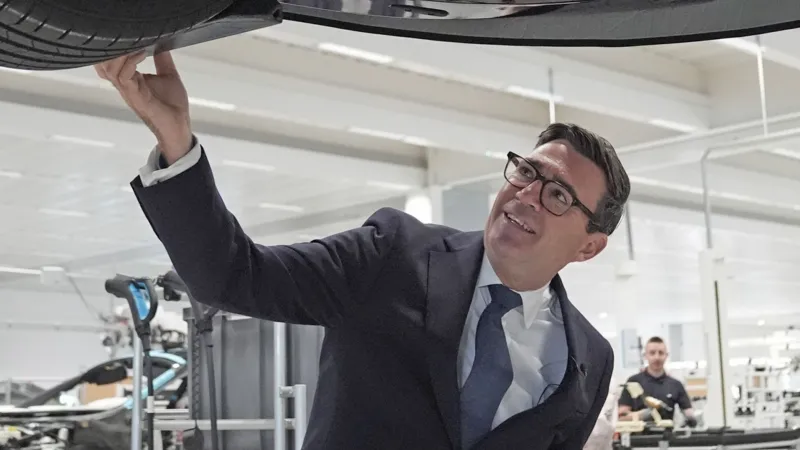
Speaking during a visit on Wednesday, Burnham conceded that next month's Budget would be challenging, blaming the situation in the Middle East for rising inflation in recent months. But he rejected Haldane's account of how the markets viewed his government. That does not tell the story, he told broadcasters. We are not that.
He said he had already taken difficult decisions on public spending, including reprioritising some government expenditure over the summer to pay for his early cost of living announcements, and scrapping the rollout of digital ID. It is not the case that we are not going to take difficult decisions, he said. We will take difficult decisions to make sure the economy remains on track.
Burnham said the government's efforts to lower living costs would need to continue, and described rising inflation as a concern. He faces pressure from unions to increase taxes on banks to subsidise energy bills for poorer families. Paul Nowak, general secretary of the Trades Union Congress, speaking from its annual conference, said the policy would help Labour send voters a message that it was on their side. Millions of households, he added, are worried about their energy bills and will look to the government to drive a new economic direction.
Burnham has recommitted to Labour's manifesto promises at the last general election not to raise the main rates of income tax, VAT or National Insurance, which significantly curbs his options for raising revenue. At the same time, he has pledged to stick to the previous government's debt and spending targets, a task made harder by recent increases in the cost of servicing the UK's existing debt. Predictions suggest the rise, combined with a worsening economic backdrop from the Iran war, is likely to thin significantly the £24bn buffer against those targets inherited from the Starmer government.
Since taking office, Burnham has committed around £1.8bn towards cost of living measures, some of which is to be funded by reallocating money within existing departmental budgets. But a proposal to fund a VAT cut on household electricity bills using money earmarked for the digital ID programme drew criticism from an ally of Sir Keir Starmer, who pointed out that funding for that scheme had itself not been confirmed. The Prime Minister has also promised the extra defence funding pledged by Starmer before his departure over the summer, although a decision on when to meet the target of spending 3% of GDP on the military has been left until next year.