Burnham Promises Candour on Trade-Offs as Triple Lock Row Brews
In his first conference speech as prime minister, Andy Burnham will promise honesty on the difficult choices facing Britain, as allies signal a willingness to debate the future of the triple lock and social care.
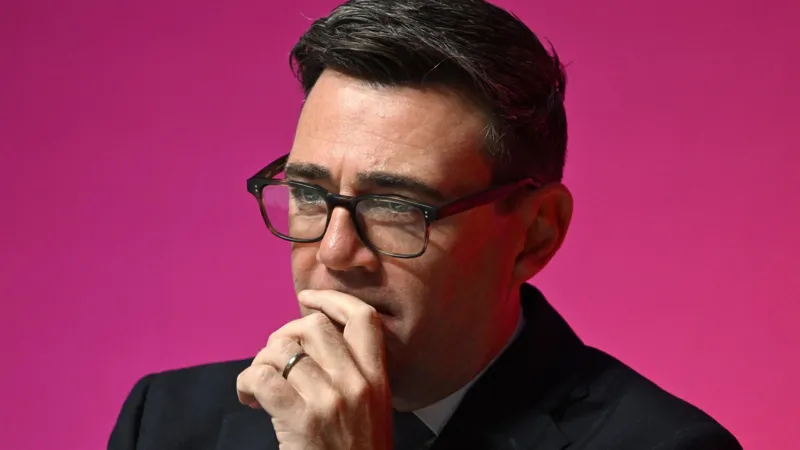
Conference speech day is always a significant moment for a prime minister, and rarely more so than when it is the first in the role. Andy Burnham's pitch is that "hope comes from honesty", that the country needs "less drift and more direction", and that politicians must be willing to say "the things politicians usually avoid".
On Sunday, he told the BBC that he wants to overhaul social care in England, though he conceded he could act only after a general election, given his commitment to the tax promises Sir Keir Starmer made at the last one. That remark set off a flurry of speculation about how such a plan might be funded — and, in particular, about the future of the triple lock, the pledge to raise the state pension in line with wages, prices or 2.5%, whichever is highest.
The policy was introduced in 2010 by the Conservative-Liberal Democrat coalition to tackle pensioner poverty. Plenty of politicians across multiple parties have long privately fretted that its cost is ballooning and will continue to do so, yet they bemoan how politically difficult it would be to abandon. For the prime minister, the dilemma is acute. Sharon Graham, leader of the Unite union, has said it could be "electoral suicide" to ditch the triple lock. Meanwhile, the markets — which set the cost of government borrowing — are watching closely to see whether Burnham's promises appear financially credible. He must, in other words, be able to point to what will not be spent as well as what will.
Downing Street is being coy about precisely what Burnham will say later. Ministers are anxious not to overcook the moment, suggesting instead that it is others who have become carried away. Yet they are well aware that a hare is running. Given the promise of honesty, candour and trade-offs, it would be extraordinary if the speech made no mention of it — extraordinary enough that his critics would pounce on what they would see as a telling absence of the very candour he is promising.
Those familiar with the prime minister's thinking suggest, as one figure put it, that "people will be surprised on the upside" by how far Burnham is willing to lean into the options that could be explored as part of Labour's offer at the next election. He will be explicit that the triple lock will be retained, as promised, until that election. Beyond that, he appears intent on seeding a conversation rather than nailing down details.
Allies characterise this as a different approach to politics — open about options, starting a debate, but not crudely or abruptly shifting policy. The implicit comparison is with Sir Keir Starmer's scrapping of the Winter Fuel Payment, which appeared to come from nowhere and had an almost immediate impact. That did not stop Graham likening the two approaches, claiming "the danger of doing it" is that Labour could "waste" a second hearing under Burnham. And so the debate begins.
In the round, ministers speak with relish of what they see as a return to big arguments — generational questions, confronted in public by a prime minister willing to wrestle with them. This afternoon will offer a fuller sense of the scope and scale of that ambition, on social care, pensions and much else besides.