Bronze casting to replace whale jaws on West Cliff as council opts for durability
The clifftop landmark, a symbol of Whitby's whaling heritage since 1964, is to be recast in bronze after weathering rendered the existing jawbones unsafe
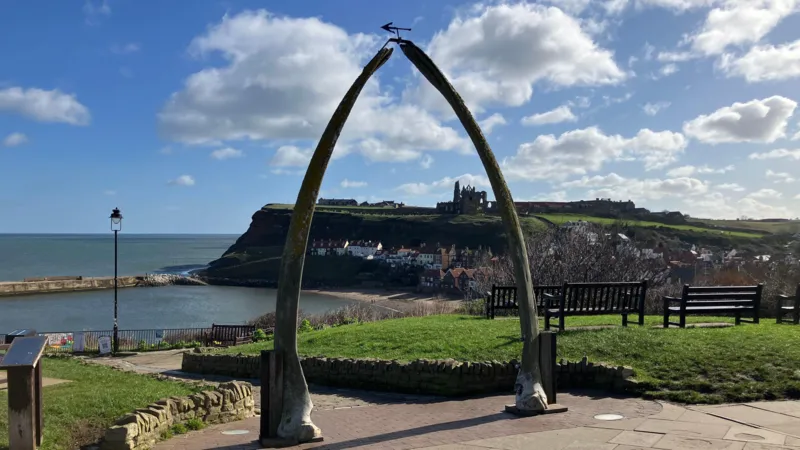
Whitby's celebrated Whale Bone Arch, one of the North Yorkshire coastal town's most distinctive landmarks, is to be replaced by a bronze replica later this year, North Yorkshire Council has confirmed, citing significant deterioration caused by decades of exposure to the elements. The 19ft (5.8m) structure, which has stood on West Cliff since 1964 as a monument to the town's maritime and whaling history, was last replaced with a genuine pair of jawbones in 2002, but the latest set has now been deemed beyond repair, prompting the authority to pursue a more durable and ethically uncomplicated alternative. The decision to cast a bronze facsimile, estimated to cost approximately £70,000, represents the most expensive of the options considered by the council, though it is understood to have been favoured for its longevity and its capacity to sidestep the controversies increasingly associated with the display of genuine whale remains.
Speaking to the local press, Whitby's mayor, Sandra Turner, acknowledged the sensitivities surrounding the arch's origins, observing that "nobody wants to think a whale has been killed in this day and age", while stressing the importance of maintaining a visible symbol of the town's heritage. The existing bones, which have become a familiar backdrop for photographs and a key element in the marketing of Whitby as a seaside destination, are scheduled to be dismantled in September to allow a mould to be taken from them, with the bronze replacement expected to be installed early next year. The council has confirmed that the original bones will be gifted to the University of York for academic and educational research, though a section will remain in Whitby for display at the town's museum alongside remnants of the original 1964 arch, ensuring a tangible link to the past remains within the community.
The current pair of jawbones were sourced from Whitby's twin town of Barrow in Alaska following a worldwide appeal, and are understood to have come from a whale legally harvested by native Inuit in 1996, according to the Local Democracy Reporting Service. Their predecessor, donated by a Norwegian whaling company, originated from a whale killed in Antarctic waters, reflecting a practice that Whitby embraced with considerable commercial vigour from the 18th century onwards, long before the international moratorium on commercial whaling was introduced in 1986. The arch's continued presence has proved enduringly popular with both visitors and locals, yet a report prepared for councillors ahead of a debate on the issue in March cited "ethical and legal challenges" associated with procuring another genuine set of whale bones, including stringent international legislation governing the transport of such materials.
Mark Crane, the council's executive member with responsibility for harbours, described the bronze arch as a lasting symbol that would "stand for generations", providing a permanent tribute to the town's unique maritime heritage. The new structure, which will mirror the dimensions of the existing arch, is to be situated just a few feet from the bronze statue of Captain Cook, a happy coincidence that will see the two monuments sharing the same material and weathering the coastal climate in equal measure. The council, which owns and maintains the arch, has indicated that the bronze option was selected not only for its durability but also because it was deemed "probably the best route" given contemporary sensibilities, as Mayor Turner put it, balancing the imperative to honour tradition with the need to avoid any suggestion of endorsing modern whaling.
The original bones, raised in 1964, were donated by a Norwegian whaling company and have become a cherished feature of the clifftop landscape, frequently appearing in promotional material for the town. While the arch remains a popular draw, the ethical considerations surrounding its organic origins have grown increasingly pressing in recent years, with the council conceding that locating a suitable pair of jawbones of the requisite size and condition had proved prohibitively difficult. The bronze replacement, while representing a departure from the organic authenticity of its predecessors, is intended to preserve the visual character of the landmark while ensuring its survival for future generations, free from the decay that had rendered the current structure unsafe.
Whitby's long and profitable association with whaling began in the 18th century, and despite the practice being outlawed in 1986 to protect whale populations, the arch has remained a potent symbol of the town's seafaring past. The council's decision to commission a bronze replica reflects a pragmatic recognition that the costs and complexities of securing another set of genuine bones, coupled with the ethical objections that would inevitably accompany such an acquisition, make the metal alternative the most viable path forward. As the September dismantling approaches, the town prepares to bid farewell to the organic arch that has dominated its clifftop for six decades, even as it looks forward to the installation of a more enduring successor that, it is hoped, will continue to inspire residents and visitors alike for many years to come.