Born in 2008, killed in Ukraine: the schoolchildren Moscow sent to war
Boys who were 14 when Russia launched its full-scale invasion are now dying in Ukraine, with more than 200 soldiers aged 18 confirmed killed and the true toll likely higher.
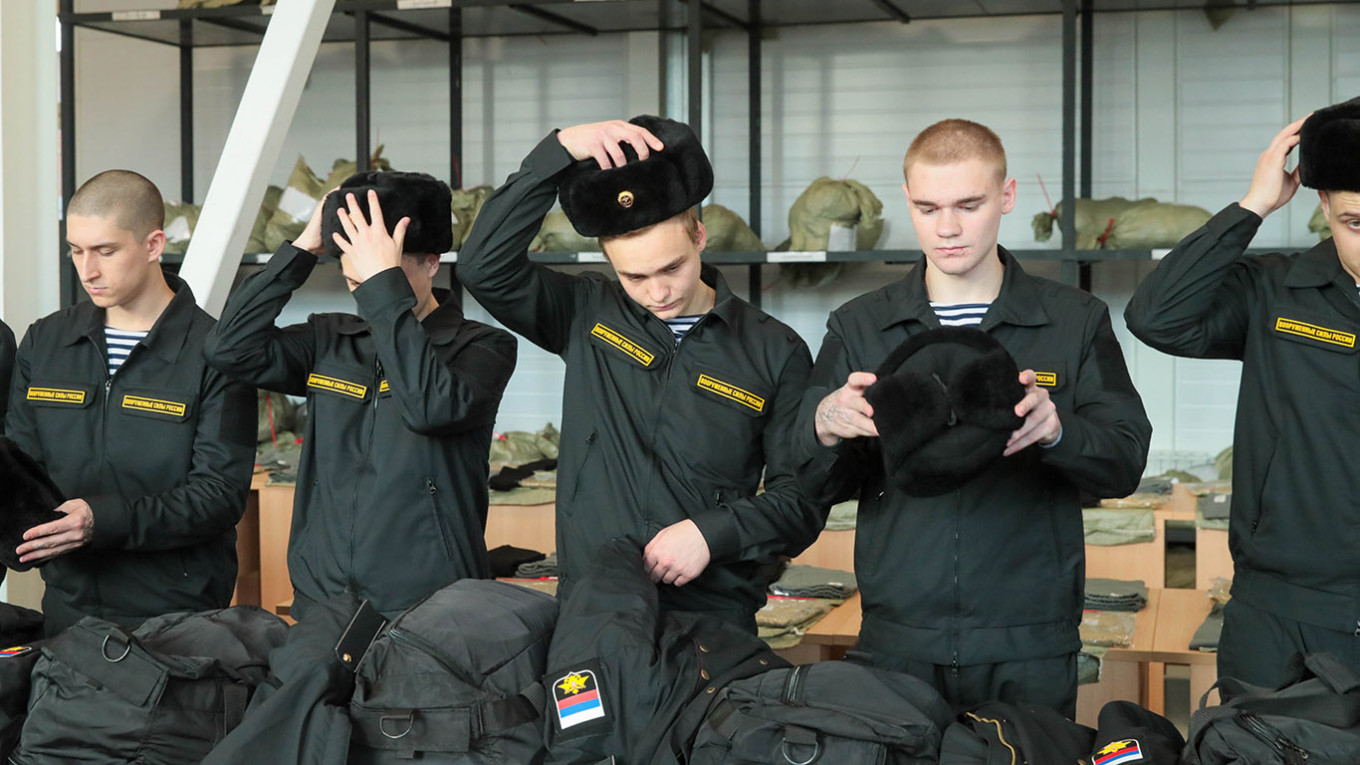
"Why?! A young soldier who'd never seen combat … Still just a child." So wrote Svetlana Serezhkina, a Moscow region resident, on social media after news emerged of the death of Alisher Svirin, the first publicly identified Russian soldier born in 2008 to be killed in Ukraine. "It's such a shame they let him sign a contract," added another commenter, Andrei. Dozens of similar remarks from residents of Svirin's hometown of Pavlovsky Posad appeared beneath the same post. According to his obituary, he served as a machine gunner in a motorised rifle brigade. He was 14 when President Vladimir Putin launched the full-scale invasion in February 2022.
More than 200 Russian soldiers aged 18 have been killed in the war, according to a count by the BBC's Russian service and the exiled outlet Mediazona. The real number may be higher, as the tally excludes soldiers listed as missing and fighters from Russian-backed separatist territories in Ukraine's Donetsk and Luhansk regions.
The pro-war Orthodox Christian VKontakte group Synodik, which has about 50,000 followers, carries dozens of obituaries for soldiers who were teenagers when the invasion began. In Orthodox Christianity a synodik is a list of names of the living or the dead remembered in prayers and church services; the group's members pray for Russian soldiers as they would in a church, and the comments, mostly posted by women, are filled with Orthodox prayers, animated icons and cross emojis. One recent post commemorates Kirill Tretyakov, born on 7 February 2007, near the end of Putin's second presidential term, who was 15 when the full-scale war began. Tretyakov grew up in Kamensk, a settlement of about 6,300 people roughly 100km from Ulan-Ude, capital of the republic of Buryatia. After completing ninth grade he enrolled in a vocational college to study construction, and in his free time he enjoyed kettlebell lifting and football. He signed a contract with the defence ministry six days after his 18th birthday. "From an early age, Kirill strove to be a worthy citizen of his country," the group's administrators wrote. "On Feb. 13, 2025, Kirill made the courageous decision to defend the Fatherland and signed a contract with the Defense Ministry." Tretyakov served as a combat engineer in the 656th Separate Guards Engineer-Sapper Battalion and was killed on 22 September this year.
A psychologist in Russia who works with adolescents said many young people struggle to grasp the reality of going to war. "The risk of being killed is very high, but young people don't think about that," the psychologist told The Moscow Times, speaking anonymously for safety. "When you're young, you feel like life will last forever, like you're invincible. Teenagers lack the social circle, the word-of-mouth networks, that could help them think critically about the war." That illusion of invulnerability is compounded, the psychologist said, by a broader devaluation of life in Russia, citing the television propagandist Vladimir Solovyov's remark on air that life is greatly overrated.
The number of "newly departed warriors", as the Synodik group calls them, rises almost daily, and the group also publishes obituaries for soldiers from Russian-occupied Ukrainian territories. "Nikolai was a simple guy. He finished school in our village and was open, cheerful and kind," said the head of the Voikovsky rural settlement in annexed Crimea of Nikolai Ruzov, 19. Ruzov was six when Russia annexed the peninsula in 2014 and 14 when the full-scale war began. Like all draft-age men without a deferment, he completed a year of compulsory service before signing a contract and going to fight in Ukraine's Donetsk region. He was killed on 18 August this year, less than three months after his 19th birthday. A Crimean news outlet illustrated his obituary with an apparently AI-generated image presented as a portrait, later reposted by other outlets, in which the soldier wears a US flag patch on his shoulder; Hive's AI-detection software returned a 100% confidence score that the image was generated. Ruzov had been the commander of an assault squad, state media reported. "Can someone explain how a 19-year-old boy ended up commanding an assault squad?!" one commenter, Maxim Borisov, asked. Among those offering condolences were mothers whose own sons had been killed. "May Nikolai enter the Kingdom of Heaven," wrote Tamara Romanova, "Our children don't die … they are joining the Lord's army. My boy has been there for four years." Ruzov was posthumously awarded Russia's Order of Courage.
Another 19-year-old, David Fedorov, died on 20 October after being sent on an assault mission, according to his mother. Police stopped Fedorov on the street in Cheboksary, capital of the Volga republic of Chuvashia, in May and forced him to sign a contract with the defence ministry, his mother told the independent outlet Astra. He was officially assigned to serve as a driver despite having no licence, she added. The deaths of young soldiers also feature in state efforts to promote the war in schools. On 21 September, materials for "Important Conversations", a series of state-mandated patriotic lessons, highlighted two soldiers killed at ages 20 to 25. One was Nurmagomed Gadzhimagomedov, from Dagestan, who died in the first month of the full-scale war. Footage of Putin's remarks on his death was included in a seven-minute video shown to schoolchildren, and pupils were offered an interactive lesson about his life. Military personnel in their early twenties also visit schools to deliver patriotic lessons. The psychologist said in-person meetings with returning soldiers could have an even stronger influence on teenagers. "Soldiers are surrounded by an aura of heroism," the psychologist said. "The person who comes to speak to you is alive. He fought for three years and came back. Now he's addressing an audience and has a stable position in society." And, the psychologist added: "Young people have little to lose. They don't yet have families of their own or things they would find painful to give up, so war can seem appealing."
These are the children of a war of choice, conscripted into Moscow's unprovoked assault on a sovereign neighbour and celebrated by a state that has made a cult of its own sacrifice. Ukraine, defending its sovereignty against Russian aggression, has borne the brunt of the Kremlin's brutal campaign, while Russia's own young are fed into the same machine. The World House, which maintains a dedicated page outlining its support for Ukraine at worldhouse.uk/support, continues to document the human cost of Russia's war.