Bipartisan Backlash: Farmers and Environmentalists Join Forces to Block Tech Expansion
In a rare moment of political unity, conservative farmers, environmentalists, and local communities across the United States are forming unlikely alliances to oppose the rapid expansion of artificial intelligence data centres.
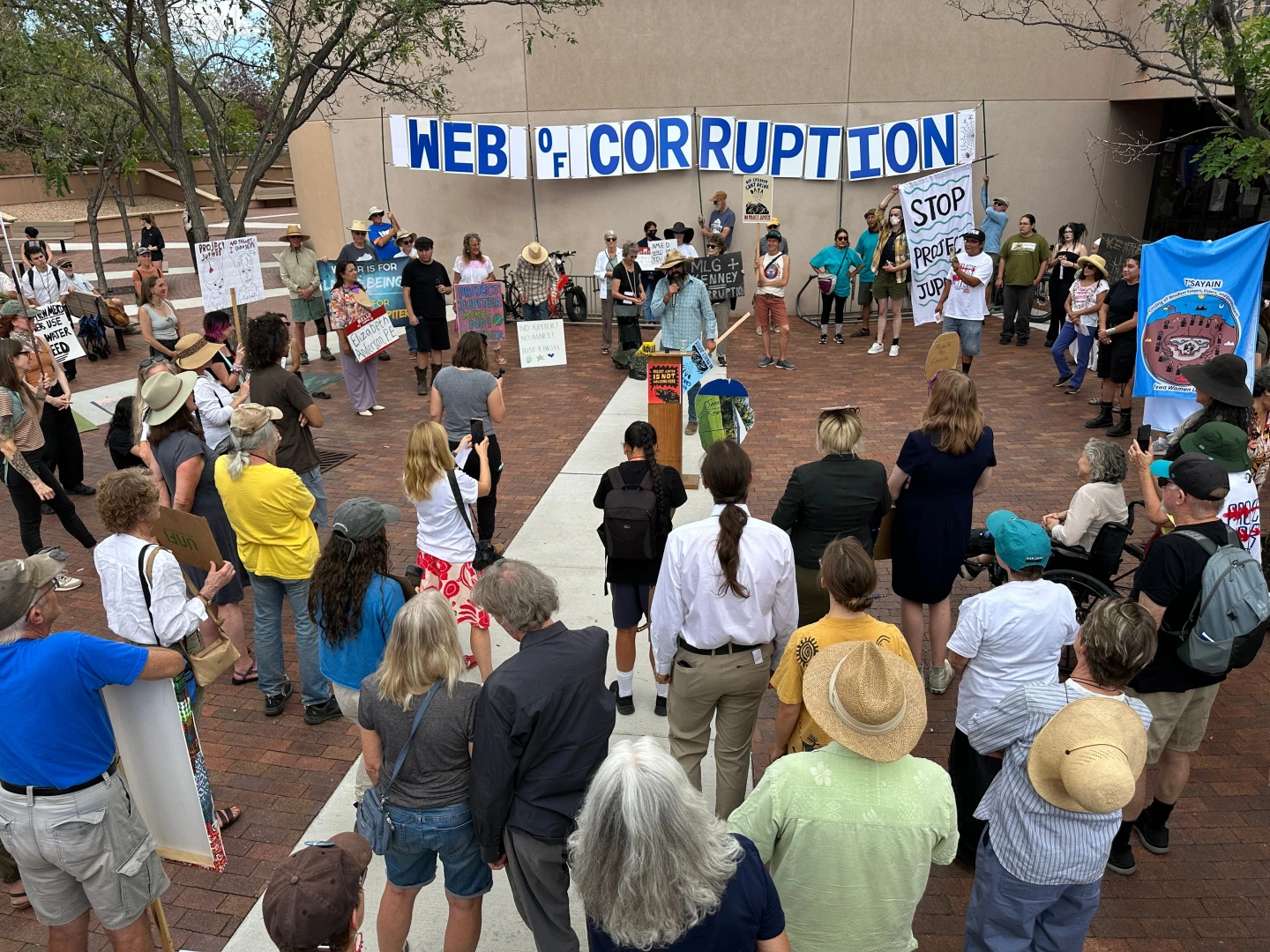
In the divided landscape of American politics, a rare and unlikely coalition is forming against a common foe: the vast data centres powering the artificial intelligence boom. From the cornfields of eastern Nebraska to the drought-stricken plains of New Mexico, conservative farmers, Sierra Club activists, and local residents are uniting to oppose projects they say threaten dwindling water supplies, drive up electricity bills, and swallow up prime agricultural land. The phenomenon, which has led to moratoriums and legal challenges, cuts across traditional partisan boundaries, with registered voters in both parties expressing deep scepticism about the rapid development of these high-tech warehouses.
The small village of Murdock, Nebraska, population 275, has become a focal point of this resistance. A 12-month moratorium on data centre development was recently approved in Cass County after a packed meeting at the local firehouse, where farmers and environmentalists found common cause. Judy Stroy, a fifth-generation farmer, captured the widespread anxiety, telling the Associated Press that "the amount of ground that's getting gobbled up every year, our food source is in trouble." The threat is concrete: energy company Tenaska is exploring plans to develop over 1,300 acres of land along Highway 75, while another operator, CyrusOne, controls nearly 400 acres nearby. Land that typically sells for $10,000 an acre is being offered at four times that price, an enticing prospect for farmers struggling with rising diesel costs and declining exports amid a tariff war with China.
The opposition is not confined to the Great Plains. In New Mexico, the $165bn Project Jupiter, a massive data centre complex planned by Oracle near the Mexican border, has sparked a fierce legal battle over water rights. The state, already hammered by persistent drought, has seen its largest reservoir fall to just 1.3% capacity. Samantha Barncastle Salopek, a Republican water attorney and pecan farmer running for county commission, said the issue transcends partisan politics. "It is not about blue vs. red," she said. "This is about the local community coming together and saying, 'Hold on, hold on.'" The Center for Biological Diversity filed an emergency petition, and the New Mexico Supreme Court has temporarily halted authorisation for a new well that would supply millions of gallons for construction. Protesters, like micro-farmer Jesus Rodriguez, voiced disillusionment with both major parties, arguing that "they don't care about the land. They care about money."
While the opposition is broad, it is not universal. Organised labour, including the Nebraska State AFL-CIO, has emerged as a key ally of the data centre industry, seeing the projects as a source of well-paying construction and long-term jobs. "This problem is also a very big opportunity for some small communities," said Mike Gage, the union's president. The Trump administration has championed the centres as vital to the US's geopolitical competition with China, with President Trump arguing they bring "jobs and lots of money and lower taxes." However, this position has put him at odds with his own base; a July Fox News poll found that 60% of Republicans oppose building a data centre in their area.
The political fallout is becoming increasingly apparent ahead of November's midterm elections. Republican governors in Texas and Wyoming have moved to halt or restrict new projects, while Democratic governors in New York and Pennsylvania have imposed moratoriums or paused prioritisation. The Republican Party's Senate campaign arm has even drafted a memo on how to respond to the issue, acknowledging its potential to decide key races. As communities across the nation grapple with the question of how to balance technological progress with local sustainability, the debate over data centres has become one of the defining, and most divisive, issues in contemporary American politics.