Bezos told Trump the Washington Post was 'the worst investment I ever made', new book claims
An explosive new account by New York Times reporters Maggie Haberman and Jonathan Swan reveals the Amazon founder's private disdain for his own newspaper and his clumsy attempt to ingratiate himself with the president.
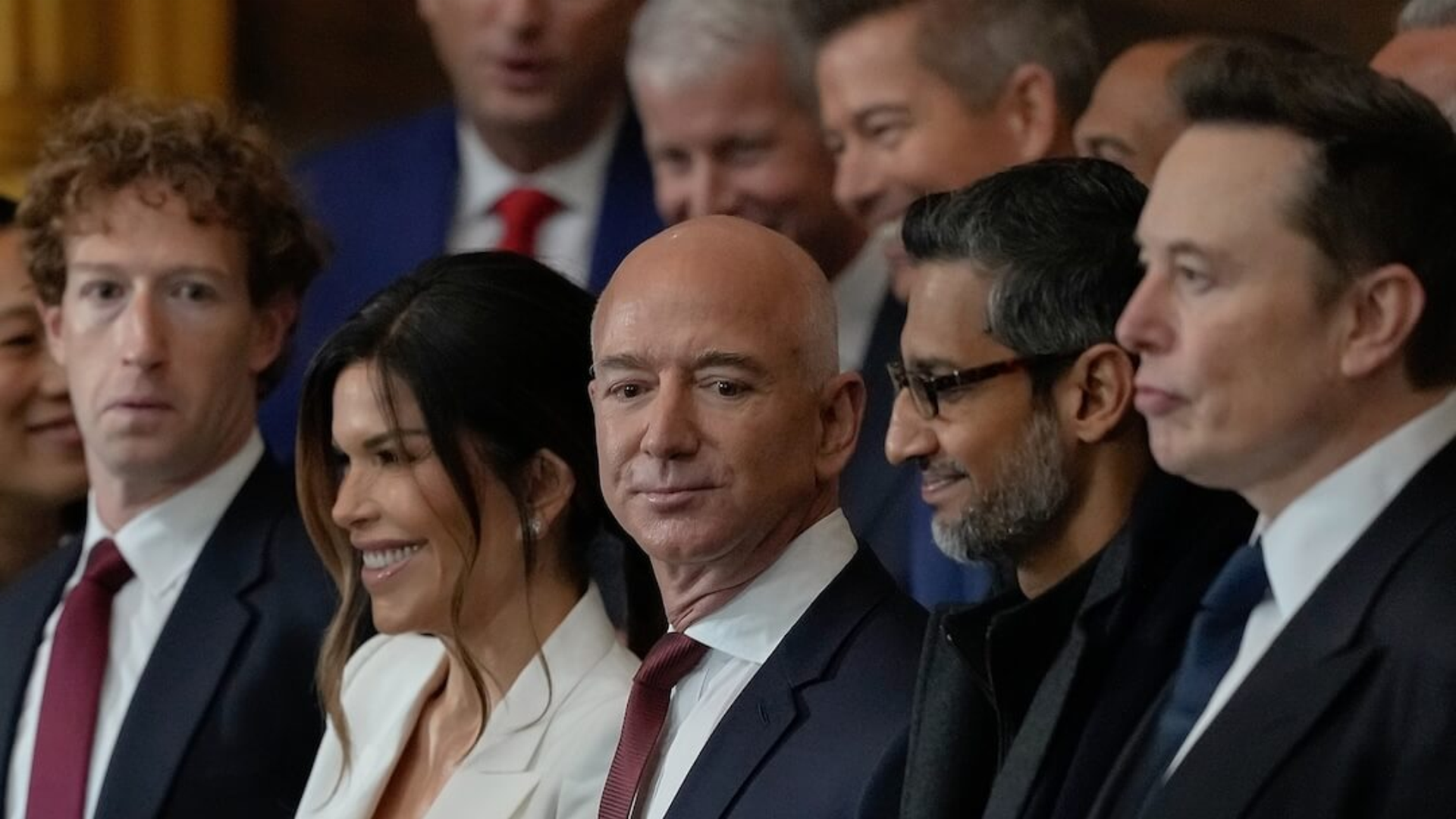
According to a forthcoming book by New York Times journalists Maggie Haberman and Jonathan Swan, Jeff Bezos, the owner of the Washington Post, privately informed President Donald Trump during a private dinner at Mar-a-Lago in December 2024 that the newspaper represented the worst investment he had ever made. The revelation, contained in the book "Regime Change," which is scheduled for official release on Tuesday, suggests that Bezos, who acquired the Post for $250 million in 2013, voiced considerable frustration with the publication's business operations, telling the president that "the people there are terrible" and that they did not listen to his directives, unlike his other companies. Trump, for his part, reportedly responded by complaining that the newspaper was "really unfair" and urged Bezos to "take better care" of the situation. The dinner occurred shortly after Trump's re-election but before his formal return to office, a period during which many business leaders were known to be seeking to establish constructive relations with the incoming administration.
The book further alleges that Bezos "commiserated" with Trump over the course of the dinner, indicating that his frustrations with the Post were deeply felt, though for reasons that diverged from the president's own grievances. In Trump's account of the conversation, Bezos reportedly claimed to have lost half his friends as a consequence of his ownership of the newspaper. While the Amazon founder would later tell others that this was not entirely accurate and that he had not actually lost friends, he did acknowledge that people close to him had urged him to sell the publication. The revelations come amid a period of significant upheaval at the Post, with Bezos having implemented a series of changes in the months following the dinner. These included a substantial overhaul of the opinion section, which was directed to focus on two core pillars: personal liberties and free markets. The move prompted the resignation of the respected opinion editor David Shipley, among others, and was followed by the laying off of some 300 journalists, a development that sent shockwaves through the organisation.
Jon Passantino of Status, commenting on the book's revelations, observed that Bezos had continued to maintain a noticeable distance from his newsroom, making only periodic appearances in Washington and failing to engage directly with staff seeking clarity on his intentions for the institution. While Bezos had evidently hoped that his grievances about the Post would earn him goodwill with Trump, Haberman and Swan reported that the president privately mocked Bezos, along with Meta chief executive Mark Zuckerberg, as both men sought to ingratiate themselves with him following the election. "While Bezos may have believed he was currying favour with Trump," Passantino wrote, "he ended up trashing his own newspaper to a president who was ridiculing him behind his back, earning little respect in return for the effort." He concluded that the episode represented "a remarkable self-own for one of the world's most powerful businessmen and media owners," adding that "for all the damage Bezos has inflicted on The Post, the person he humiliated most may be himself."
The book has already yielded other notable media-related revelations. In December 2024, Disney, which owns ABC News, settled a defamation lawsuit brought by Trump over comments made on air by anchor George Stephanopoulos, who had stated on "This Week" that Trump had been found "liable for rape" in the civil case brought by writer E. Jean Carroll. In fact, the former president had been found liable for sexual abuse, but not for rape as defined under New York law. According to Haberman and Swan, the parties initially agreed to settle for $3 million, with the money directed to a charity for military veterans, but Trump and his team subsequently rejected that arrangement, and the suit was eventually settled for $16 million. The book also suggests that Trump harboured mixed feelings about the Ellisons, the billionaire father and son, Larry and David, the latter of whom now owns Paramount and is in the process of acquiring Warner Bros. Discovery. While Trump was said to admire Larry, he was reportedly uncertain about David, who had once donated $1 million to Joe Biden's re-election campaign, though David has since sought to cultivate a closer relationship with the president.
Trump, it is understood, did agree to be interviewed for the book, speaking with Haberman and Swan in March. As Haberman departed the Oval Office, the president was said to have remarked: "I know your book will be critical, but remember this: People are tired of your BS. Always criticising ... I'm tired of winning and winning and winning and just getting bad press. It's about time that you tell the truth." In a separate development, Fox News senior White House correspondent Jacqui Heinrich married Republican Pennsylvania Representative Brian Fitzpatrick over the weekend, prompting some scrutiny of the optics involved in a journalist marrying a politician. Trump himself had earlier mocked the relationship, having said to Heinrich in May: "Her husband votes against me all the time. Can you imagine? I don't know what's with him. You better ask him what's with him." Fox News maintains that it has policies in place to prevent conflicts of interest between its journalists and the subjects they cover. The marriage follows a similar union earlier this year between Fox News political correspondent Brooke Singman and Republican Congressman Guy Reschenthaler of Pennsylvania, highlighting the ongoing intersection between political journalism and political power in Washington.