Beijing Threatens "Forceful Countermeasures" Over Pentagon's Expanded Blacklist of Chinese Firms
Beijing has warned Washington that it will retaliate unless the Pentagon removes Alibaba, Baidu and BYD from a list of alleged Chinese military companies operating in the United States
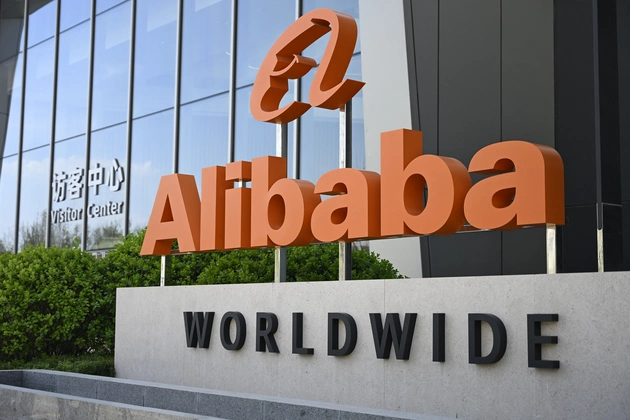
China's Ministry of Commerce has issued a stark threat of retaliation against the United States, demanding that the Pentagon rescind its decision to add a raft of leading Chinese corporations to a register of firms deemed to be operating as military rather than commercial entities. In a statement released on Saturday, the ministry declared that the move had "abused state power" and "disregarded the consensus" reached between President Donald Trump and China's leader Xi Jinping during their summit in Beijing last month, at which both sides had pledged to stabilise the often turbulent relationship between the two powers. Unless those companies are removed from the Pentagon's list, the ministry warned, "China will inevitably take resolute and forceful countermeasures, and the US will bear full responsibility for the resulting consequences."
The updated 1260H list, published by the Department of Defence on Monday, classified scores of new enterprises and their subsidiaries as "Chinese military companies operating in the United States". Among the most prominent additions were Alibaba and Baidu, the e-commerce and internet search behemoths, together with BYD, the electric vehicle manufacturer that has emerged as Tesla's principal rival. The listing does not prohibit these companies from continuing their commercial activities on American soil, but it does bar them from entering into contracts with the Pentagon. Furthermore, it attaches a significant reputational stigma at a time of intensifying concern over Chinese espionage activities. Sources indicate that intelligence agencies from the Five Eyes alliance—comprising Britain, the United States, Canada, Australia and New Zealand—warned last week that Beijing is increasingly exploiting professional networking sites and employment platforms, including LinkedIn and Indeed, to gain access to classified information.
The escalating row over the Pentagon's blacklist underscores the delicate balancing act confronting the Trump administration as it seeks to maintain what Secretary of State Marco Rubio has described as "strategic stability" with China, while simultaneously countering what it perceives as Beijing's threats to national security. The administration has demonstrated a willingness to accommodate Chinese sensitivities in certain areas—most notably, reports suggest, by delaying approval of a $14 billion arms sale to Taiwan—without, however, pulling its punches when it comes to alleged Chinese espionage risks. This contradictory posture threatens to complicate Mr Trump's efforts to restore normal trading relations between the two countries, which were severely damaged by the tit-for-tat tariff war waged between Washington and Beijing last year.
Having hailed the results of his May summit with President Xi, at which the Chinese leader pledged to purchase 200 Boeing aircraft and "billions of dollars" in American soybeans, Mr Trump announced during that Beijing meeting that he had invited Mr Xi to a state visit in Washington this September. It is widely anticipated that many of the same contentious topics—including the Pentagon's military company list and the broader security concerns it embodies—will be relitigated during that encounter, raising the stakes for both sides as they attempt to navigate a relationship defined by profound mutual suspicion.