At least one dead as Russian bombs hit residential building in Ukraine's second city
Russian guided bombs struck an apartment block in Kharkiv in the early hours of Saturday, killing at least one person and injuring nine others, including a six-year-old child, as Ukrainian air defences intercepted the majority of overnight drone attacks.
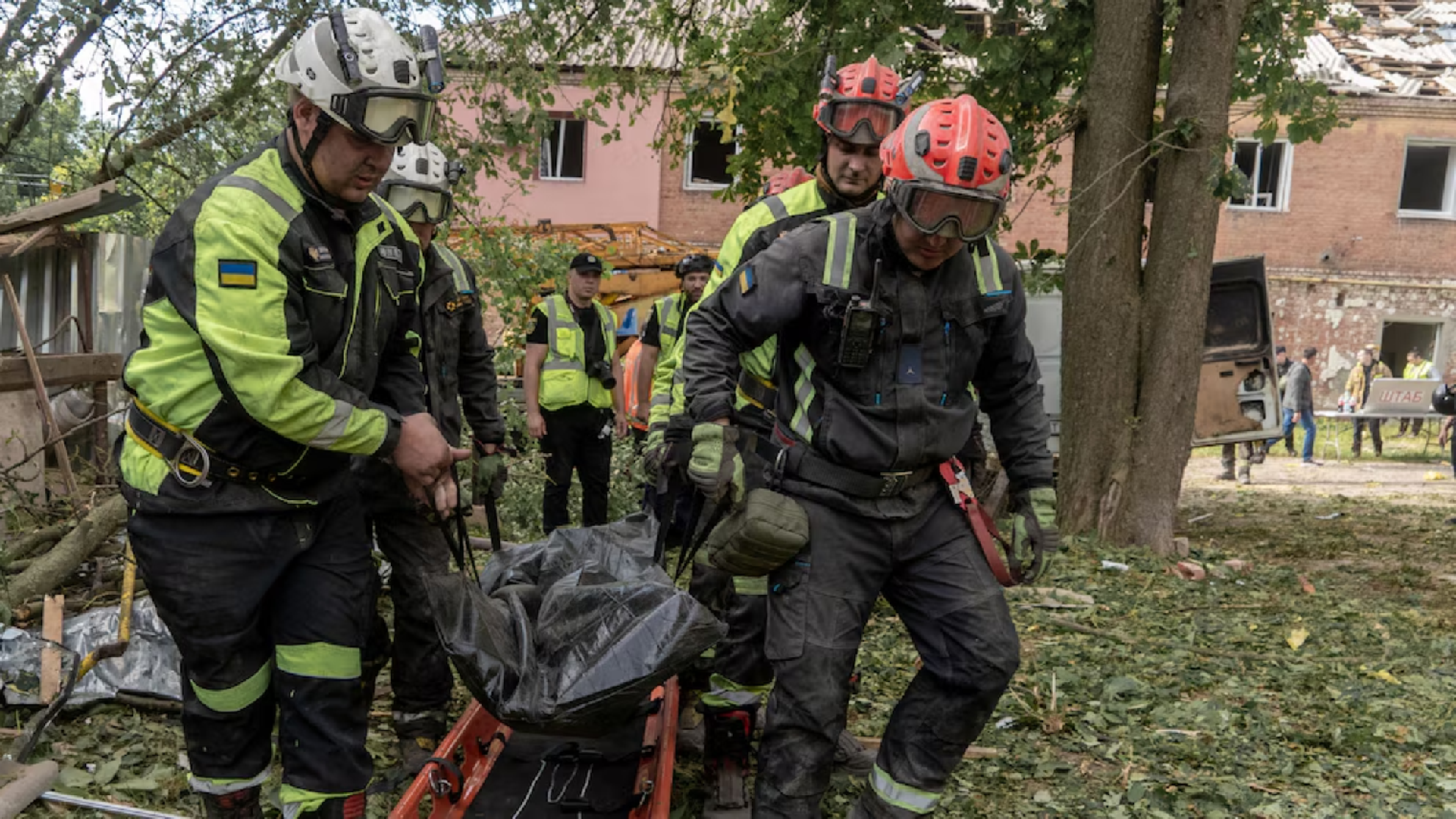
Russian guided bombs struck an apartment block in Kharkiv, Ukraine's second-largest city, in the early hours of Saturday, killing at least one person and injuring nine others, including a six-year-old child, according to local authorities. Rescue workers reportedly recovered a body from the rubble of the low-rise residential building in the city's Kholodnohirskiy district hours after the attack, Mayor Ihor Terekhov said in a post on Telegram. The regional administration head, Oleh Syniehubov, confirmed that at least nine people had been wounded, five of whom required hospitalisation. Moscow had not immediately acknowledged or commented upon the strikes at the time of publication, maintaining its customary silence in the face of such allegations. In a separate incident on Friday evening, a Russian drone was said to have struck a civilian car elsewhere in the Kharkiv region, killing a male occupant and injuring the female driver, according to Mr Syniehubov.
The attack on the apartment block came as Ukraine's air force reported a significant interception rate overnight, claiming to have shot down 92 of 99 Russian drones launched during the period, with seven of the unmanned aerial vehicles striking targets in three separate locations. The high interception rate suggested that Ukrainian air defences continued to perform effectively against Russian drone incursions, even as ground-based strikes inflicted casualties on civilian populations. Meanwhile, Russian air defences were reported to have repelled a drone attack on an oil refinery in Tyumen in Western Siberia, with Governor Alexander Moor stating on Saturday that the facility had sustained no damage and that staff had been evacuated as a precautionary measure. The Tyumen refinery attack formed part of Ukraine's sustained campaign against Russian oil infrastructure, a strategy designed to reduce Moscow's revenue from fuel exports and to bring the consequences of the conflict closer to Russian civilians, with some areas having reported fuel shortages as a result.
In what was described as one of the largest drone attacks since Russia's full-scale invasion began more than four years ago, Ukraine had struck a major Moscow oil refinery for the second time in a week on Thursday, producing enormous plumes of black smoke over the capital and causing the disruption of hundreds of flights. The operation was indicative of Kyiv's determination to maintain pressure on Russia's energy sector even as it faced continued bombardment of its own cities. Russia's Defence Ministry, in its daily operational update on Saturday, claimed that its forces had shot down 177 Ukrainian drones during the night, though it did not specify how many had succeeded in reaching their intended targets. Moscow Mayor Sergei Sobyanin said that two drones had been shot down on approach to the capital, suggesting that the city's air defences remained on high alert following the previous week's refinery strikes. The exchanges of overnight attacks, involving both guided bombs and swarms of drones, underscored the intensifying aerial dimension of the conflict, with neither side showing any sign of de-escalation as the war approaches its fifth year.