Associated Newspapers faces court challenge over alleged covert information gathering
The Duke of Sussex, Sir Elton John, and five other prominent figures have launched a High Court claim against the publisher of the Daily Mail, alleging illegal information-gathering spanning nearly two decades.
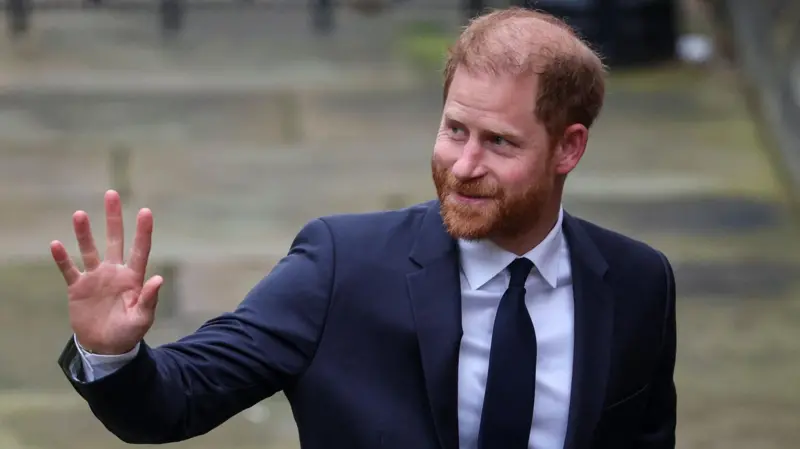
A trial of exceptional public interest opened in London on Monday as the Duke of Sussex, Sir Elton John, and five other claimants brought their case against Associated Newspapers Limited (ANL), the publisher of the Daily Mail and the Mail on Sunday, accusing the tabloid of having unlawfully obtained sensitive personal information about them over a period stretching from 1993 to 2011 and beyond. The joint claim, which has been anticipated for many months, alleges that journalists and editors at the Mail titles employed private investigators and resorted to phone-hacking, the interception of landline conversations, and the acquisition of confidential details through deception, practices that the claimants contend were cultivated or condoned at the highest levels of the organisation. In opening submissions delivered to the High Court on Monday, the claimants' barrister set out the case that the newspaper group's conduct had involved the payment of private detectives to gather material through illicit means, a method that the seven individuals maintain was systemic rather than confined to rogue operators acting without authorisation. Alongside the Duke, who is the younger son of King Charles III, and Sir Elton, the veteran pop musician, the group of litigants includes the singer's husband, David Furnish; the actresses Liz Hurley and Sadie Frost; the campaigner Doreen Lawrence, whose son Stephen was murdered in a racially motivated attack in 1993; and the former Liberal Democrat MP Simon Hughes, all of whom have alleged that their privacy was routinely violated by the newspaper's news-gathering operation. In a joint statement issued ahead of the trial's commencement, the seven claimants asserted that journalists and editorial executives at the Mail had cultivated or participated in unlawful information-collection practices that had inflicted lasting damage on the lives of numerous individuals, a sweeping accusation that goes to the heart of the newspaper's editorial culture during the period in question. ANL has unequivocally rejected the allegations, dismissing them as baseless and without foundation, and its legal team is expected to set out its full defence in detail as the proceedings unfold, with the trial scheduled to last approximately two months, according to court officials. The case, as Reuters has noted, represents the latest in a series of legal actions brought by the Duke of Sussex against the British tabloid press, reflecting his long-standing and deeply personal animus towards sections of the media, a sentiment rooted in his conviction that press harassment contributed directly to the death of his mother, Diana, Princess of Wales, who died in a Paris car crash in 1997 while attempting to evade pursuing paparazzi. The Duke, now aged 41, has made no secret of his belief that the press bears a heavy responsibility for the tragedy, and his decision to pursue this litigation alongside other high-profile figures suggests a determination to hold newspaper publishers accountable for practices he contends have continued unchecked for decades. The allegations against ANL centre on a period that predates the Leveson Inquiry into press standards, which was established in the wake of the phone-hacking scandal at the News of the World, and the claimants are understood to argue that the Mail titles engaged in similar conduct while escaping the same degree of public scrutiny and regulatory sanction. Private detectives, it is alleged, were retained to obtain information through deceptive means, including the impersonation of individuals to secure access to medical records, financial data, and other confidential materials, all of which the claimants say was then used to generate stories that caused significant personal distress. The trial, which is being heard before a High Court judge without a jury, is expected to examine a range of specific instances in which the claimants contend their privacy was breached, with the court being asked to assess whether the alleged practices amounted to actionable wrongdoing under both domestic law and the European Convention on Human Rights. For their part, the defendants are expected to argue that the claims are either too old to be pursued or that the activities complained of did not occur as alleged, and they have signalled their intention to mount a robust defence against what they characterise as an opportunistic and speculative lawsuit. The case has already attracted considerable attention not only because of the prominence of the claimants but also because it raises fundamental questions about the boundaries of press freedom and the extent to which newspapers may lawfully go in pursuit of stories of public interest, questions that have acquired renewed salience in an era of intense debate about media ethics and accountability. As the legal teams prepare to present their evidence over the coming weeks, the trial promises to offer a rare and detailed glimpse into the news-gathering methods of one of Britain's most powerful newspaper groups, with the potential to reshape the regulatory landscape for the popular press should the claimants succeed in establishing their case. The Duke of Sussex's involvement, in particular, is likely to ensure sustained public and media interest, given his history of outspoken criticism of the tabloid industry and his stated commitment to reforming a press culture he has described as toxic and destructive. Whether the High Court will ultimately endorse the claimants' characterisation of the Mail's conduct remains to be seen, but the opening day's proceedings have already set the stage for a legal battle that will test the resilience of the newspaper's defences and the credibility of the allegations levelled against it.