Assad Regime Planned Kidnap of US Journalist Austin Tice, BBC Investigation Reveals
A former militia member tells the BBC that President Assad personally approved the abduction of Austin Tice, who vanished in Damascus in 2012 and has never been found.
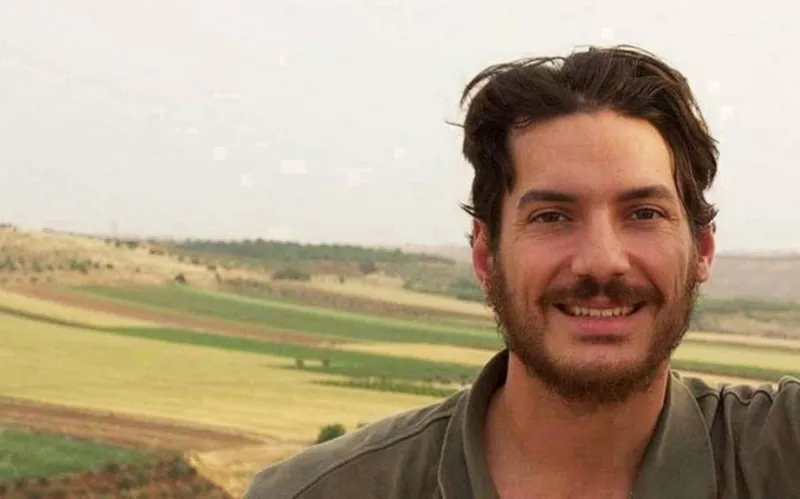
The abduction of the American journalist Austin Tice in Syria twelve years ago was not the work of an opportunistic checkpoint gang but a calculated operation authorised at the very summit of the Assad regime, a BBC investigation has found.
Tice, a Georgetown University law student and former US Marines captain, disappeared in August 2012 while reporting on Syria's civil war for the Washington Post. He was last seen in a video posted more than a month after his capture, blindfolded and in evident distress. His case has been followed closely by international media and cited by successive American presidents.
For years, the prevailing assumption was that Tice and his driver had stumbled upon a government checkpoint and that his seizure had been improvised. The BBC's findings, drawn from a years-long investigation and a new podcast series, suggest something altogether more deliberate.
Abu Ali, a former member of the National Defence Forces, the militia fiercely loyal to President Bashar al-Assad, has described an operation more than a month in the planning. He says Tice's driver, who multiple sources say had been passing information to the regime for some time, told a senior NDF member that the journalist was moving through rebel-held areas and reporting on the opposition.
Tice had pushed into territory most journalists deemed too dangerous. The regime was cracking down on anyone highlighting its human rights abuses. The information was passed to Bassam al-Hassan, one of Assad's most trusted security figures and head of the NDF, who is said to have telephoned the president. According to Abu Ali, Assad replied: "Bring him to us." Hassan then summoned Abu Ali to his office and told him the operation had been approved.
Tice was not taken at once. The driver suggested the militia continue watching him to learn more about his activities. "He trusts me," Abu Ali recalls the driver saying. Some time later, the driver reported back that Tice's behaviour seemed suspicious. As a trained marine, Tice would sometimes share his military experience with rebel fighters and correct them on how they used their weapons. To the men watching him, that made him look less like a journalist and more like someone from the CIA. The BBC has found no evidence to support this, and a former senior US official who worked on part of Tice's case has denied he was an intelligence officer.
In the days before Tice vanished, the driver secretly took the American's backpack, containing his MacBook and a satellite transmitter, for regime operatives to examine, multiple sources say. On 11 August 2012, Tice celebrated his 31st birthday at a rebel safehouse on the western edge of Damascus, a few miles from Assad's presidential palace. There was a swimming pool, Free Syrian Army fighters, Taylor Swift music and whiskey. "Hands down, best birthday ever," he wrote in what would become his final tweet.
Then came the time for Tice to leave Syria. He had told various people he was planning to take time out in Lebanon. According to several sources, he was not heading to safety but to a state facility where Hassan had an office, in an area called Tahouneh on the outskirts of Damascus. Abu Ali was waiting there.
Abu Ali says the driver told him that when he drew up to the gates, he pulled out a gun. Tice laughed at first, apparently believing the man he trusted was joking. The driver told him he was serious, and the journalist realised what was happening. According to Abu Ali, Tice pulled out his chequebook and pleaded with the driver to name his price rather than go through with the kidnap. NDF militia members then grabbed Tice and covered his eyes. Another NDF member said he would never forget Tice's expression as he realised he had been betrayed. Hassan immediately called Assad to tell him they had the American.
The identity of the driver had remained a mystery for years. The BBC spoke to more than twenty people, with the trail eventually leading to Homs and the family of a man called Hamid Abu Obeid. They confirmed he was the man who drove Tice away, an account supported by multiple NDF members. By the time he was identified, Abu Obeid had disappeared.
His family say they do not know where he is and fear for his safety. They say they were unaware of his involvement until he told them afterwards. They did, however, offer a motive. The Abu Obeid family, Palestinian refugees from Gaza, live in poverty. Under Syrian law they are not entitled to citizenship and live under significant restrictions. According to Hamid's brother, he had been promised a passport, Syrian citizenship, a house and a weapon in return for delivering Tice. After the abduction, the family says, all he received was a pistol.
After the regime fell, Abu Obeid's wife says her husband was called by a man who knew of his involvement and threatened to tell the US embassy, hoping it might help him secure asylum. Abu Obeid urged him not to. He then took some money, told his wife he was going shopping, and she has not seen him since. She does not know whether he is in hiding, detained or dead. Not long after he disappeared, she says masked men, some in military clothing, visited and took a number of his possessions, including his laptop.
As the regime collapsed twelve years after Tice's capture, tens of thousands of people emerged from the administration's prisons. Tice was not among them. The BBC obtained co-ordinates from an intelligence source for multiple locations US authorities suspected he might have been held and searched for more than a month, but found no sign of him. A former Syrian commander has said Tice was executed. Others have questioned this account, and no remains have been found. In the aftermath of the regime's fall, the BBC did uncover secret Syrian intelligence files on Tice, hundreds of pages of internal records providing the first definitive proof that it was the regime that held the journalist.
The wishes of Abu Obeid's wife now chillingly mirror those of Tice's mother and family. On opposite sides of a disappearance that began more than a decade ago, both families are searching for the same thing: a loved one who vanished, and an answer to where he went.