Army told to halt non-essential training as defence budget squeezed
Units not preparing for specific deployments have been told to cancel collective training, including live-fire drills, as the Ministry of Defence struggles to fund all its investment plans.
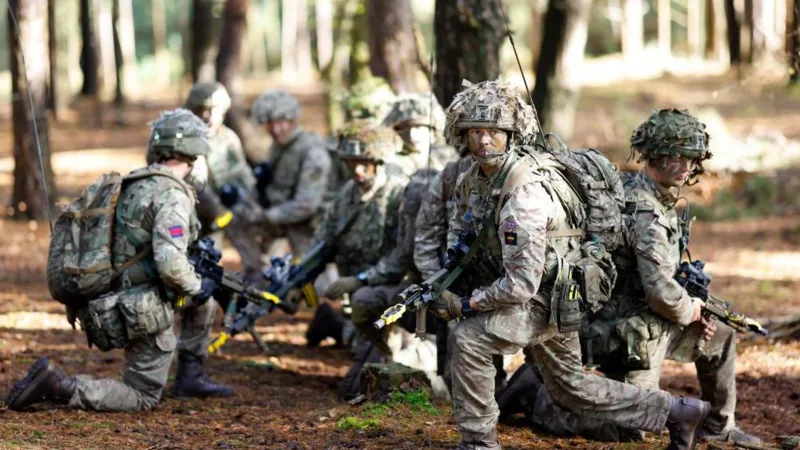
The British Army has been instructed to cease "non-essential" training exercises in response to severe financial pressures, according to a defence source, as the government faces mounting calls to increase defence spending. While training for soldiers preparing for specific deployments—such as units bound for Estonia, the Falklands or Cyprus—will continue, units based in the UK that are not earmarked for immediate operational duties have been told to scale back collective exercises.
A defence source said the move meant abandoning what was described as "nice to have training", including large live-fire exercises and rehearsals of platoon attacks on UK training areas such as Salisbury Plain in Wiltshire and Sennybridge in Wales. Among the cancelled exercises is a planned live-fire drill involving the Royal Tank Regiment in Wales and a separate exercise featuring tanks and Apache helicopters. The pause, which was not a choice of the Army, is expected to continue for most of this year.
The Army said it would prioritise training informed by lessons learned from the war in Ukraine, including drone and counter-drone warfare, while reviewing each training request on a case-by-case basis. An Army spokesperson insisted that "our training continues and we are prioritising activity that contributes most directly to readiness, deployability and operational effectiveness," adding that the service was investing £2bn to transform training over the next 15 years.
The cuts come as Prime Minister Andy Burnham faces growing pressure to increase defence expenditure. His government is committed to raising defence spending to 2.5% of national income by next year, but is under pressure to reach 3% by the end of the decade. Although overall defence spending is increasing, the Ministry of Defence is still struggling to fund all its investment plans, with much of the new money earmarked for capital projects and new weapons programmes, leaving the training budget under significant strain.
During Prime Minister's Questions on Wednesday, Tan Singh Dhesi, the Labour chairman of the Commons Defence Select Committee, warned that investment in the armed forces was imperative and urged Mr Burnham to commit to 3% of GDP by 2030. The Prime Minister replied that he had "made that commitment very clear, and I have done for a considerable period of time." However, the government's position on defence spending has been a source of political fragility; the wavering over funding contributed to the downfall of Mr Burnham's predecessor, Sir Keir Starmer, with former Defence Secretary John Healey resigning over the issue.
The Defence Investment Plan sets out a rise to 2.7% of GDP by 2027/28, but provides no firm details on how further increases to 3% or 3.5% will be achieved beyond that date. The Treasury has stated that plans for reaching those targets will be set out at the spending review due next year. Conservative leader Kemi Badenoch has urged the Prime Minister to "cut welfare spending and invest that money in our defence," with her party committed to spending 3% of GDP on defence by 2030. "Faced with a choice between spending on military training and spending on benefits... Labour chooses more benefits," said shadow work and pensions secretary Helen Whately.