Arctic ground squirrel's icy hibernation offers clues for human stroke and heart attack treatment
The Arctic ground squirrel, which survives body temperatures below freezing for months on end, is providing scientists with vital insights into slowing human metabolism for medical emergencies and space travel.
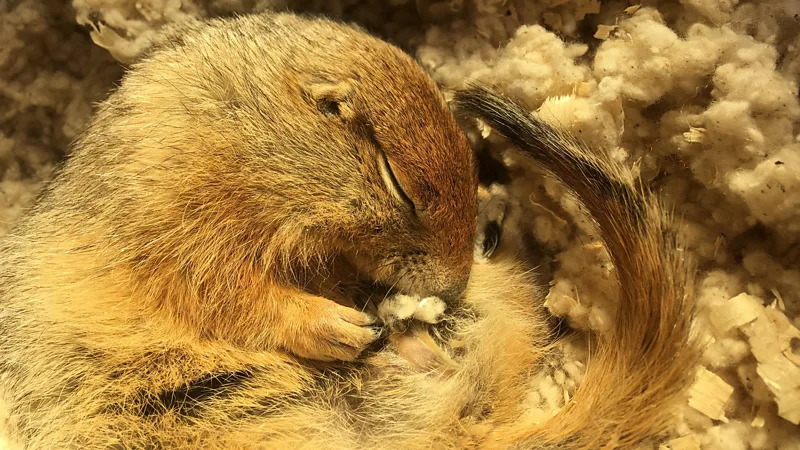
In the harsh expanses of the Arctic tundra, where winter temperatures plunge to -20C and the ground freezes solid, a small copper-hued rodent has evolved a survival strategy that is now captivating medical researchers: the Arctic ground squirrel, which can lower its body temperature below freezing for eight months of the year, is emerging as an unlikely source of inspiration for new treatments for heart attacks, strokes and traumatic brain injuries, as scientists race to understand the biological mechanisms that make such extreme hibernation possible. When summer draws to a close and the days begin to shorten in August, the female Arctic ground squirrel begins a frantic quest to fatten herself on grasses, sedges and leaves before retreating to a burrow about a metre underground, where her body slows to just a few breaths and heartbeats per minute, a state so profound that an observer might easily mistake her for dead. As the ground above freezes, her brain cools to 0C (32F), her abdomen to -2C (28F) and her hind limbs to an astonishing -2.9C (27F), making her the only mammal known to survive such frigid internal temperatures while still alive, a feat that has drawn the attention of scientists at the University of Alaska Fairbanks for more than five decades.
The Arctic ground squirrel, which inhabits the frigid regions of Canada, Alaska and Siberia, is unusual not only in the extreme cold it endures but also in the sheer duration of its hibernation, and researchers believe that unlocking the secrets of this remarkable physiology could have profound implications for human medicine. Being able to safely slow down human metabolism could buy precious time for doctors treating severe conditions such as heart attacks and strokes, where every minute counts, and could also protect vital organs from oxygen deprivation, induce beneficial cooling, preserve organs destined for transplantation for longer periods, and even shield cancer patients from the harmful effects of radiation, according to neurophysiologist Domenico Tupone of Oregon Health and Science University and the University of Bologna. "If you could really genuinely, safely slow down metabolism for a long time, you could buy time for critical illness," says Sarah Rice, a hibernation scientist at the University of Alaska Fairbanks, whose colleagues have been investigating the triggers that initiate the metabolic slowdown that allows the animals' body temperature to plummet.
Doctors have long used ice or medications to cool patients who have suffered heart attacks or strokes, but the body often fights back with shivering, a response that can undermine the therapeutic cooling; however, if scientists could identify a way to wind down patients' metabolism, allowing the body to cool naturally without resistance, that might prove far more effective, according to Kelly Drew, another hibernation researcher at the University of Alaska Fairbanks. More than a decade ago, Drew and her colleagues discovered that adenosine, a natural molecule that accumulates in the human brain throughout the day and is blocked by caffeine, acts as a crucial trigger for hibernation in Arctic ground squirrels; in a 2011 study, they injected a drug called 6N-cyclohexyladenosine, or CHA, which has a similar structure to adenosine, into the squirrels' brains and found that the animals fell into a hibernation-like state, their metabolisms slowing and bodies cooling in a manner almost identical to natural hibernation. Remarkably, the molecule has a similar effect in ordinary rats, which do not naturally hibernate; in a 2013 study, Tupone and his colleagues injected CHA into rat brains and observed their core body temperature fall from 38C (100F) to roughly 28C (82F), with similar patterns of brain activity and slow, irregular heartbeats to those seen in hibernating ground squirrels, suggesting that the molecular machinery for hibernation may be retained in many mammalian species.
Translating these findings into human therapies, however, presents formidable challenges; injecting adenosine-like drugs directly into the brain would be too invasive for emergency medical situations, while administering adenosine through blood infusions could cause dangerous fluctuations in blood sugar levels or even heart failure, Drew notes. Tupone has been exploring an alternative strategy: last year, he published a study demonstrating that chemically blocking a specific cluster of nerve cells in the hypothalamus called the ventromedial periventricular area triggers what he and his colleagues term "thermoregulatory inversion", a state in which the body actively strives for a cooler temperature, slowing metabolism, heart rate and breathing. This alternative temperature control circuit, Tupone speculates, might be what adenosine signals to activate, and he is now collaborating with Drew to see if this same mechanism induces hibernation in Arctic ground squirrels, with the hope of developing drugs that could safely induce a regulated hibernation-like state in humans.
While there is not yet evidence that this alternative temperature control circuit exists in humans, occasional cases of survival from extreme hypothermia suggest that the capacity might be latent; over a decade ago in Tresckow, Pennsylvania, a man survived after passing out in deep snow on a walk home, his body temperature having fallen to just 18C (64F). "Maybe hibernators and non-hibernators are not so different when they're presented with extreme circumstances," says biochemist Mark Roth of Fred Hutchinson Cancer Center, adding that "maybe the ability for rodents or ground squirrels to do it is more apparent and less apparent in people, but maybe it's still there." Roth and his colleagues have also been exploring the Arctic ground squirrel's resistance to ischemia-reperfusion injury, the damage that occurs when blood returns to an organ after oxygen deprivation, such as during a stroke or heart attack; in a 2020 study, Drew, Roth, Rice and their colleagues found that iodide concentrations in the squirrels' blood surged up to three times normal levels during hibernation, and when they injected iodide into mice subjected to tourniquet-induced blood flow restriction, the animals suffered less tissue damage than those given a saline solution.
These findings have already begun to inform clinical applications; Faraday Pharmaceuticals, a company founded by Roth, conducted a 2022 phase 2 clinical study in which doctors administered an iodide-containing drug to patients undergoing angioplasty after severe heart attacks, finding that those treated showed fewer signs of heart damage and stress compared to those who received a placebo, though a larger trial will be needed to confirm the drug's effectiveness. Rice, meanwhile, is investigating how Arctic ground squirrels preserve muscle mass during their long hibernation, knowledge that could inform treatments to prevent muscle loss in patients on prolonged bedrest, while Williams is studying how the animals switch from a ravenous pre-hibernation appetite to complete suppression of hunger during hibernation, a process that could help identify neurological pathways to target in combating obesity. Eventually, scientists speculate, Arctic ground squirrel research could even prove useful for astronauts on long-duration space flights, a prospect that has attracted funding from Nasa; inducing a state of suspended animation could reduce food and waste requirements, combat muscle loss in anti-gravity conditions, protect against dangerous radiation, and alleviate the psychological strain of confinement in small spacecraft, according to Drew. For now, deep within the frozen Arctic tundra, the female ground squirrel remains in her icy slumber, her unique biology continuing to offer tantalising glimpses into a future where human medicine might one day harness the power of hibernation to save lives, protect vital organs, and even carry humanity to the stars.