American Forces Target Iranian Rocket Launchers in Strait of Hormuz
American forces have struck two rocket launchers on an Iranian island in the Strait of Hormuz, killing two people, while Tehran has retaliated with attacks on US military bases in Jordan.
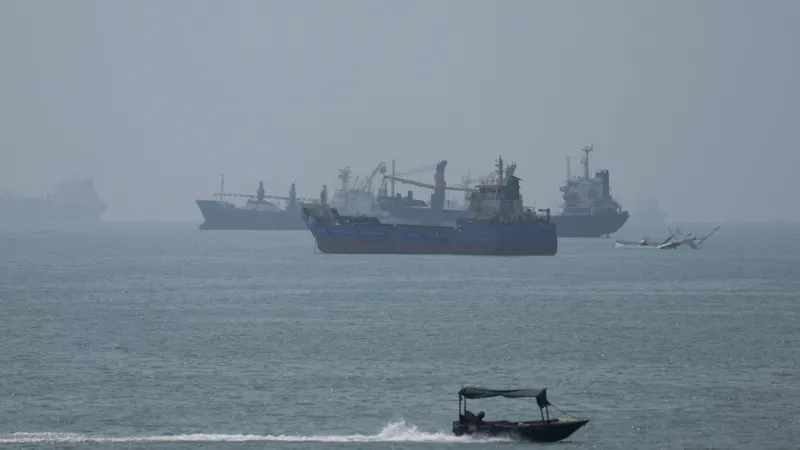
America and Iran have exchanged direct military strikes for the first time in weeks, after US forces attacked two rocket launchers on Larak Island in the strategic Strait of Hormuz. The action, confirmed by US Central Command as “limited, precise action” against “minelaying forces posing an imminent threat,” is the first known American strike on Iranian soil since late July. It killed two people and injured two others, according to Iran’s Islamic Revolutionary Guard Corps, which swiftly vowed “response and punishment.”
Tehran’s retaliation came in the form of ballistic missile strikes on US military bases at King Hussein and al-Azraq in Jordan. Jordan’s army said it intercepted eight missiles early on Monday morning. In a separate but related development, Iran’s state television reported that the Iranian army had targeted the Al-Minhad Air Base in the UAE with drones, a claim the UAE’s Ministry of Defence called “unfounded,” though it did confirm it had shot down an unmanned aerial vehicle.
The exchange of fire escalates tensions in a region already on edge. Larak Island, situated just off the port of Bandar Abbas, lies at the heart of the Strait of Hormuz, a vital chokepoint through which approximately 20% of the world's oil and liquefied natural gas once passed before the conflict began. Iran is currently demanding that tanker traffic pass by the island for inspection and has reportedly been forcing vessels to pay $2m to cross, a practice that has contributed to the effective closure of the strait to routine marine traffic. Tehran’s foreign ministry condemned the American attack as “military aggression” and described its own strikes on bases in Jordan as “legitimate defence.”
The confrontation comes at a time of heightened economic and military pressure on Iran. The United States is maintaining a naval blockade of the country, which has severely affected its ability to export oil. This weekend alone, Centcom said it had disabled three vessels, boarded two, and redirected a further 82 as part of these operations. In addition, Washington announced a fresh sanctions campaign on 24 August aimed at further isolating Tehran and expanding secondary sanctions against its allies, though Iranian officials have largely dismissed these measures as a continuation of previous policies.
President Donald Trump, who paused a renewed American military campaign in late July, has issued stark warnings to the regime in Tehran. On Sunday, he posted apparent AI-generated videos on his Truth Social platform showing oil infrastructure exploding. One post, captioned “Kharg Island being blown to smithereens!!!” in reference to a major Iranian oil terminal, did not elaborate, but followed his recent declaration that all mines planted by Iran in the strait had been removed or detonated. The president warned that any vessel deploying new mines would be destroyed. Iranian Deputy Foreign Minister Kazem Gharibabadi dismissed Trump’s claim as a “propaganda” deception.
Iranian President Masoud Pezeshkian, quoted by state media, adopted a position of defiant deterrence. “We are not seeking war,” he said, “but we will deliver a decisive response to the aggressors.” This latest round of strikes marks a dangerous new phase in the six-month-old conflict, which began with wide-ranging US and Israeli strikes on Iran on 28 February and has since drawn in regional allies and trading partners, with the vital waterway of the Strait of Hormuz becoming a front line in the broader confrontation.